

In a remarkable ecological milestone for New York City, researchers have documented their 500th individual humpback whale in the waters surrounding the five boroughs and surrounding areas, marking a stunning recovery of marine life in one of the nation’s busiest harbors. Gotham Whale, a Staten Island-based nonprofit marine research and conservation organization, reached this historic benchmark after starting the New York City Humpback Whale Catalog in 2012, a project that catalogs individual whales by photographing the unique markings on their tail flukes.
The dramatic increase in whale sightings represents one of the most visible symbols of environmental recovery in urban America. Starting in 2012, documented sightings climbed from just 10 to 30 whales per year to roughly 80 to 100 individual whales annually in recent years. In the earliest days of the project, between 2011 and 2012, sightings were sparse, with merely five whales recorded. Today, whale watchers operating through a network of local boats from Belmar on the Jersey Shore to Freeport on Long Island contribute their sightings to the catalog, allowing researchers to track the comings and goings of these marine giants.
Paul Sieswerda, who serves as board vice president of Gotham Whale and previously curated marine life programs at the New York Aquarium, remarked on the significance of reaching this milestone. He described each documented whale as “another giant step toward understanding and protecting the remarkable wildlife living just beyond New York City’s skyline.”
The resurgence of humpback whales in New York waters stems from a convergence of environmental factors. Most significantly, the waters surrounding New York and New Jersey have grown substantially cleaner over recent decades, allowing fish populations to rebound. The harbor now ranks among the cleanest it has been in over a century, a transformation that occurred as a result of legislation including the Clean Water Act of 1972 and subsequent environmental regulations that transformed wastewater treatment and reduced pollution flowing into the estuary.
The improved water quality has directly supported the recovery of Atlantic menhaden, a small, oily fish that serves as the primary food source for humpbacks. These schooling fish are now abundant in New York’s waters, drawing whales that have traditionally fed further north in the Gulf of Maine and off Cape Cod. Climate change has accelerated this shift, as warming ocean temperatures in New England and Canada disrupt traditional feeding grounds and push whales to seek new sources of sustenance closer to New York’s shores. Many of the whales spending time in the New York Bight, the indentation of Atlantic coastline spanning from Cape May, New Jersey to Montauk Point on Long Island, are young animals seeking areas where they can feed without competing with larger adults in more northern waters.
Researchers have discovered that individual whales identified through the catalog frequently linger in the area for weeks or months at a time, fattening up during the summer feeding season before migrating south for winter. Some whales return year after year, demonstrating that the New York Bight has transformed into a reliable feeding ground for these marine mammals.
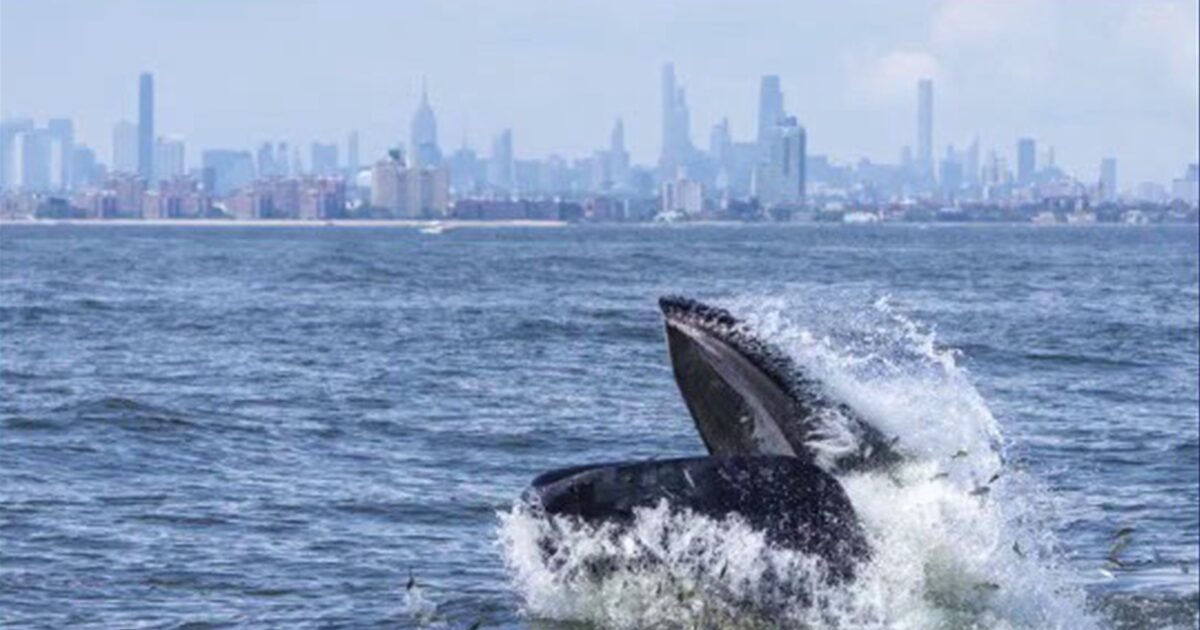
Yet this success story carries a troubling undertone. The same waterways that have become increasingly attractive to whales also rank among the busiest in the nation. The Port of New York and New Jersey is the largest container port on the East Coast and the third largest in the United States. Escalating maritime traffic has created dangerous conditions for the recovering whale populations, particularly as the animals feed in shallow waters near the surface, behavior that increases their vulnerability to vessel strikes.
Recent research has documented alarming trends in humpback mortality. A 2017 Unusual Mortality Event declared by the National Oceanic and Atmospheric Administration remains open, with humpback whale deaths rising significantly along the Eastern Seaboard. New York and New Jersey have reported the highest numbers of confirmed mortalities of any states along the coast. Studies using drone technology have found that roughly 14 percent of juvenile humpbacks in the area bear scars from vessel strikes, with the vast majority of all whales, regardless of age, showing evidence of scarring from fishing gear entanglement. The combination of surface feeding behavior and shallow coastal waters makes humpbacks particularly vulnerable in heavily trafficked lanes.
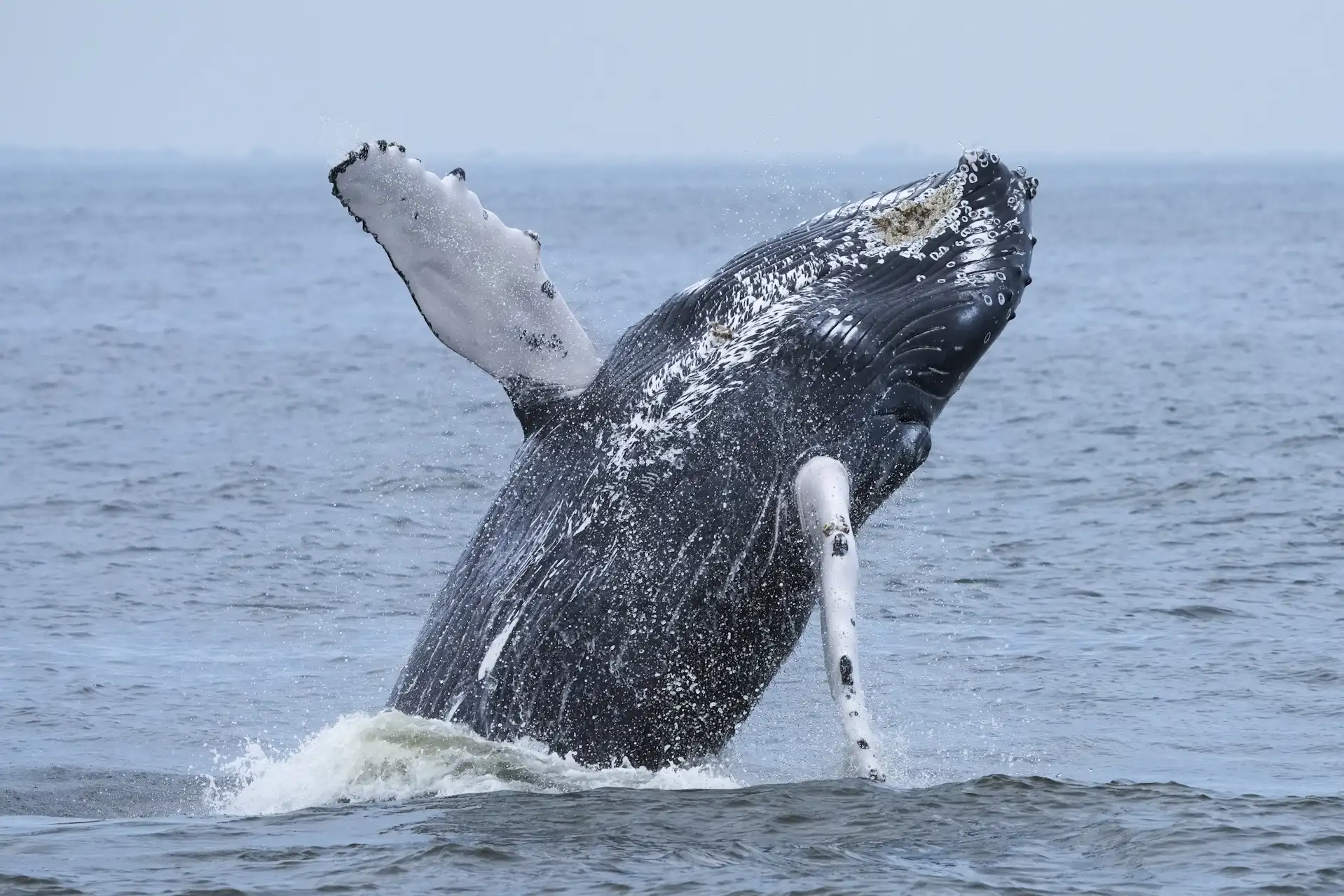
Conservation groups and boaters are now testing various protective measures, from AI-assisted monitoring systems to educational programs designed to help mariners recognize whales and maintain safe distances. Federal speed restrictions currently apply only during certain seasons when endangered North Atlantic right whales are expected to migrate, creating a gap in protection for humpbacks during other periods when they concentrate in New York waters. Current regulations require vessels of 65 feet or longer to slow to 10 knots in designated Seasonal Management Areas, and boaters are advised to maintain at least 100 feet of distance from most whales.
Despite the conservation challenges ahead, the achievement of documenting 500 individual humpback whales underscores how decades of environmental investment can reverse the damage of industrial pollution. The waters that once earned designations as among the dirtiest in America have become a thriving habitat for whales that had been essentially absent for a century. For Gotham Whale and its network of citizen scientists, the challenge now lies in protecting these magnificent creatures while they feed and rest in the increasingly crowded waters surrounding one of the world’s largest cities.