


Three years after the death of LSU student Madison Brooks, a high-profile rape case is drawing courtroom scrutiny over an unusual request from the defense. Desmond Carter, 21, accused of raping the 19-year-old before she was struck and killed by a car, has asked a judge to ban supporters from wearing pink—Brooks’ favorite color—during his upcoming trial in Baton Rouge.
Carter’s attorneys filed a motion earlier this summer seeking to prohibit what they characterize as “prejudicial or intimidating spectator displays,” arguing that supporters wearing pink clothing and merchandise from the Madison Brooks Foundation could unfairly sway jurors. The defense cited Supreme Court precedent, specifically the 1966 case “Sheppard v. Maxwell,” which addressed how “carnival atmospheres” in courtrooms can compromise a defendant’s right to a fair trial.
Brooks died on January 15, 2023, when she was struck by a vehicle on Burbank Drive in Baton Rouge. According to authorities, the 19-year-old LSU sophomore had been at Reggie’s bar in Tigerland with the men now accused of assaulting her. Prosecutors say that after leaving the bar, Brooks was sexually assaulted inside a car driven by the suspects and then left intoxicated and disoriented near a busy highway. Brooks’ blood-alcohol concentration was reported at approximately 0.319%, nearly four times the legal driving limit.

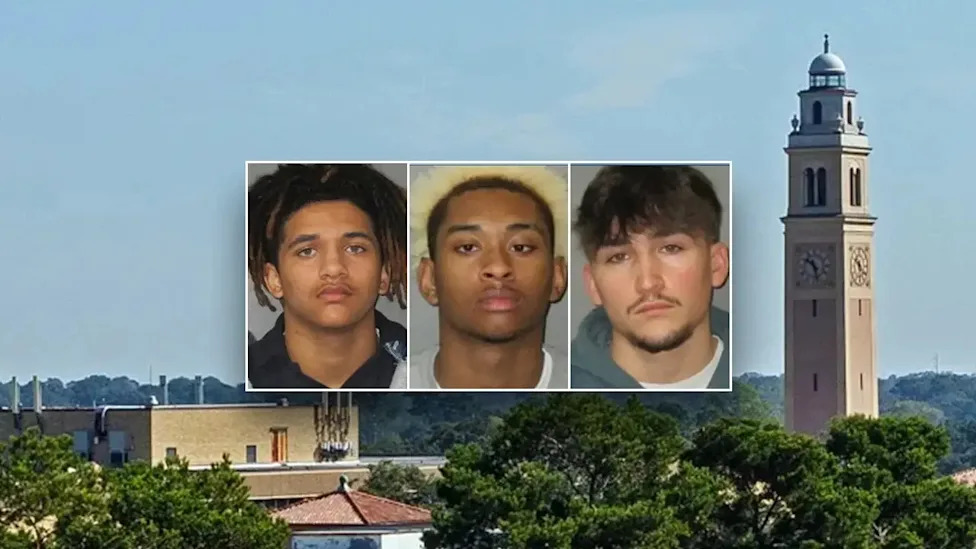
Three men—Carter, Kaivon Washington, and Casen Carver—face rape charges in connection with the alleged assault. Carter, who was 17 at the time of his arrest, is being tried as an adult and faces both first-degree and third-degree rape charges. If convicted of first-degree rape, he faces a mandatory life sentence without possibility of parole.
The defense strategy has proven controversial. Carter’s attorneys argue that Brooks’ family and friends have routinely worn pink to court hearings as a show of support, and that these displays, combined with merchandise from the Madison Brooks Foundation, constitute intimidation designed to prejudice jurors. Social media posts from supporters asking people to attend hearings in pink have also been cited by the defense as evidence of an orchestrated campaign.

However, prosecutors have vigorously opposed the motion. The district attorney’s office characterizes the pink clothing not as jury intimidation but as victim advocacy and remembrance. Prosecutors argue that pink is simply a personal way for supporters to honor Brooks’ memory and have requested that the court instruct jurors to disregard any spectator attire.
Ashley Baustert, Brooks’ mother, has responded emotionally to the request. She founded the Madison Brooks Foundation in her daughter’s honor to advocate for the safety of young adults. In statements about the pink clothing ban, Baustert said that wearing pink represents a peaceful act of remembrance and a symbol of her daughter’s life.
“Pink is not a protest. It is not an attempt to influence a jury. It is not about the defendants,” she said in an email to local media, adding that no legal motion can remove or silence the people who love her daughter.
The driver who struck Brooks remained at the scene and called 911. Investigators say the driver showed no impairment and was not charged in her death. The case has captured national attention, reigniting conversations about campus sexual assault, violence against women, and the dangers of underage drinking at college bars.
A Baton Rouge judge held a hearing on August 4 to consider Carter’s motion regarding the pink attire restriction. Carter’s trial before Judge Gail Ray is scheduled to begin on August 17. The outcome of the judge’s decision on the motion could set parameters for how the case proceeds and what supporters may wear in the courtroom during what is expected to be a closely watched proceeding.