

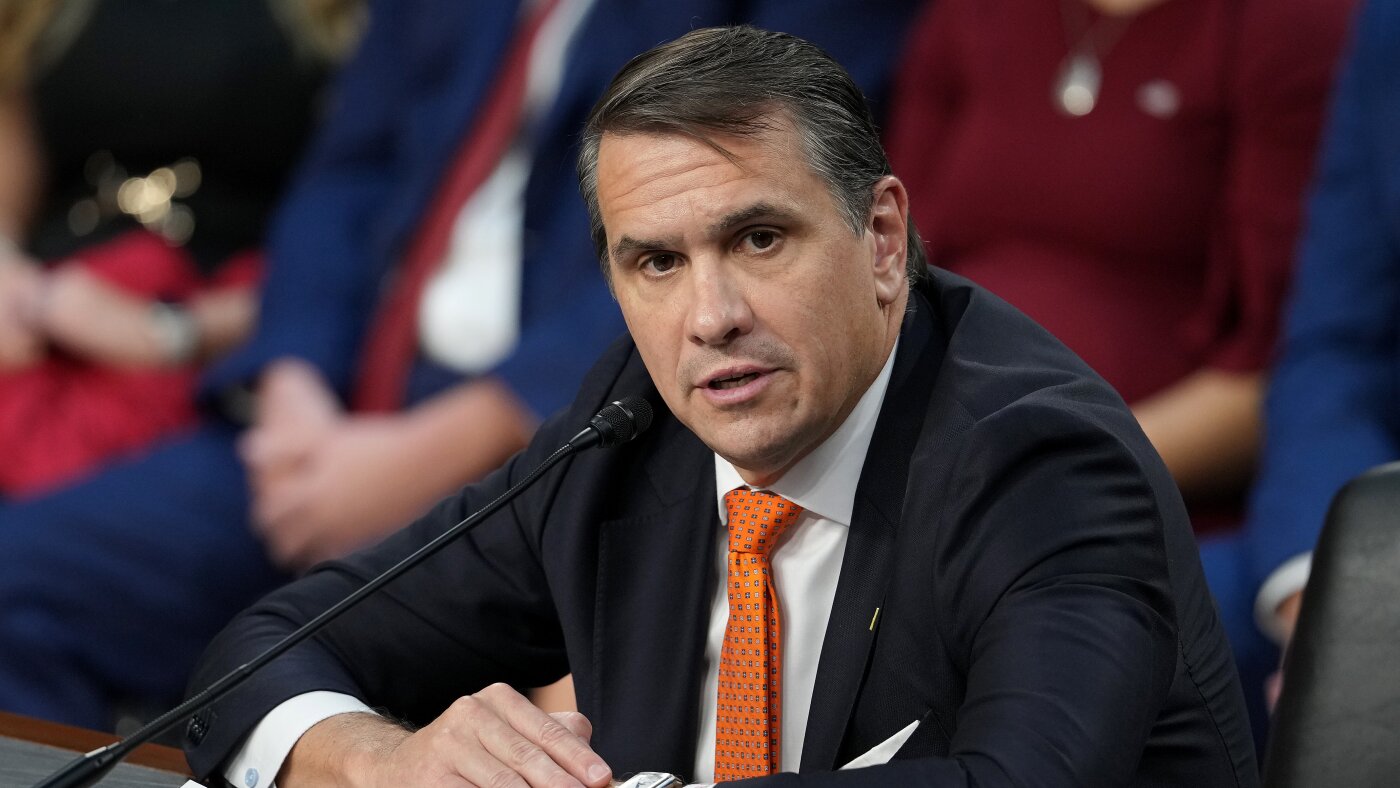
Todd Blanche, President Trump’s former personal lawyer, was narrowly confirmed as attorney general by the Senate in a 50-49 vote early Saturday morning, capping off weeks of uncertainty and securing the position after bipartisan concerns about his independence from the White House.
Two Republicans, Senators Lisa Murkowski of Alaska and Susan Collins of Maine, joined all Democrats in opposing Blanche’s confirmation. The vote was gaveled down at 4:31 a.m. After a late-night Senate session that ran into the early hours of Saturday.
“I am deeply honored by the trust and confidence President Trump has placed in me to lead the Department of Justice as our great nation’s 88th Attorney General,” Blanche said in a post on social media following the vote. “I am grateful to the Senate for staying late to complete this process.”
Blanche’s path to confirmation had been precarious throughout the process, with his nomination repeatedly appearing in doubt due to concerns from senators on both sides of the aisle. The pivotal moment came Friday morning when Senator Bill Cassidy of Louisiana announced he would support Blanche’s nomination, providing the critical vote needed for confirmation. With Senator Mitch McConnell absent due to ongoing health issues, Blanche could afford to lose only two Republican votes, and Cassidy’s backing essentially assured his confirmation.
Cassidy, who lost his primary race in May after Trump endorsed his opponent, said in remarks on the Senate floor that he was voting for Blanche “not as a referendum on President Trump” but based on the specific circumstances surrounding the nominee. “Mr. Blanche is not perfect, and he will tell you this, but the choice is not between perfection and Mr. Blanche,” Cassidy said.
The controversy that nearly derailed Blanche’s confirmation centered on two major issues: the handling of documents related to Jeffrey Epstein and a $1.776 billion “anti-weaponization” fund created as part of a settlement with the IRS, along with related immunity provisions granted to Trump, his family, and his business entities.
Senators John Cornyn of Texas and Thom Tillis of North Carolina, both Republicans, initially withheld support for Blanche over these concerns. They demanded written assurances that the anti-weaponization fund would be terminated and that clarification be provided about whether the president and his family would be shielded from future IRS audits. During his July 15 hearing before the Senate Judiciary Committee, Blanche had declared the fund “dead,” but the senators’ demands for written documentation nearly delayed the confirmation process.
Murkowski cited the Justice Department’s handling of the Epstein files as one of her primary concerns, along with what she described as the Trump administration’s acceleration of the “politicization” and “weaponization” of the Justice Department. She emphasized that the nation needs an attorney general who will act as a check on the administration’s worst impulses, but expressed she had no confidence Blanche would fulfill that role.
Collins similarly objected to Blanche’s nomination, stating that while she viewed him as a capable lawyer, the Justice Department “has become increasingly political” under his leadership. She cited his approval of the anti-weaponization fund and the sweeping immunity granted to Trump and his family from IRS audits as evidence that his actions “further eroded the Department’s independence.”
Despite these reservations from both Republican and Democratic senators, Blanche’s confirmation secures his position as the nation’s chief law enforcement officer. The 51-year-old Colorado native has served as acting attorney general since April 2, when President Trump elevated him from the deputy attorney general position after firing Pam Bondi, who had faced criticism over her handling of the Epstein files.
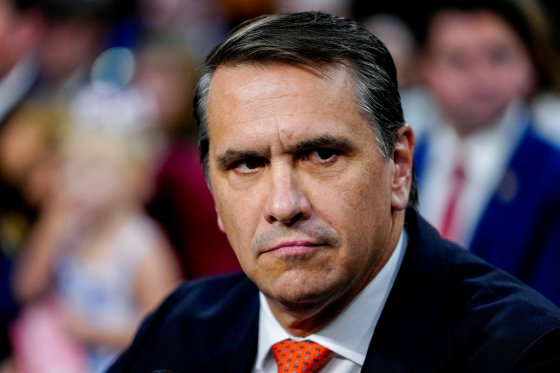
Blanche’s controversial background as Trump’s personal legal representative in multiple criminal cases, including the hush money trial in New York and federal cases over classified documents and alleged attempts to overturn the 2020 election results, fueled Democratic opposition. Democratic Senator Adam Schiff of California said before the Judiciary Committee vote that Blanche “has never been able to shed his role as criminal defense lawyer for Donald Trump” and that he would “only do what’s best for Donald Trump.”
Senate Judiciary Committee Chairman Chuck Grassley of Iowa had defended Blanche’s nomination before the confirmation vote, saying his “impressive background and the presentation at our hearing in the Judiciary Committee are proof that he’s led the Justice Department with distinction and is well suited to continue doing that.”
The Judiciary Committee had advanced Blanche’s nomination in a 12-10 party-line vote earlier in the week. With the full Senate confirmation, Blanche can now continue leading the 100,000-person Justice Department on a permanent basis, a position that carries significant power over federal law enforcement and prosecutions across the country.
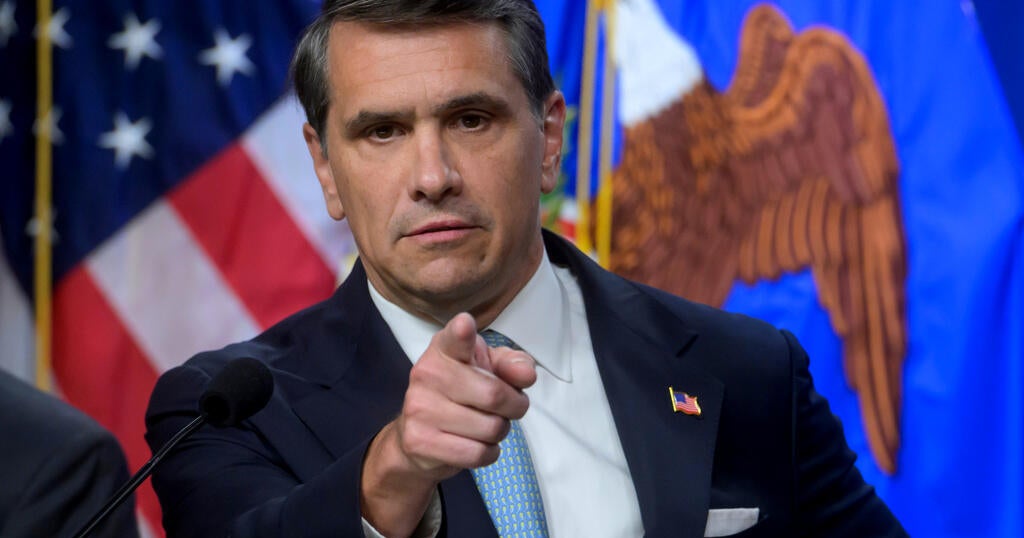
White House Press Secretary Karoline Leavitt called Blanche’s confirmation “a huge win for President Trump and our country” in a statement, saying he will be a “phenomenal” attorney general who will continue advancing the administration’s commitment to law and order. Vice President JD Vance congratulated Blanche on social media, saying he will continue to aid the administration’s efforts to root out fraud.