

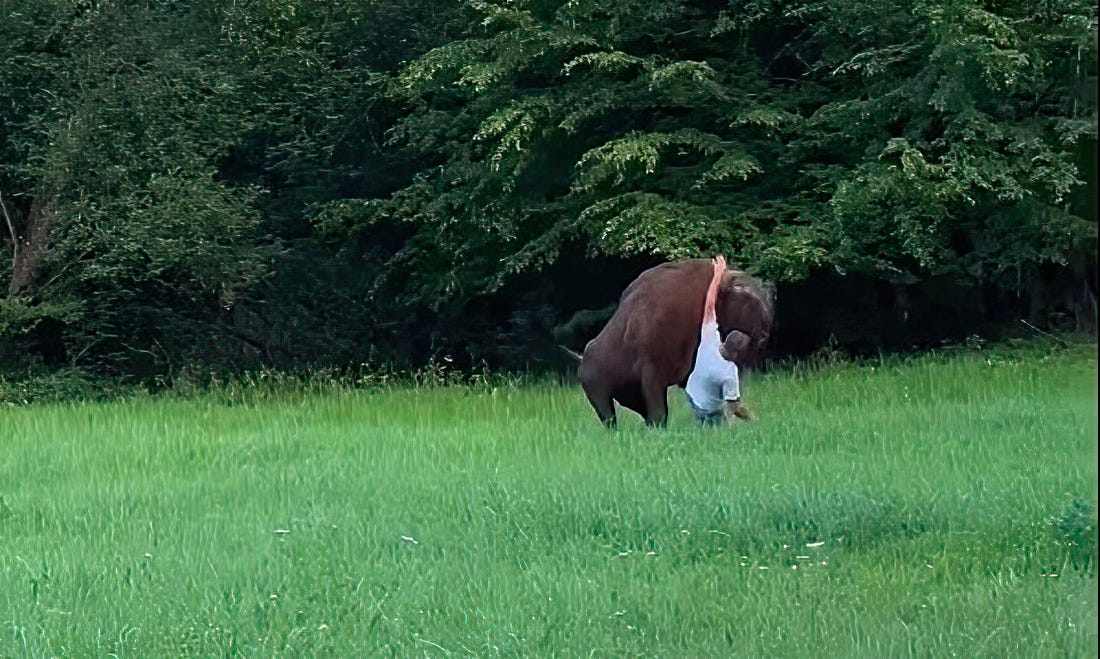
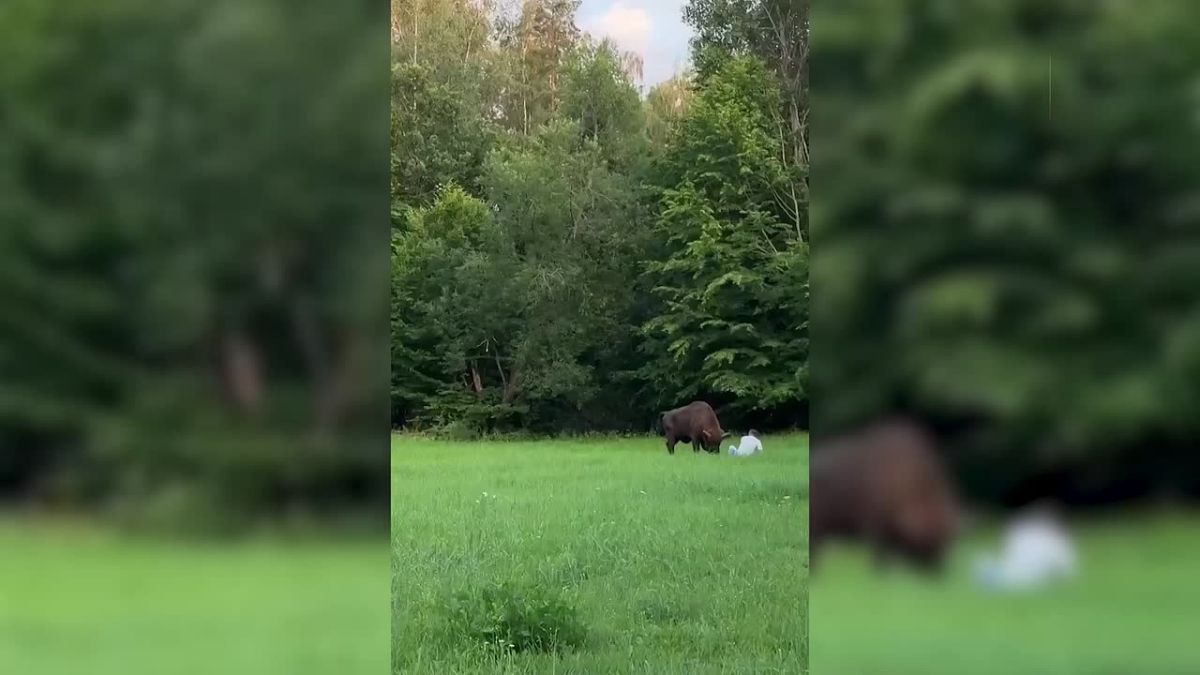
A wild video captured an unnamed tourist being knocked to the ground by a European bison in Stara Białowieża, Poland’s Białowieża Forest, after he approached the animal too closely.
The incident happened on Monday in Stara Białowieża, a settlement in the Białowieża Forest area, which contains Poland’s largest free-ranging European bison population.
Witnesses said the man came within around four or five meters of the bison before it charged and knocked him to the ground.
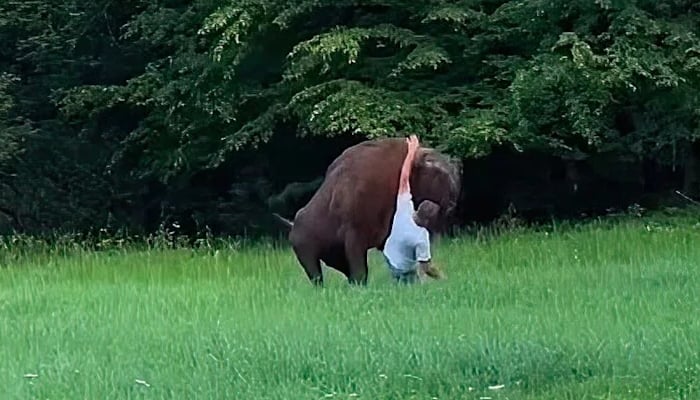
Viral videos show the mammal remaining dangerously close to the tourist who lay on the ground, as nature photographer Grzegorz Ryński, who witnessed and recorded the encounter, instructed the man to not move before using his car to separate him from the bison.
Ryński slowly drove towards the animal and left one of the car doors partly open so the tourist could get inside.
However, the tourist, who was caught by surprise, began moving away on foot, forcing Ryński to reverse alongside him until he reached a safe distance.
Ryński told private broadcaster TVN24 about the encounter.
“We shouldn’t blame the bison. The man was actually very lucky because this particular animal was quite calm. There are much more aggressive individuals,” Ryński said.
The man’s wife, Aneta, who also witnessed the incident, said the tourist had suffered a deep, open wound to his calf and was badly bruised, adding that he would need hospital treatment.
Aneta spoke to TVN24 about the danger of approaching wildlife.
“A bison is a wild animal. If a person gets too close, the animal may feel threatened and attack,” she said.
Science communicator and journalist Maciej Kawecki shared the footage on X and criticized tourists who ignore safety warnings.
“There are warning signs everywhere telling people not to approach bison because they are dangerous, powerful animals. But that’s not enough,” he wrote, adding that “People still walk right up to them with camera lenses, almost touching the bison.”
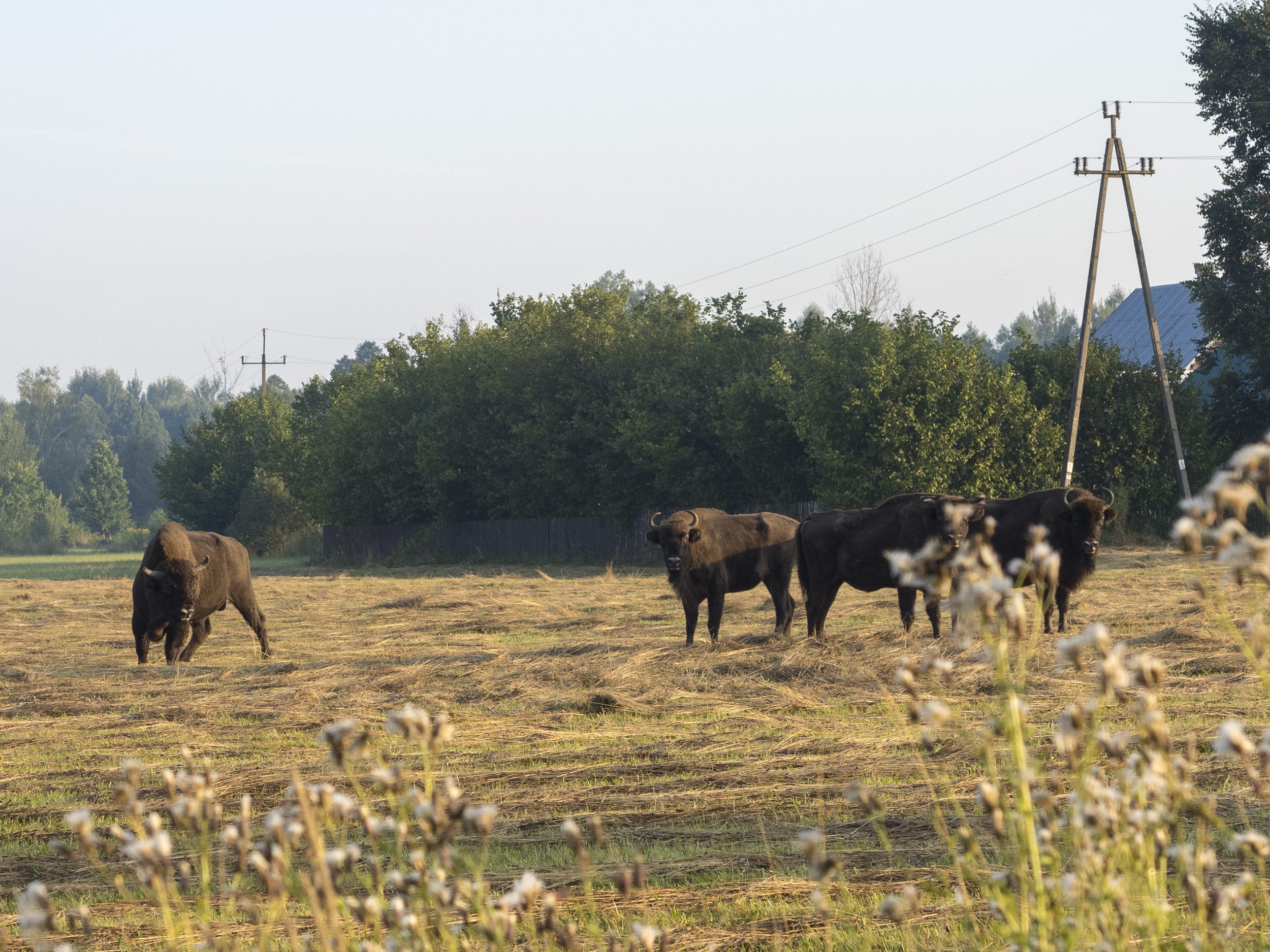
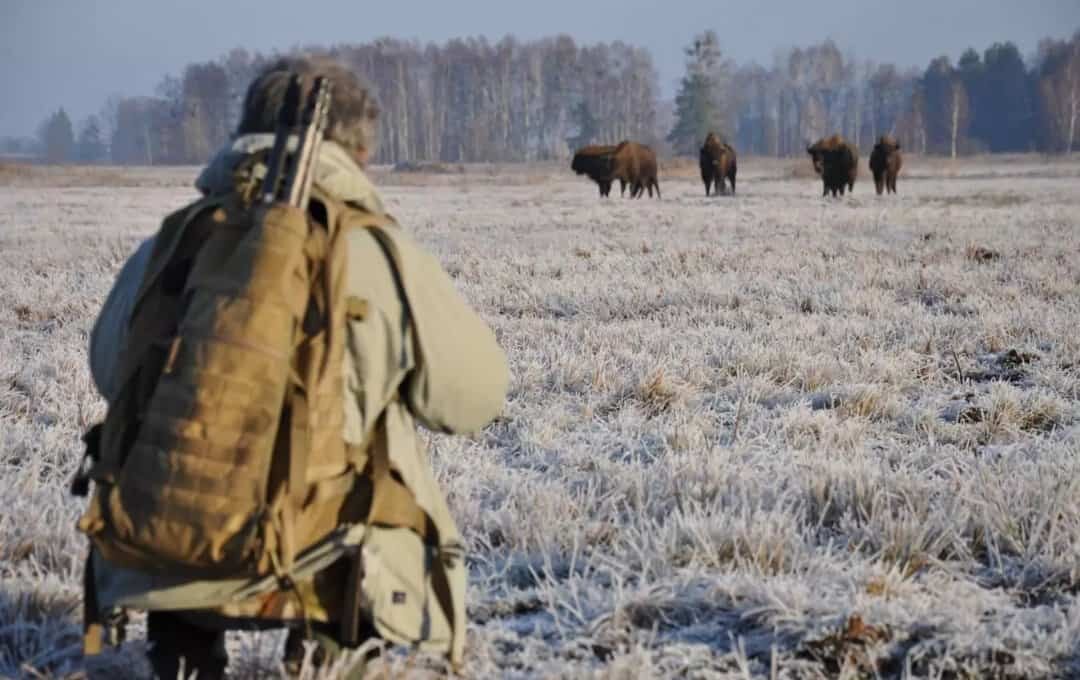
Białowieża Forest is one of Europe’s last remaining large areas of primary forest, and is best known as a refuge for the European bison, the continent’s largest land mammal. Around 1,176 free-ranging European bison were recorded in the Polish part of the forest and surrounding areas at the end of 2025, making it home to Poland’s largest wild bison population.
The continent’s largest land mammal roams freely throughout this UNESCO-listed wilderness.
The European bison was once extinct outside zoos, but has been successfully reintroduced to its ancient home.
This incident echoes a more serious bison attack that occurred at Yellowstone National Park in July.
A 65-year-old man who was flipped eight feet in the air by a bison at Yellowstone National Park shared his story from his hospital bed. Carl Isom-McDaniel broke his femur in four places, had surgery and is now recovering at a Montana hospital.
Isom-McDaniel was visiting Yellowstone with his 13-year-old grandson when they spotted a massive bull bison and stopped to watch it. Although they weren’t trying to approach or disturb the animal, the bison suddenly charged, tossing Isom-McDaniel approximately eight feet into the air.
Reflecting on his experience, Isom-McDaniel warned others about the speed of bison.
“They move faster than you could ever imagine,” Isom-McDaniel said.
He also noted that recovery would involve physical therapy but “it was not as catastrophic as it could have been.”
Unlike the Yellowstone victim, the tourist in Poland escaped with less severe injuries and did not require the same level of surgical intervention. Both incidents serve as reminders of the dangers posed by wild bison and the importance of maintaining safe distances.
Park officials urge visitors to stay at least 25 yards away from bison to avoid dangerous encounters.