

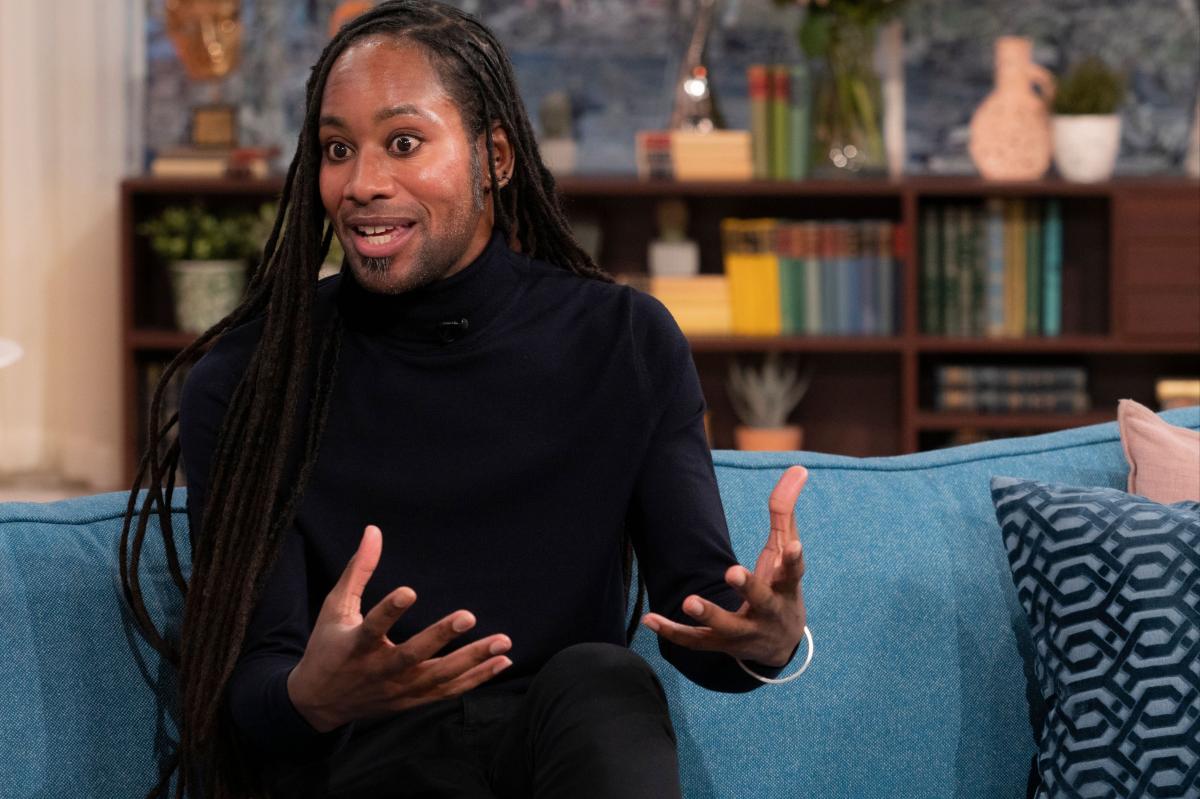
Jason Arday, the former Cambridge professor who resigned amid plagiarism allegations, was found dead in south London on Friday.
Arday, 41, was discovered “unresponsive” at a location in south London and was later pronounced dead at the scene, according to the UK Telegraph. A spokesman for the Metropolitan Police told the paper, “Sadly, a 41-year-old man was pronounced dead at the scene. His next-of-kin have been informed and are being supported by officers.” The spokesman added, “At this time his death is being treated as unexpected, but is not believed to be suspicious. The case is being investigated by officers from the Met’s Central South Command Unit. A file will be prepared for the coroner.”
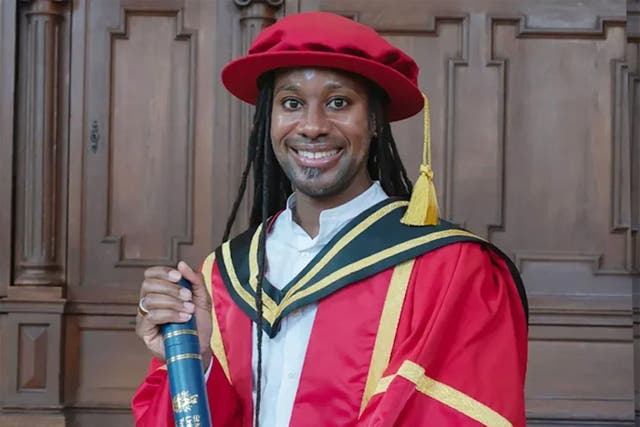
The sociology professor had resigned from Cambridge on Aug. 5, just days before his death, as the university launched an investigation into accusations that he plagiarized parts of his Ph.D. Dissertation and lied about positions he held at other schools. He cited “an unrelenting level of public scrutiny” as his reason for resigning. His appointment in 2023 as the youngest ever Black professor at the lauded university had made him a prominent figure in academic diversity efforts.
In his resignation statement, published by the Good Law Project, Arday wrote, “I have tried to continue because I believe deeply in the values of higher education, in rigorous scholarship, and in the transformative power of universities,” He continued, “I have tried because of my students, my colleagues and the countless people who have written to tell me that my journey gave them hope. But there comes a point when the personal cost becomes too great.”
Arday also said in the statement, “I have a family. I want to be present for them. I want to reclaim some peace, some privacy and some semblance of an ordinary life. I no longer wish to feel as though I am living under a constant spotlight, where every aspect of my life is subject to public examination and judgement.”
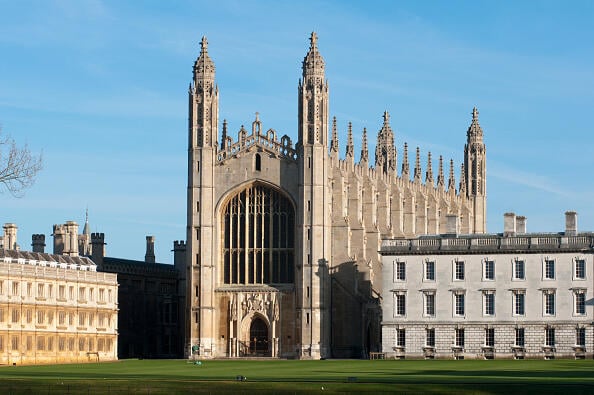
He promised supporters that his departure was “not the end of my work,” adding, “I will return stronger, wiser and with the same determination that has always defined my journey.” The professor also emphasized that his resignation “should not be interpreted as a loss of faith in scholarship or in the values that first brought me to Cambridge” nor “mistaken for an acceptance of the narratives that have surrounded me.” He described it as “simply the decision of someone who has reached the limits of what any person should reasonably be expected to endure.”
The controversy surrounding Arday had intensified rapidly in the weeks before his resignation. Cambridge announced its investigation on Aug. 5, citing “new information” about his “academic qualifications and honorary appointments.” The university said “a number” of complaints regarding academic misconduct were being handled separately under its research misconduct policy. Jesus College, where Arday held a fellowship, also launched its own parallel investigation.
Arday had admitted to making “mistakes” in his academic work. In an interview, he said he should be held “accountable” but rejected accusations that he was a “liar and fantasist,” He told the paper, “I think the cruelty that I’ve experienced and the positioning of me as this kind of liar and fantasist is totally unacceptable.” Arday also said, “What I am not is a liar.”
The Telegraph published a report in July identifying more than 100 passages in Arday’s Ph.D. Thesis — completed over a decade ago at Liverpool John Moores University — that it claimed were “identical or nearly identical” to a 2009 Ph.D. Thesis by Paula Zwozdiak-Myers, a Brunel University student. The Times of London published a similar analysis the same day. Liverpool John Moores University later investigated and determined the alleged plagiarism was the result of “honest and reasonable error,” though Cambridge pressed forward with its own inquiry. The Times also published follow-up reports on alleged “anomalies” in Arday’s published academic work, including “inconsistencies in references to participants in his papers.” Separately, questions emerged about claimed affiliations with universities including Glasgow and Ohio State, which denied any ongoing links with the professor. Arday’s charitable fundraising claims and athletic achievements also came under scrutiny, with the professor revising a claim to have personally raised over £5 million for charities to clarify he was part of a larger team, and correcting a reported 600-mile treadmill challenge from six days to 12 days with rest periods.
Arday’s memoir, “Great and Unfortunate Things,” was scheduled for publication in the United States on Aug. 11 by Simon & Schuster, which had defended its relationship with him and said it was “proud to publish Professor Jason Arday.”