

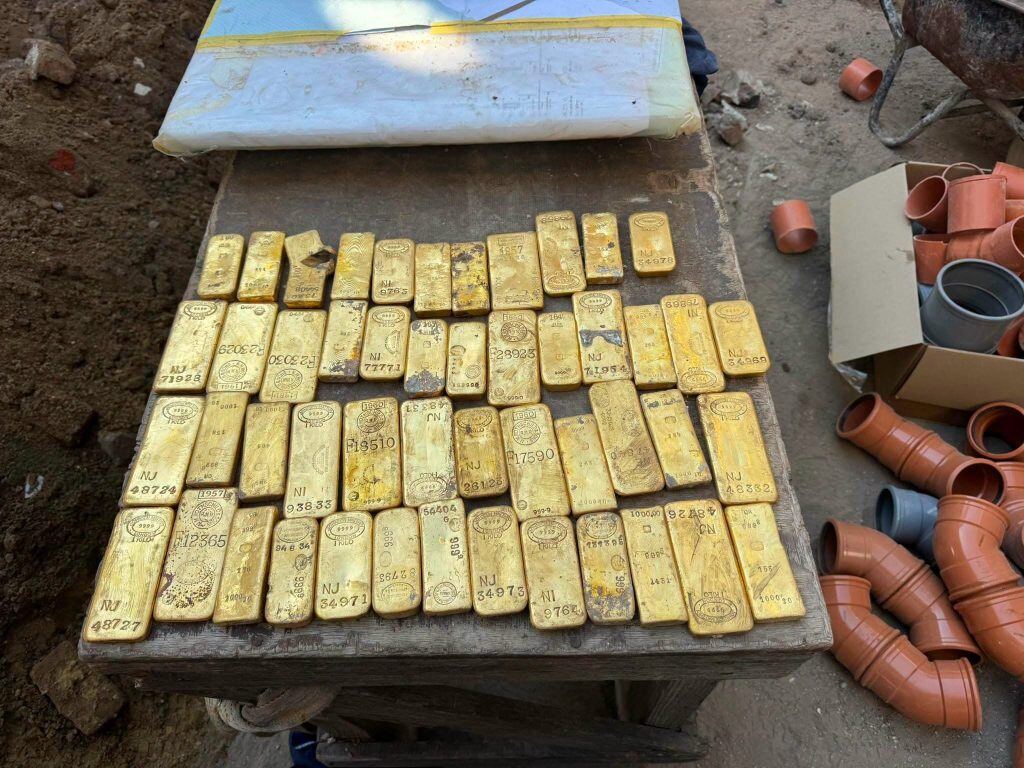
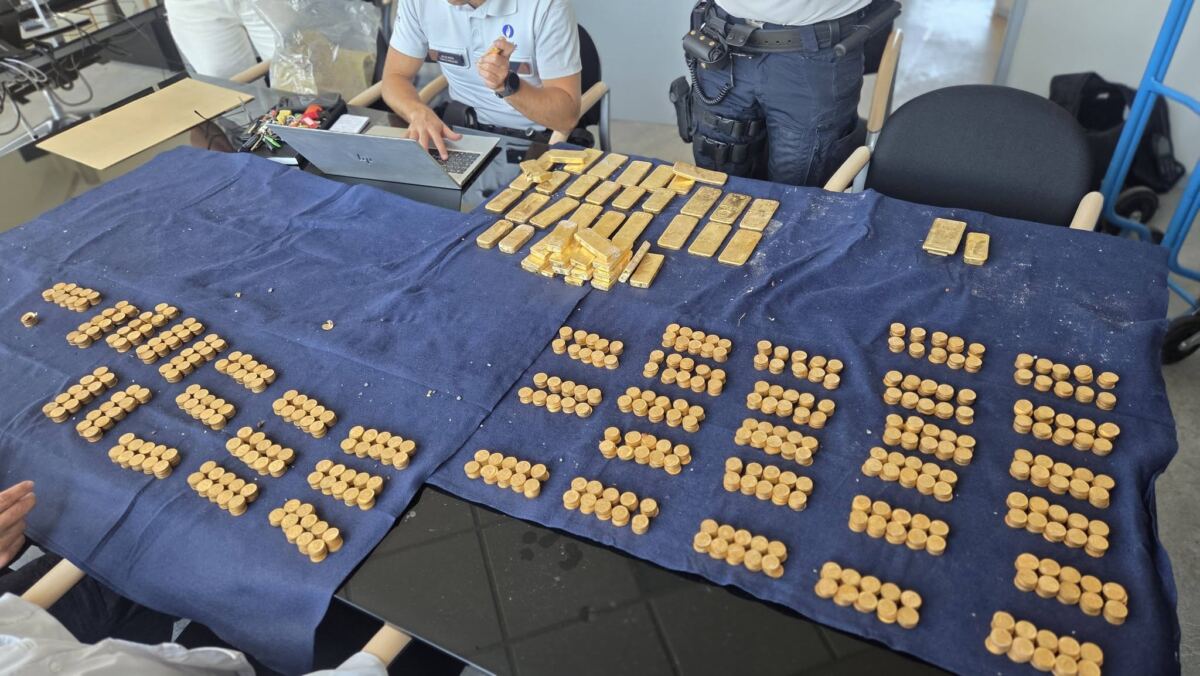
Construction workers in Belgium stumbled upon an extraordinary windfall this week when they uncovered approximately $10 million in gold while preparing to install a sewage system at a renovation site. The discovery, made on Tuesday in the Flemish community of Sint-Gillis-Dendermonde about 40 minutes from Brussels, has turned an ordinary work day into one of the most remarkable treasure finds in recent Belgian history.
An 18-year-old student worker named Kobe was among the crew tasked with removing the building’s foundation to lay the new sewer pipes when the crew spotted something unexpected. “Our first reaction was actually disbelief,” Kobe told local media outlet VRT. “Of course, we hadn’t expected to find gold.”
At first, the workers believed they had discovered a cache of 1-Euro coins, but their suspicions changed when they spotted what appeared to be a gold nugget. The stash, ultimately valued at around 9 million Euros or approximately $10.4 million, consisted of more than 40 gold bars and at least 4,000 old coins, apparently concealed inside a chest that had been bricked into the cellar wall. The gold appeared to be deliberately hidden, having been wrapped in a plastic bag before being sealed away.
Site manager Mario recalled the moment the full scope of the discovery became clear. “I went to look and took the gold in my hands,” he said. “We kept digging up new coins and bars as well. Only then did it really sink in what we had found. That was a crazy feeling.” After 33 years in the construction industry, Mario noted this was the first time he had experienced anything like it.
The workers faced a critical decision at that moment. Some might have considered keeping the fortune, but the sheer volume of the find made that impractical. When asked whether the idea of pocketing the treasure had crossed his mind, Mario responded, “There are so many coins and bars — it would be almost impossible. Besides, that would be theft.” Kobe agreed with the assessment, acknowledging that concealing 9 million euros was simply not feasible.
The crew promptly contacted authorities, and police arrived to catalog and secure the precious metals. The gold was then transferred to a high-security federal government vault while investigators work to determine its origin and rightful ownership.
The property where the treasure was found is owned by CAW Oost-Vlaanderen, a welfare organization that provides support to residents of the Dendermonde area. The building itself has a fascinating history. According to local records, it was originally constructed around 1900 as a residence for Theophilus Van Assche, a successful brewer. The brewery operated from 1899 until 1970, and the building, with its wrought-iron gates still bearing the initials “VA,” is now a protected historic structure undergoing complete renovation by the welfare organization.
A local historian and former mayor of Dendermonde named Piet Buyse has speculated that the gold likely belonged to the Van Assche family, though investigators have not yet established any definitive connection. The deliberate concealment of such a large hoard raises intriguing historical questions about the circumstances that led someone to hide it in the cellar wall.
The discovery has drawn the attention of authorities and treasure hunters alike. Police have issued stern warnings against unauthorized visits to the site, cautioning that the property is a dangerous active construction zone with “several dangerous pits” and that all the gold has been removed. Dozens of people have already descended on the location in hopes of finding additional treasure, prompting Dendermonde police to issue a strong advisory to stay away.
Geert Hillaert, director of CAW Oost-Vlaanderen, expressed both shock and hope regarding the discovery. He noted that his initial reaction was one of “surprise and amazement” and indicated that if the charity’s ownership claim is successful, the funds could transform the organization’s ability to serve vulnerable populations across East Flanders. He described the find as addressing an “enormous need we experience daily” in the community.
The question of who ultimately benefits from this windfall remains uncertain. Under Belgian law, the rightful owner has five years to come forward and claim the fortune. If no legitimate claimant emerges within that timeframe and the gold is not connected to criminal activity, the treasure will be divided between the finder and the property owner. This means both the construction workers and CAW Oost-Vlaanderen potentially stand to benefit, though a lengthy investigation must first determine the gold’s origins and whether anyone has a valid claim.
For Kobe and his fellow workers, the future holds both hope and uncertainty. “Of course, we do hope we’ll get a ‘finder’s fee,'” Kobe told VRT. “That would be nice.” Whether the young construction worker receives a reward, and how much of the fortune ultimately benefits the welfare organization, workers, or a potential original owner remains to be determined by Belgian authorities and the courts in the coming years.