

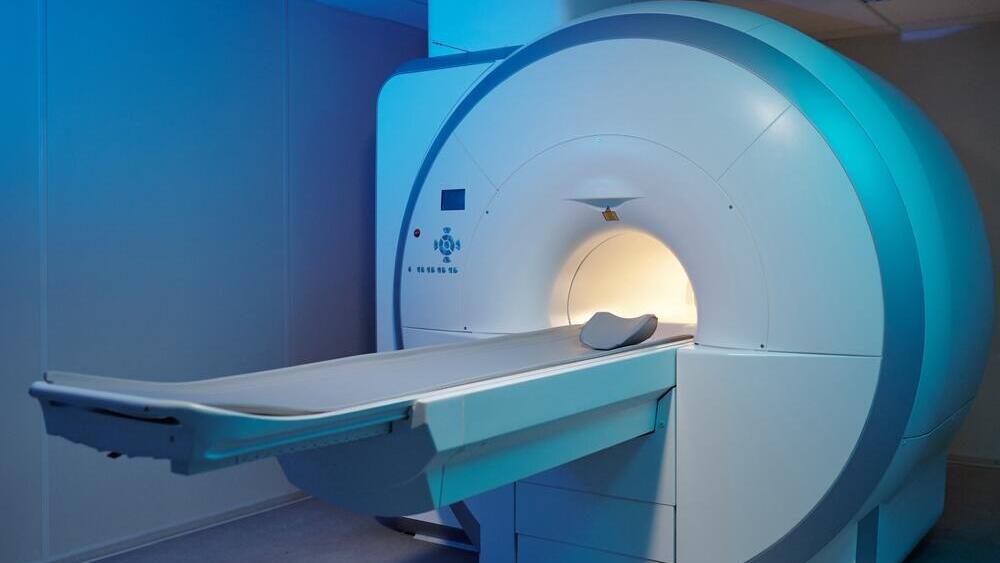
In 1991, a Dutch couple made an unconventional decision that would ultimately reshape medical understanding of human anatomy. Ida Sabelis and her boyfriend Jupp climbed into an MRI scanner at a hospital in Groningen, the Netherlands, to have sex while scientists captured detailed images of what was happening inside their bodies. The experiment was conducted at the request of their friend, Dutch scientist Menko Victor “Pek” van Andel, who had long wondered what the actual anatomical reality of sexual intercourse looked like.
At the time, practically all medical knowledge about human sexual anatomy came from centuries-old assumptions and outdated illustrations. Leonardo da Vinci’s anatomical drawings from the 1490s had been so influential that doctors and anatomists had based their understanding of sexual intercourse on his depictions for more than 500 years, even though those drawings contained significant inaccuracies about how male and female genitals actually positioned themselves during intercourse.
The logistics of the experiment presented immediate challenges. The MRI machine was cramped, and the couple quickly realized that the original plan to film them in the missionary position would be impossible in such tight quarters. Instead, they adopted a spooning position, which turned out to be the only viable option given the machine’s narrow confines. The scanning process was also time-consuming. Since this was one of the first MRI machines in existence, capturing clear images required couples to hold their positions for extended periods, sometimes a full minute at a time.
When Ida arrived at the hospital that Saturday morning, she initially felt some unease about the situation. She found herself the only woman in a room full of male scientists and realized the irony immediately. But her commitment to advancing women’s health and her background as an anthropologist who had championed women’s rights motivated her to proceed. She later described the experience as “hilarious” rather than romantic, noting that it was more of an act of love and performance than intimacy.
Despite the unusual setting and the scientific scrutiny, the experiment was surprisingly successful. Ida remarked on the podcast “What Was It Like” in April 2024 that while the MRI machine was “very, very loud,” they managed to complete the session. The couple found the warm environment inside the scanner actually helped them feel comfortable. Notably, Jupp had no difficulty maintaining an erection throughout the 45-minute session, a detail that Ida mentioned as testament to their relationship, particularly since she noted they were the only couple in van Andel’s expanded research who accomplished this without the aid of medication.
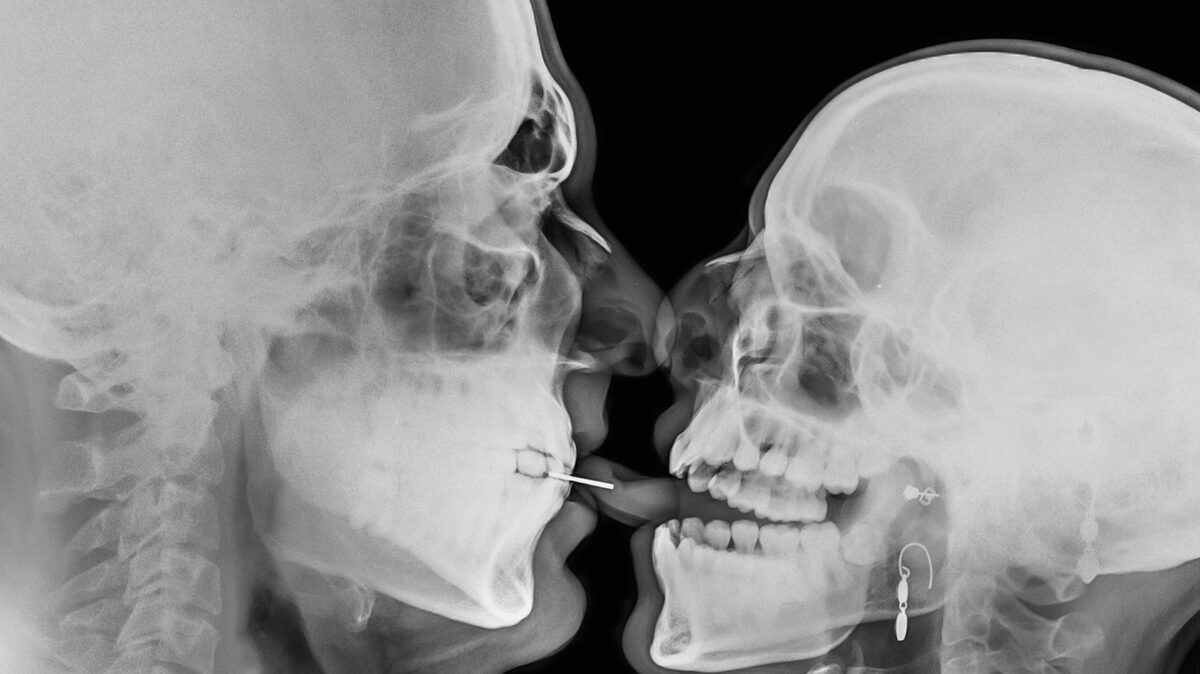
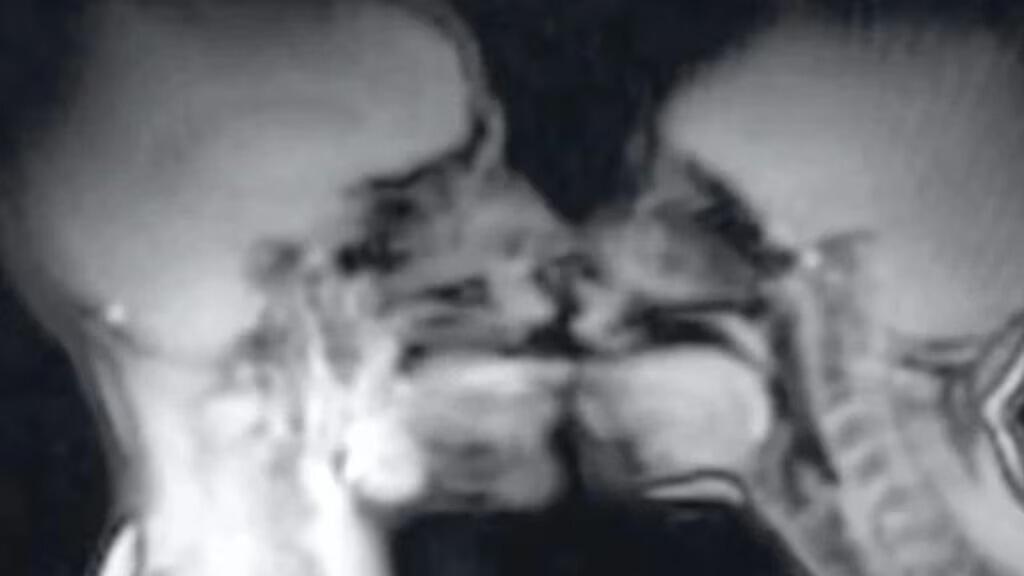
What the MRI captured was nothing short of revolutionary. The images revealed that the penis during intercourse takes on a boomerang shape, not the straight configuration that da Vinci and subsequent anatomists had believed for centuries. The penis bends to accommodate the contours of the woman’s vaginal canal, which itself is curved rather than straight, as had been previously assumed. About one-third of the penis’s length consists of its root, a detail that had never been clearly documented before.
The initial experiment with Ida and Jupp opened the door to expanded research. Between 1991 and 1999, van Andel conducted a more comprehensive study involving eight couples and three single women, totaling thirteen separate MRI scans. These subsequent experiments were conducted in the missionary position, with all participants over 18 years old who were able to provide informed consent. Remarkably, none of the volunteers withdrew from the studies.
The formal research paper was published in the British Medical Journal on December 24, 1999, under the title “Magnetic Resonance Imaging of Male and Female Genitals During Coitus and Female Sexual Arousal.” The study made several groundbreaking findings. Beyond documenting the boomerang shape of the penis, the research showed that during female sexual arousal without intercourse, the uterus was raised and the anterior vaginal wall lengthened. However, contrary to what researchers Masters and Johnson had previously reported, the size of the uterus itself did not actually increase during sexual arousal.
The published paper became one of the most downloaded and cited articles in BMJ history. It went on to win the Ig Nobel Prize in Medicine in 2000, an award that recognizes “improbable research that first makes people laugh, then makes people think.” The research team included Willibrord Weijmar Schultz, Pek van Andel, Eduard Mooyaart, and Ida Sabelis, whose contributions were acknowledged with the prize.
One surprising finding left researchers puzzled. Across all thirteen sexual encounters recorded in the MRI scanner, the female participants’ bladders rapidly filled with fluid. Scientists have struggled to explain this phenomenon ever since. Van Andel proposed that it might be an evolutionary adaptation, potentially a mechanism designed to encourage women to urinate after sex as a way to prevent urinary tract infections. But the exact reason remains a scientific mystery.
Ida, who went on to become a Professor of Organisational Anthropology at Amsterdam’s Vrije University, never anticipated the lasting impact of her participation. She has spoken openly about her role in advancing knowledge about the female body and women’s health in scientific and medical contexts. In recent years, the study has experienced a revival in popular attention, particularly after being shared on social media platforms like TikTok, introducing the experiment to a new generation fascinated by this unconventional but scientifically rigorous approach to understanding human anatomy.
The work also highlighted how much of medical science had been built on assumptions rather than actual observation. For centuries, the medical and scientific communities had accepted Leonardo da Vinci’s interpretations without questioning them or seeking empirical confirmation. It took the willingness of an ordinary couple and an eccentric scientist to finally document what was actually happening inside the human body during intercourse, correcting misconceptions that had persisted for more than half a millennium.