

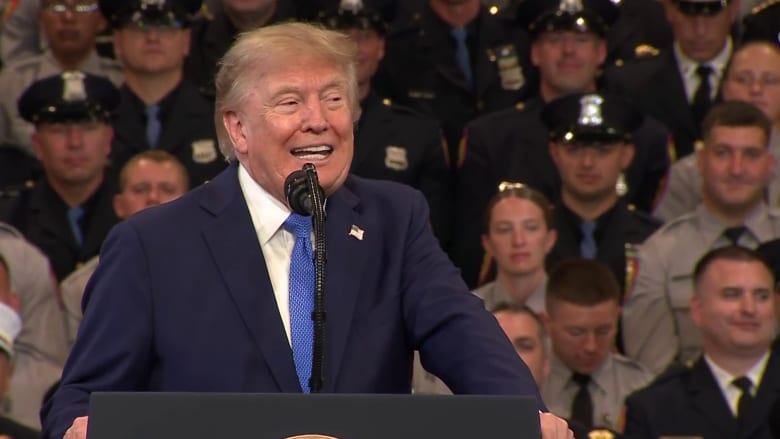
President Trump said Friday that he plans to declare the Strait of Hormuz “a territory of the United States” after the Iran war, marking a dramatic escalation in his rhetoric about the strategically vital waterway that has become central to the conflict between Washington and Tehran.
“After we finish defeating Iran, which is being very badly defeated — pretty soon I’ll be declaring the Hormuz Strait a territory of the United States,” Trump said during a Long Island rally in Garden City, New York, where he stumped for Republican candidates in the state’s gubernatorial and congressional elections.
The president defended the economic costs of the nearly six-month conflict, arguing that preventing Iran from acquiring a nuclear weapon justifies higher gas prices. “When you have to pay a little bit more, you’re at $4. It’s okay,” he said. “I’ll never apologize. I did the right thing.”
Trump’s territory declaration represents a new stage in his evolving rhetoric about the waterway. In March, after European and Asian allies declined to join a joint effort to secure the strait, Trump floated renaming it “the Strait of America” or even after himself. At a Miami investor forum that month, he referred to it as “the Strait of Trump — I mean, Hormuz,” telling the crowd the slip was no accident.
The Trump administration’s position on the strait stems from a broader conflict that began in late February with military strikes against Iran. A preliminary peace deal signed June 17 between the U.S. And Iran fell apart last month after Iran attempted to assert control over the waterway. Iran opened fire on commercial ships using a US-approved sea lane along Oman’s coast, escalating the dispute over which country would control passage through the crucial chokepoint.
Trump framed the situation as already settled. “Essentially, that’s what it is. We have the blockade. No ships get through unless we want them to,” he told the rally crowd. The president blamed U.S. Allies for not helping to break Tehran’s grip on the strait, directing criticism at NATO. “NATO wasn’t there for us, by the way,” Trump said. “You know, NATO was not there for us. We paid all that money for so many decades. Money, money, money. Then we say, ‘Yeah, give us a hand.’ ‘Well, sir, we’d rather not.’ But we remember.”
Trump also attacked diplomats engaged in talks with Iranian officials, describing them as “duplicitous.” He cited Iran’s economic troubles as evidence of American success, noting that “they have 350 percent inflation. Their currency is valueless.” Treasury Secretary Scott Bessent suggested the administration was preparing to intensify pressure further, saying Thursday night that the U.S. Would announce “measures like have never been seen in the history of economic isolation on a country” next week.
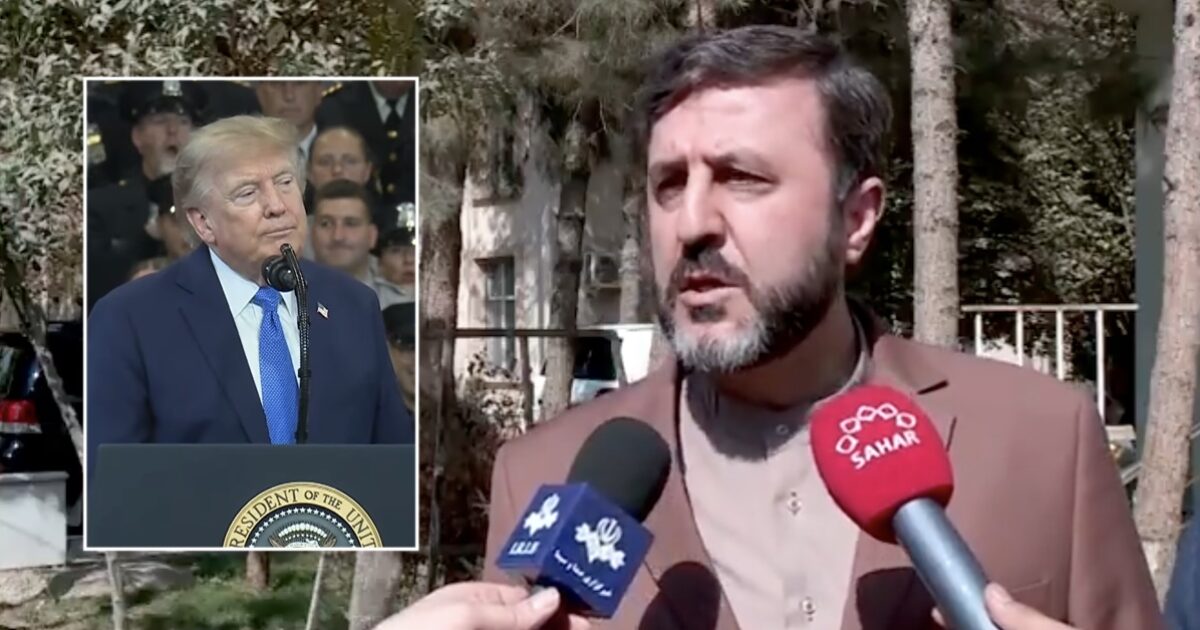
Iran’s response was swift and dismissive. Deputy Foreign Minister Kazem Gharibabadi fired back on social media Saturday, declaring that “the Strait of Hormuz cannot be seized by tweet, nor by aircraft carrier, nor by issuing an order, nor by an election speech. Iran neither fears threats nor cowers before displays of power.”
He added: “Once and for all, accept the reality: up to this point, you have suffered strategic and heavy defeats; the Strait of Hormuz has been Iranian, is Iranian, and will remain Iranian; this strait will only be closed and opened under Iran’s command, and as long as you do not accept the reality of defeat and cease your fanciful delusions, Iran will continue to enforce the blockade.”
The exchange underscores a fundamental impasse that has defined six months of conflict. The Strait of Hormuz, through which roughly one-fifth of the world’s oil typically flows during peacetime, has been brought to near standstill. Only two commercial vessels transited the waterway on Friday, compared to a pre-war average of 130 to 140 ships daily. The blockade has already raised global energy prices, with gasoline averaging $4.07 a gallon in the U.S. On Saturday, up from $3.15 a year earlier.
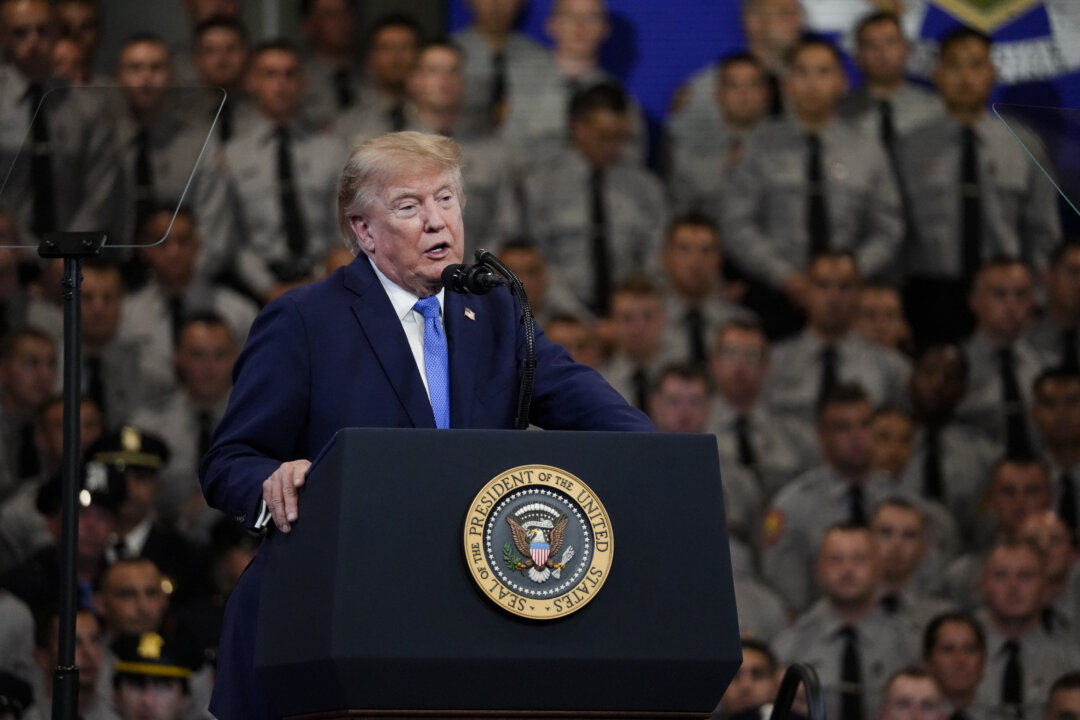
Before the war, Trump said the U.S. Has “total control” over the strait, describing the American naval presence as “a WALL OF STEEL” and insisting there is “nothing Iran can do about it.” But despite Trump’s assertions, commercial shipping has not resumed at pre-war levels. The flow of traffic through the strait has been a central issue in peace negotiations between the two countries, with Iran insisting it must control which vessels transit and be able to charge passage fees—terms the U.S. And Gulf Arab states have rejected.
The dispute over the Strait of Hormuz has also become a factor in American domestic politics. Rising energy prices since the start of the war have become a prominent issue in the 2026 midterm elections, with Republicans emphasizing energy affordability in their messaging. At the Long Island rally, Trump framed gas price increases as a necessary sacrifice for national security. “For you to pay a tiny little bit more for your gasoline, just remember you’re doing it so that a very evil country cannot have a country,” he said.