

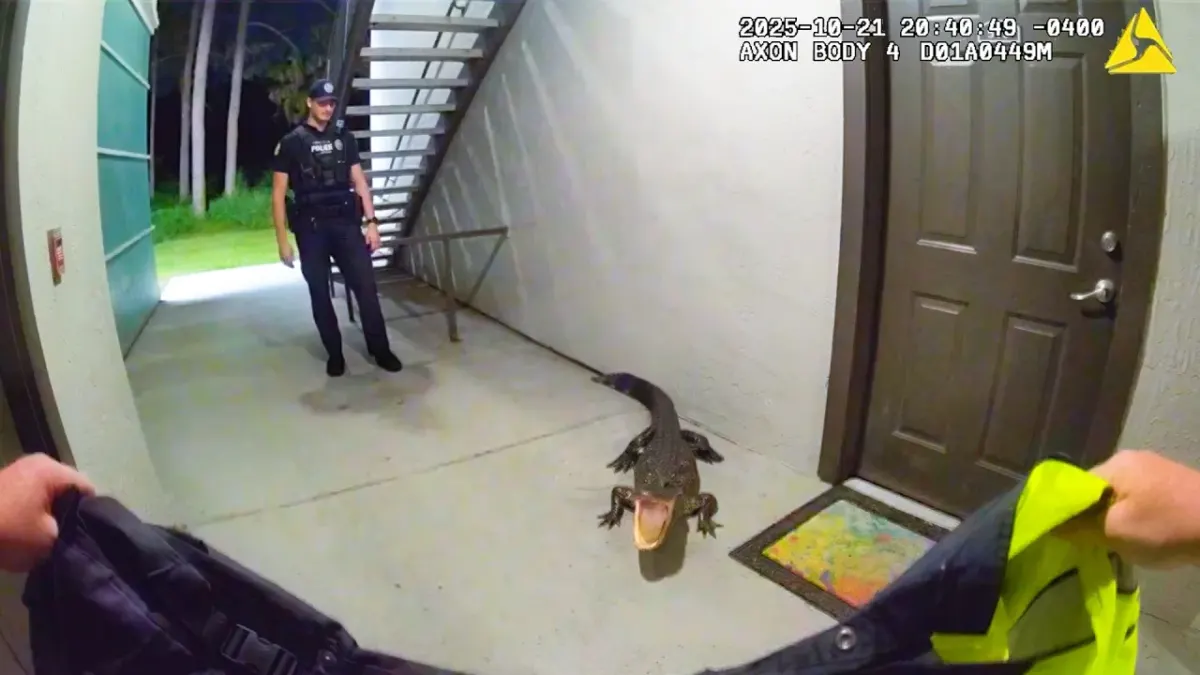
An apartment hallway became an unexpected wrestling ring when Florida police officers encountered a five-and-a-half-foot alligator that had wandered into the building. The officers faced a challenging capture operation that required teamwork, improvisation, and nerves of steel.
The gator was clearly agitated from the start. “That thing looks angry,” one officer observed. “It’s pissed,” another confirmed. The animal had settled into a corner of the hallway, and the officers knew they needed a strategy to safely contain it without getting bitten.
The initial plan involved using blankets to cover the gator’s head. One officer explained the reasoning: “Once you get his face covered, it’ll be easy.” The thinking was sound in theory. A blanket would obscure the gator’s vision and make it calmer and easier to control. But the execution proved trickier than anticipated.
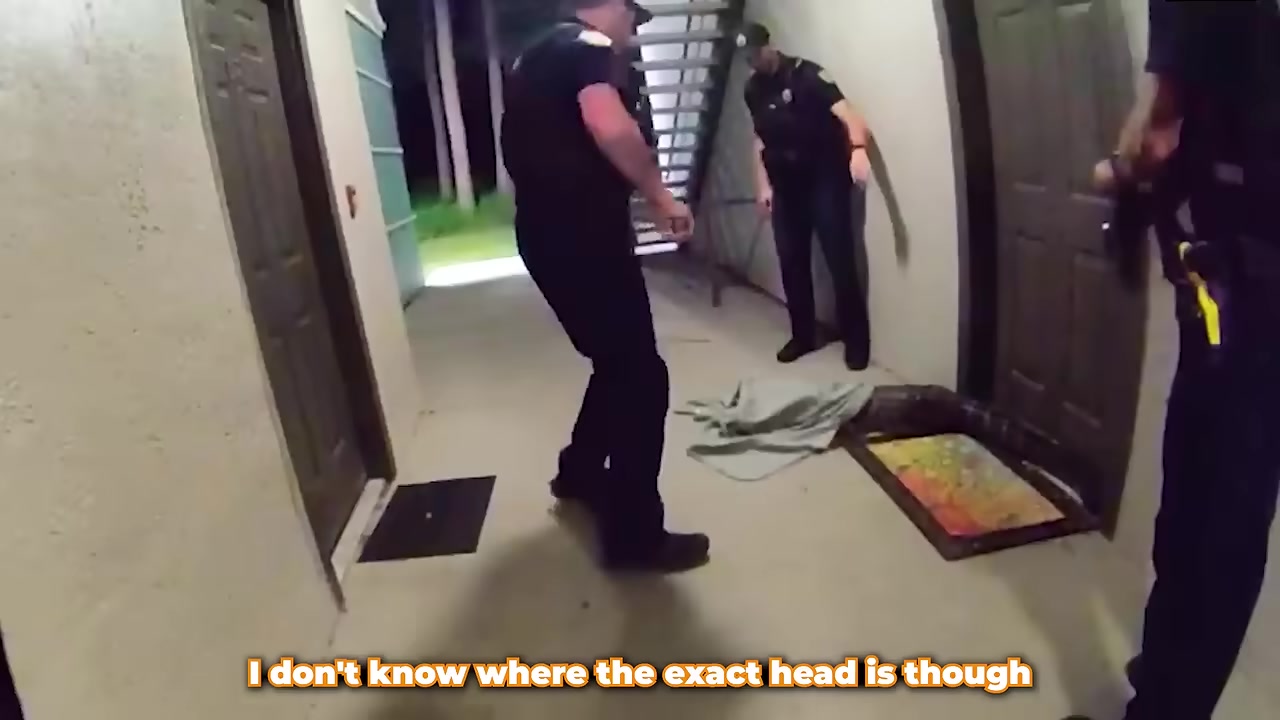
The first blanket provided was too light. Wind kept blowing it around, and it offered little help in subduing the animal. “The problem is the wind is blowing in,” one officer said, frustrated. “This blanket’s too light,” another complained. An officer asked repeatedly for the heavier wool blanket that was supposed to be standard equipment. “How many people do I have to ask for a wool blanket? It’s literally supposed to be in your car,” he said.
One officer threw himself into the action with enthusiasm. “I want to do it. I never done this. I’m from New York. Let’s go, baby,” he said, eager for what he called his “Florida man credentials.” As preparations continued, another officer joked about the situation. “Do we have to say yehaw?” He asked.
The team discussed the best approach. One experienced officer outlined the plan: “So, what we’re going to do when I go basically everybody else just hold him down.” Another responded, “You want to grab the back of the head and I’ll try to pin the mouth.” The gator, meanwhile, had other ideas. It kept backing into the corner, refusing to move forward. “He’s probably going to thrash, huh?” One officer asked.
The battle intensified as the gator resisted with full force. Officers shouted commands and encouragement to each other. “He’s getting pissed,” one said. Another urged his colleague, “Do not get bit, please.” The gator thrashed and snapped, trying to escape their grip. One officer groaned in frustration: “Damn. Cooperate with me, my guy.”
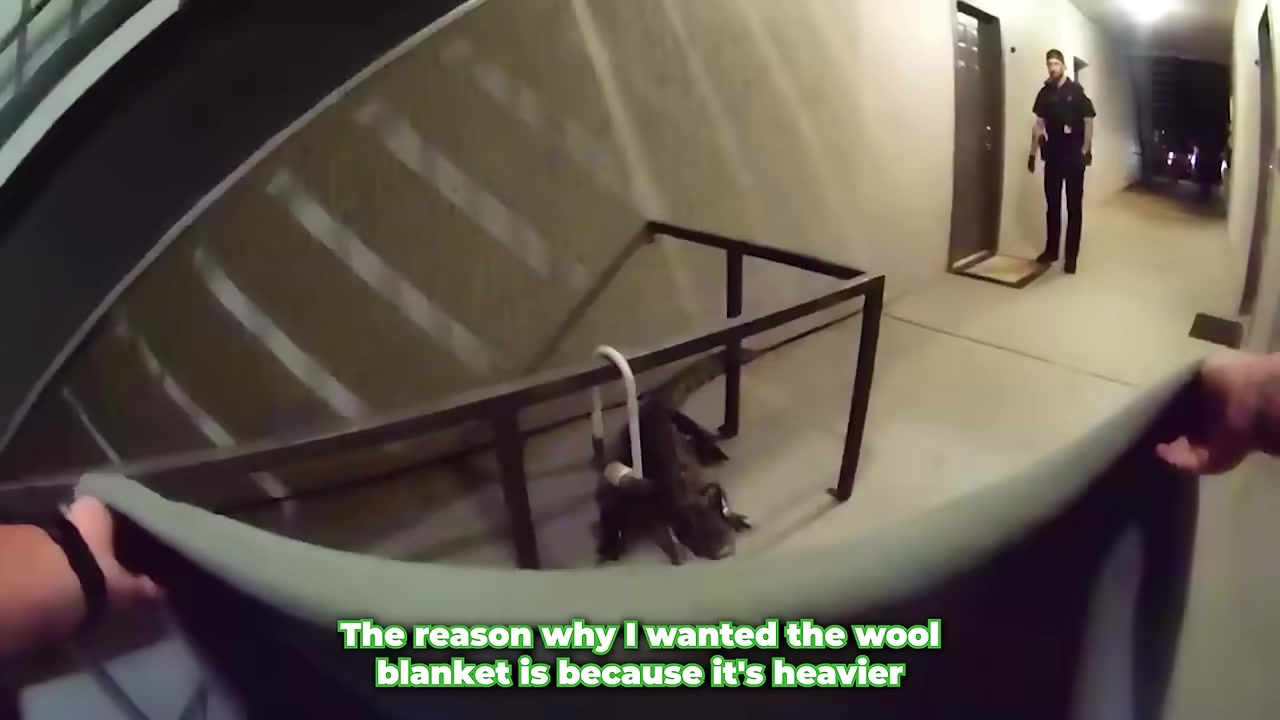
Eventually, a resident provided a heavier blanket, and the dynamic shifted. “The residents gave it to us. They said we can keep it,” an officer announced. With the more substantial wool blanket in place, they had much better control. One officer explained the technique: “I can lift his jaw up again and grab it. So, cuz you have both the bottom and the top is when you have the most control.”
Once they had the gator’s head secured under the heavier blanket, duct tape became the next tool. They needed to secure the gator’s mouth shut. One officer shared a key fact about alligator anatomy: “You only need 15 lbs of pressure to close a gator’s jaw.” The officers worked carefully to wrap the tape around the snout while keeping the nostrils clear for breathing.
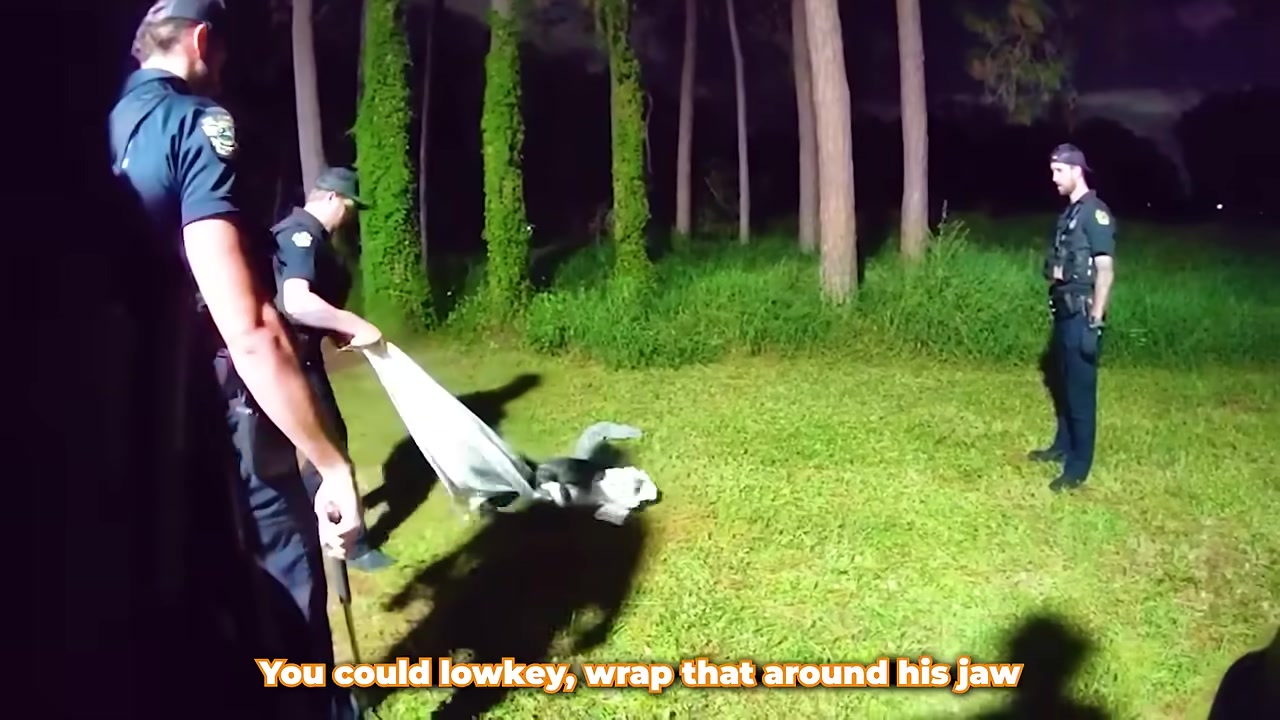
As they worked, one officer shared educational details about the animal. “This guy’s also about about 6 years old,” he said. He explained the growth pattern: “Gators grow about a foot every year that they’re alive for the first eight years. And then after that, they grow an inch or two a year. So the real big gators you see, they’re 40, 50, 60 years old.”
With the gator finally restrained, the officers prepared for transport. They discussed the finer points of securing the animal. One officer suggested taping the gator’s arms, joking, “it’s like we’re handcuffing it.” They placed the blanket back over its face to keep it calm during the move.
The officers then transported the five-and-a-half-foot gator to a nearby body of water, the closest natural habitat to where it had been found. As they prepared for release, tensions remained high. One officer warned the others to stand clear: “GUYS, CLEAR THE HALLWAY.”
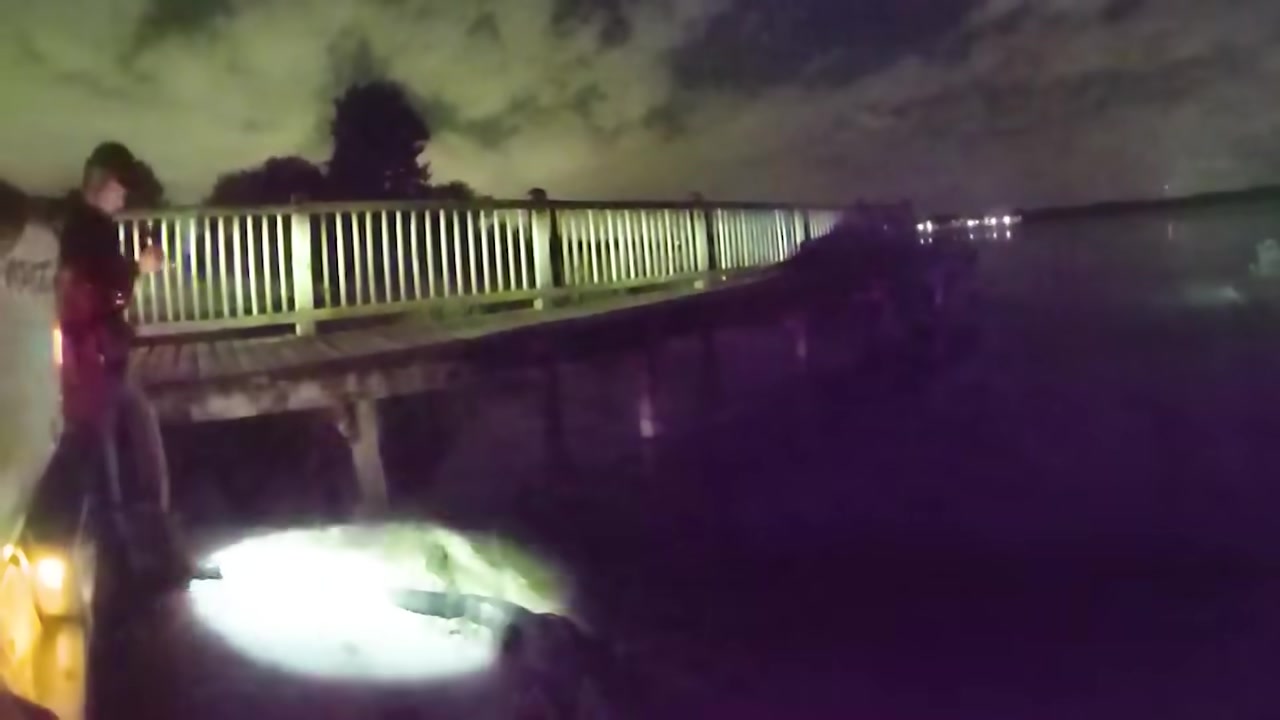
At the water’s edge, the release didn’t go smoothly. The gator resisted and thrashed. Officers encouraged it to enter the water. “Come on, Bobo,” one called out. “Keep going. Yeah,” another urged. Finally, the gator moved into the water and disappeared beneath the surface.
The entire operation showcased the challenges Florida law enforcement faces with wildlife encounters. Fish and Wildlife generally considers an alligator a nuisance if it’s at least four feet long and poses a threat to people, pets, or property. This five-and-a-half-foot animal in an apartment hallway clearly qualified. The officers handled the situation without a catch pole, which would have made the job significantly easier by allowing them to maintain distance while securing the animal.
“Nice and healthy and gone,” one officer said as the gator finally swam away to safety. The apartment hallway intruder had been successfully relocated back to where it belonged.