

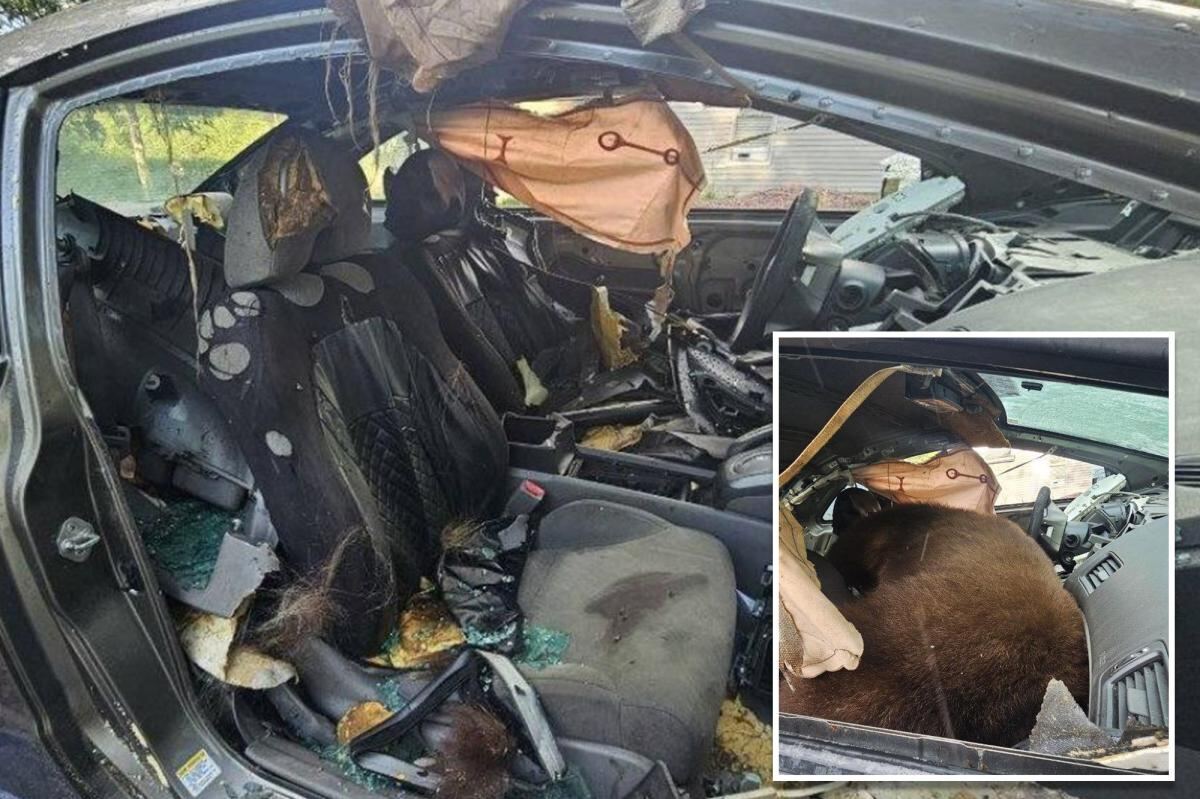
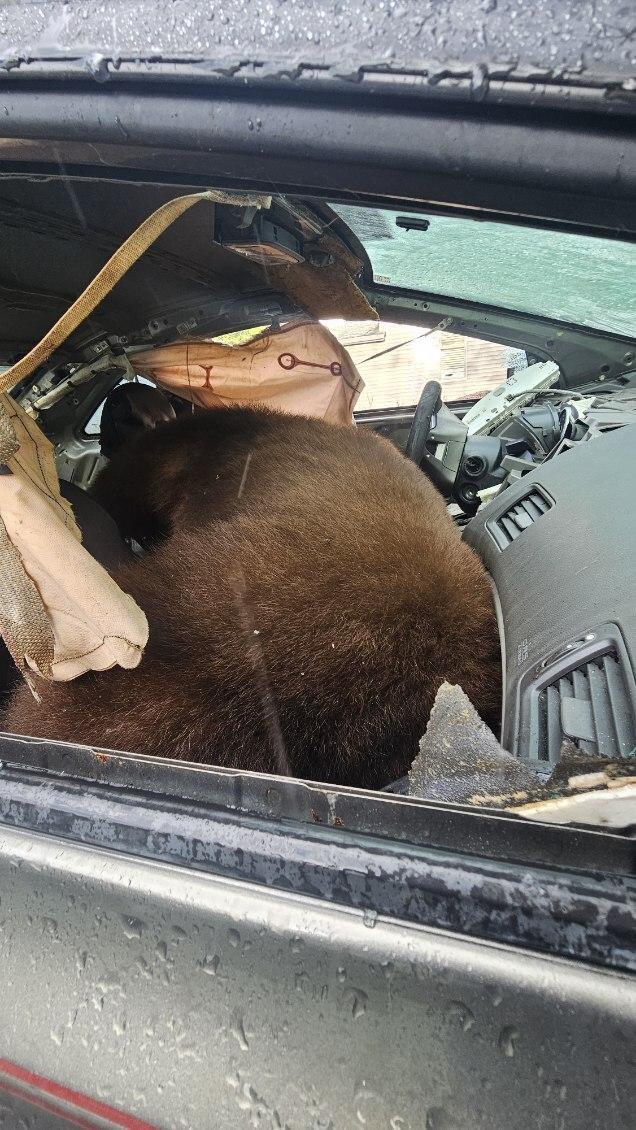
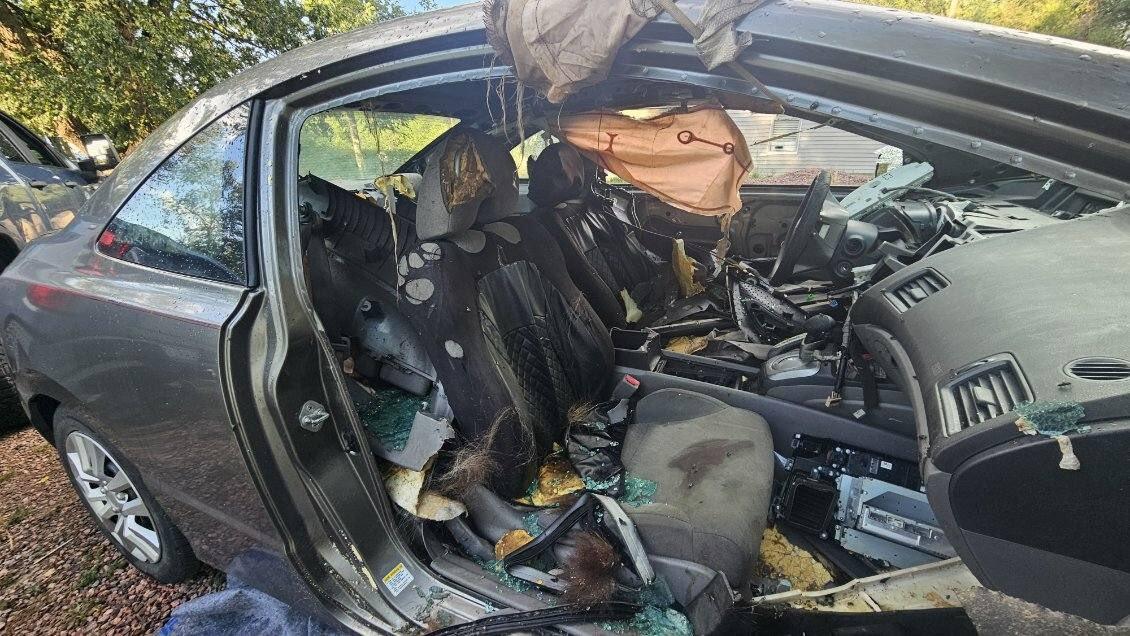
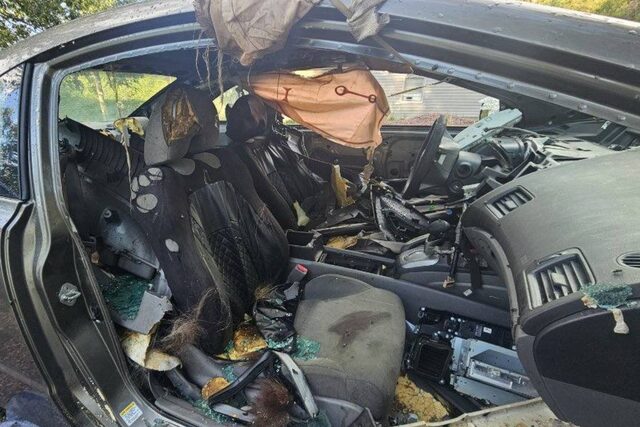
A black bear was found dead in Colorado Springs after spending days trapped inside an unlocked vehicle while trying to claw its way out.
The roughly 250- to 300-pound animal destroyed the car’s interior during its desperate escape attempt before succumbing inside the vehicle, Colorado Parks and Wildlife officials confirmed. The bear’s body lay undiscovered for several days in the summer heat before being found.
Travis Sauder, a CPW wildlife officer, told The Denver Gazette that bears are smart and dexterous enough to open unlocked car doors while searching for food, but can struggle to escape if a door closes behind them.
“Typically what happens is they pull the door open, get in, get their food and then they leave,” he said. “But sometimes the door closes behind them, and they have trouble figuring out how to get out.”
The incident comes as Colorado experiences an unusually active year for bear sightings and conflicts. CPW received 6,129 reports of bear sightings and conflicts between Jan. 1 and Aug. 13, nearly double the 3,115 recorded during the same period last year. The number has already surpassed the 5,299 reports recorded during all of 2025.
Wildlife officials have linked the increase in encounters to poor natural food conditions. Low snowpack and late freezes have reduced some of the food sources bears typically rely on, pushing the animals to travel farther and take greater risks in search of calories, Sauder told the newspaper.
The timing adds to the concern as bears enter hyperphagia, the period when they consume large amounts of food and water to build fat reserves ahead of winter.
CPW advises people living in bear country to eliminate potential food sources and other attractants that can bring bears close to homes, campsites and vehicles. Food, trash and scented items can draw bears searching for an easy meal. CPW advises keeping vehicles clean and removing anything that could attract a bear, including food and other scented products.
“Treat your vehicle the way you would a campsite by removing any attractants,” Sauder told The Gazette. “Whether it’s pet food, a kid’s snack or even flavored bubble gum, get it out of your vehicle.”
CPW also warns against intentionally feeding bears. Bears that become accustomed to food provided by people can lose their natural fear of humans, increasing the risk of conflicts.
This year is on pace to produce the highest number of reported bear-human interactions since CPW began digitally tracking them in 2019.
A similar incident occurred on July 29 in nearby Manitou Springs, when a black bear got into an unlocked vehicle and was trapped for hours, trying to fight its way out and ripping up the interior before wildlife officers freed it. That bear survived, but the repeated pattern of vehicle break-ins highlights how common the hazard has become across the region.
CPW did not immediately respond to Fox News Digital’s request for comment.