

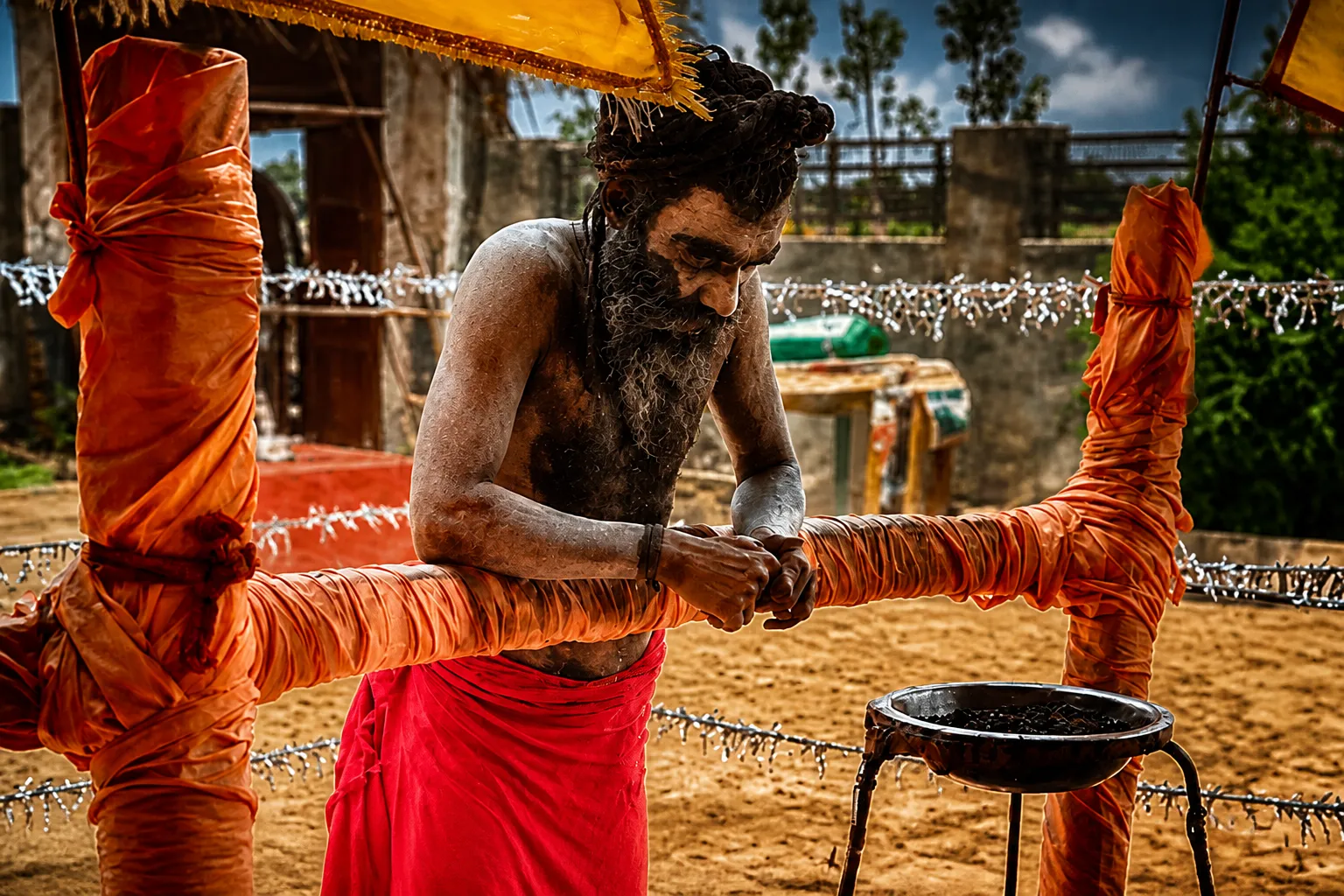
An Indian monk who vowed to stand for 12 years has revealed the severe physical toll after five years without sitting down.
Daulat Giri Ji Maharaj, a member of the Khareshwari sect known as “Standing Babas,” has not sat since 2021, and medical images show his legs have blackened and swollen dramatically. The monk belongs to a religious group whose members take vows to remain standing in the belief that the practice cleanses souls and brings them closer to the goddess Shiva.
Reports from India indicate that Maharaj abandoned his university education to dedicate himself fully to spiritual enlightenment, a path he believes requires extreme suffering and sacrifice. His commitment has left him dependent on swings and harnesses to remain upright when his damaged legs threaten to collapse.
Health experts consulted about his condition noted the severe risks of prolonged static standing. “When standing still for a long time, the veins in the legs must fight gravity to send blood to the heart, but the lack of pumping action in the calf muscles causes blood to pool in the lower extremities,” one medical expert explained.
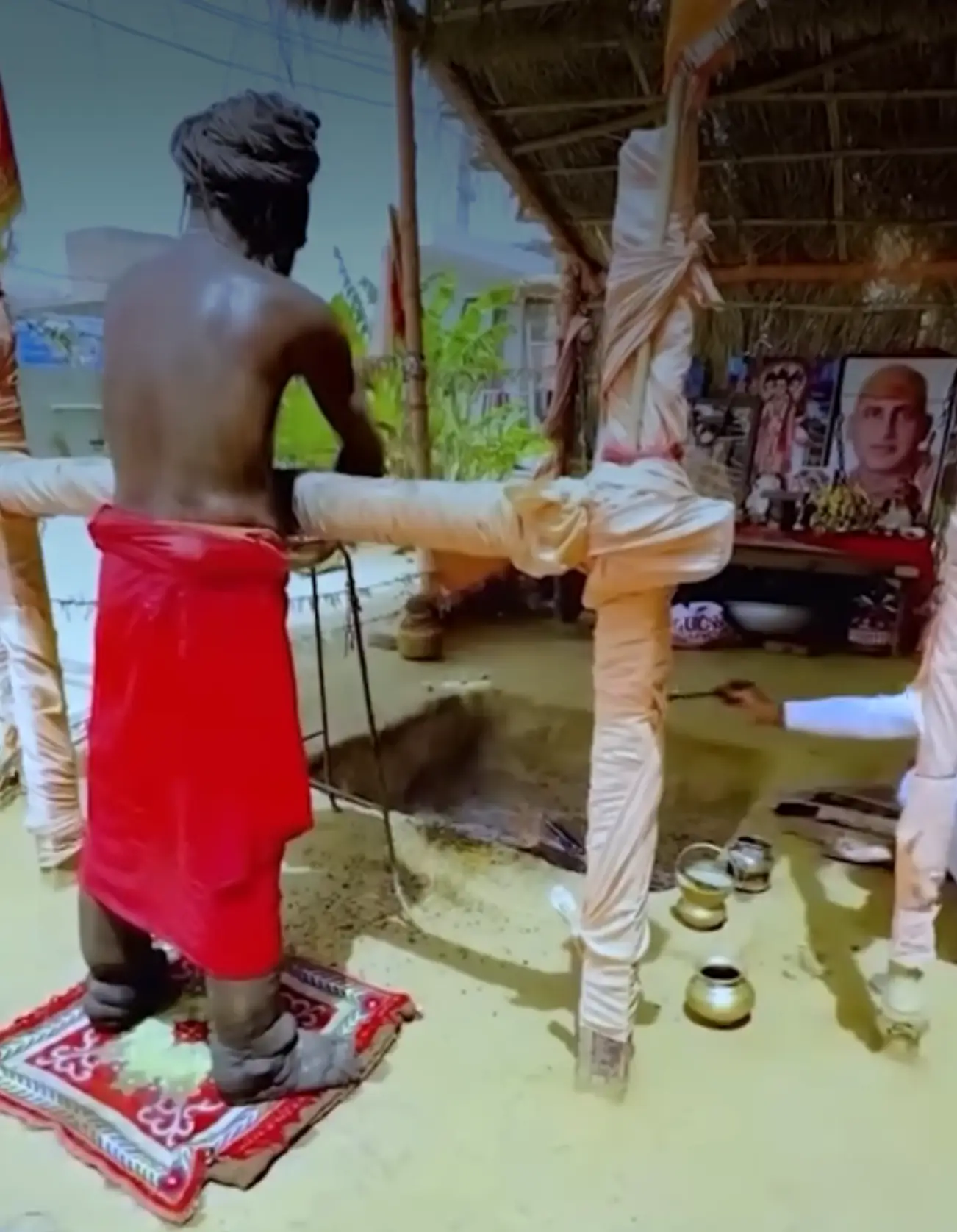
That pooling, experts warn, causes venous pressure to rise, initially producing swelling and pain but potentially degenerating into life-threatening deep vein thrombosis. Maharaj’s visible symptoms align with that progression: chronic swelling and pronounced skin discoloration have already taken hold.
The Khareshwari tradition frames standing as a devotional practice tied to Shiva, the deity regarded as destroyer and source of rebirth. Members of the sect accept physical hardship as a means of spiritual advancement, though Maharaj’s case illustrates the extreme bodily cost of such vows.
Despite his deteriorating condition, the monk remains determined to complete the full 12-year commitment. Volunteers currently assist with his daily care, supporting him through the physical challenges that have intensified as the years have passed.
Doctors monitoring similar cases of prolonged standing have consistently warned about circulatory damage, noting that the human body evolved for a mix of rest and movement rather than continuous load-bearing in a fixed position.
Maharaj now relies entirely on external support structures to maintain his upright posture, his legs no longer capable of sustaining his weight independently. The harnesses and swings that keep him vertical have become essential equipment rather than occasional aids.
Images and video of Maharaj’s severely discolored and enlarged legs circulated widely, prompting both shock at the physical damage and debate about the limits of religious devotion. The footage, which some outlets warned could be distressing, showed extremities that had darkened to an alarming degree after years of compromised blood flow.
His supporters continue to assist with the logistics of his vow, though medical observers have expressed concern about irreversible tissue damage and the elevated risk of clot formation.
The monk’s seven remaining years will test both his spiritual resolve and the capacity of his caregivers to manage a body increasingly strained by its own immobility.