

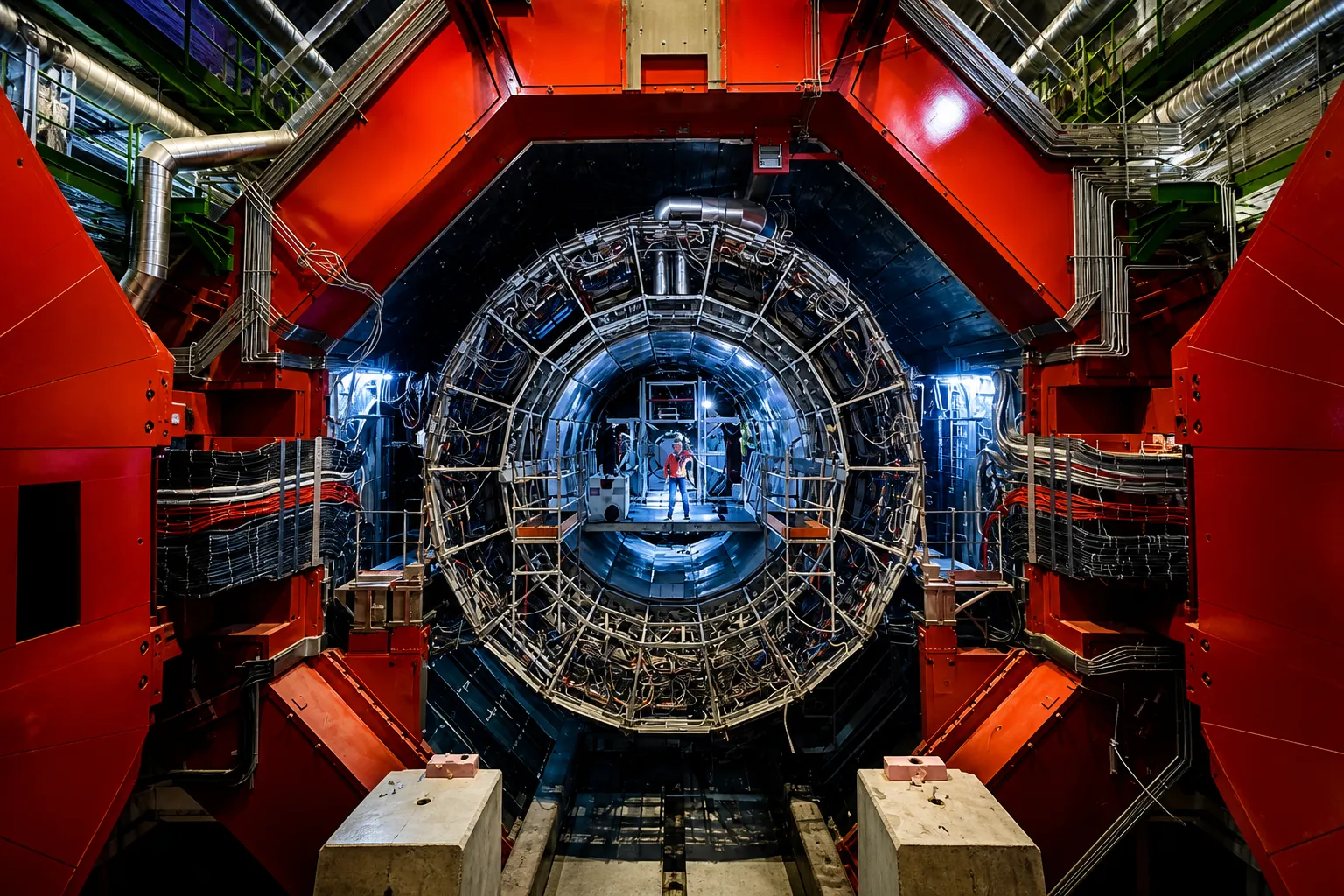
European physicists have smashed together two of the tiniest atoms ever used to recreate a miniature version of the universe’s first moments.
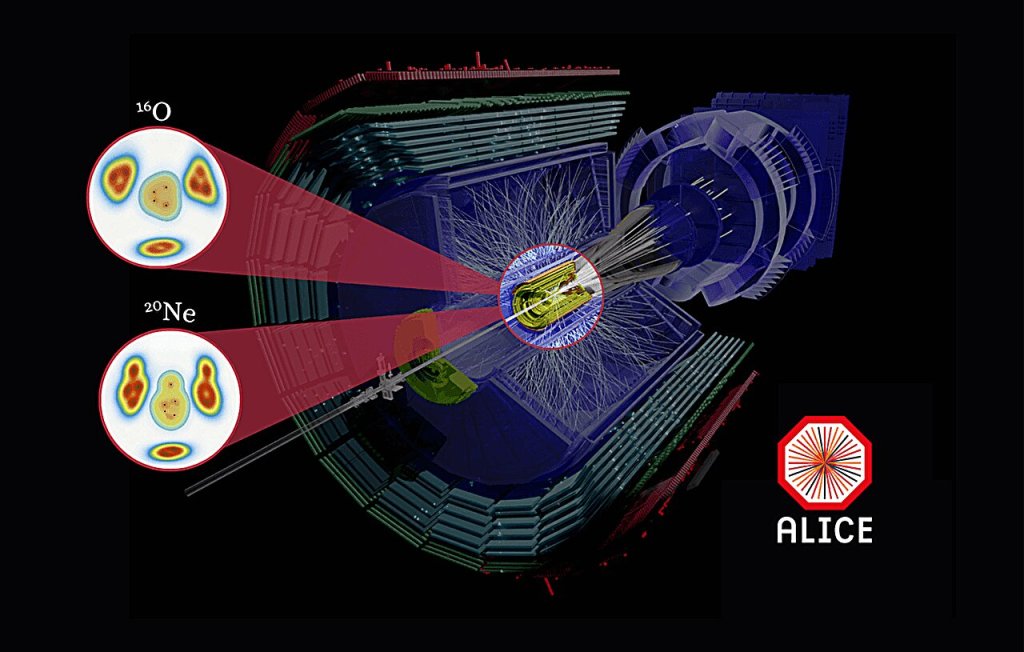
The breakthrough came from researchers at the Niels Bohr Institute in the Netherlands, who fired oxygen-16 and neon-20 nuclei into each other at nearly the speed of light. Their target was quark-gluon plasma, the superheated “soup” of particles that filled existence immediately after the Big Bang, before anything recognizable as matter had formed.
Until now, physicists believed creating this primordial state required slamming heavy atoms like lead together. The Dutch team proved otherwise.
“We have pushed the boundary for how small the atomic nuclei can be while still re-creating this primordial matter — what you could call a ‘little big bang,'” said You Zhou, who led the study, in a statement.
The collision produces a droplet of quark-gluon plasma that expands and cools instantaneously, far too quickly for direct observation. Scientists instead analyze the particles left behind in the aftermath, and those remnants delivered a surprise.
When two oxygen atoms collided, the resulting particles sprayed outward in a rounded pattern. The neon-neon collision told a different story: the debris emerged shaped like a bowling pin, matching the true geometry of a neon nucleus. This unexpected finding gave researchers a way to visualize atomic shape with the naked eye through particle tracks, something impossible through direct observation.

“We now know more about the fundamental conditions required for matter to transition into this extreme state,” Zhou explained.
Emil Gorm Dahlbæk Nielsen, a postdoctoral researcher at the Niels Bohr Institute and coauthor, added that “by studying how the particles move after the collision, we can gain insights into atomic nuclei that are otherwise difficult for physicists to obtain.”
The findings appeared in the journal Physical Review Letters.
“Hopefully, this will help us better understand how the plasma behaved during the first moments of the universe — and how it later evolved into the forms of matter that everything around us is made of,” Zhou said.
The standard Big Bang theory holds that the universe began as that unimaginably hot quark-gluon soup, with particles packed together before atoms, stars, or galaxies existed. The new results add fresh evidence supporting this framework, though scientific consensus has begun to fracture around whether there was ever a “bang” at all. A competing “Big Bounce” theory proposed by other researchers suggests the universe rebounded from a collapsing black hole, leaving detectable traces in black holes observed today.