


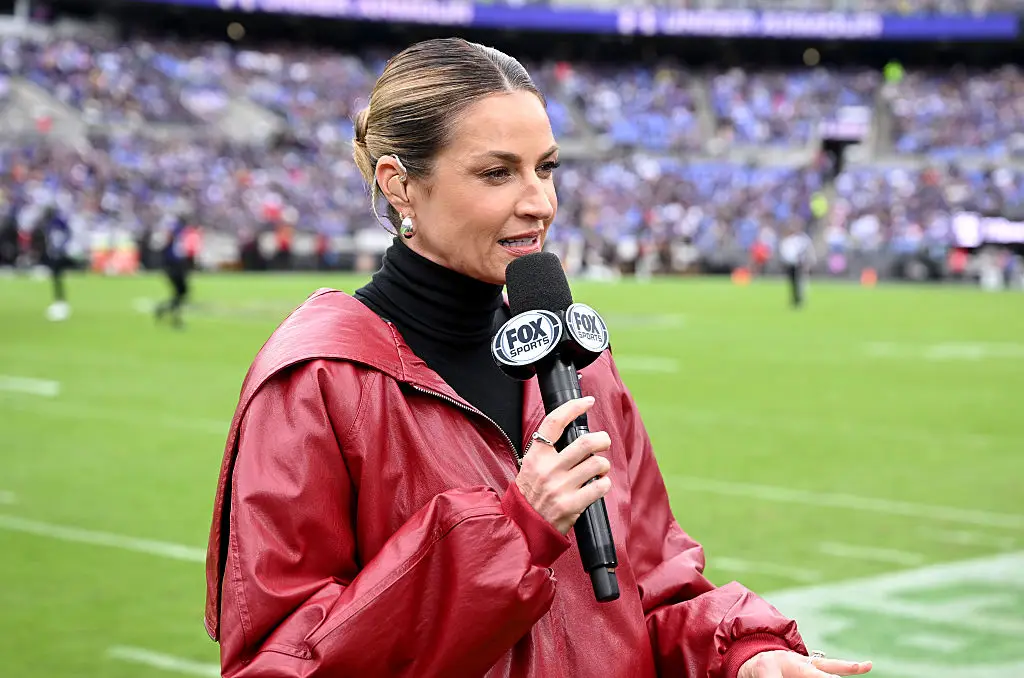
Erin Andrews is still in therapy for PTSD nearly two decades after her hotel stalking ordeal, the veteran NFL sideline reporter revealed in a raw new interview.
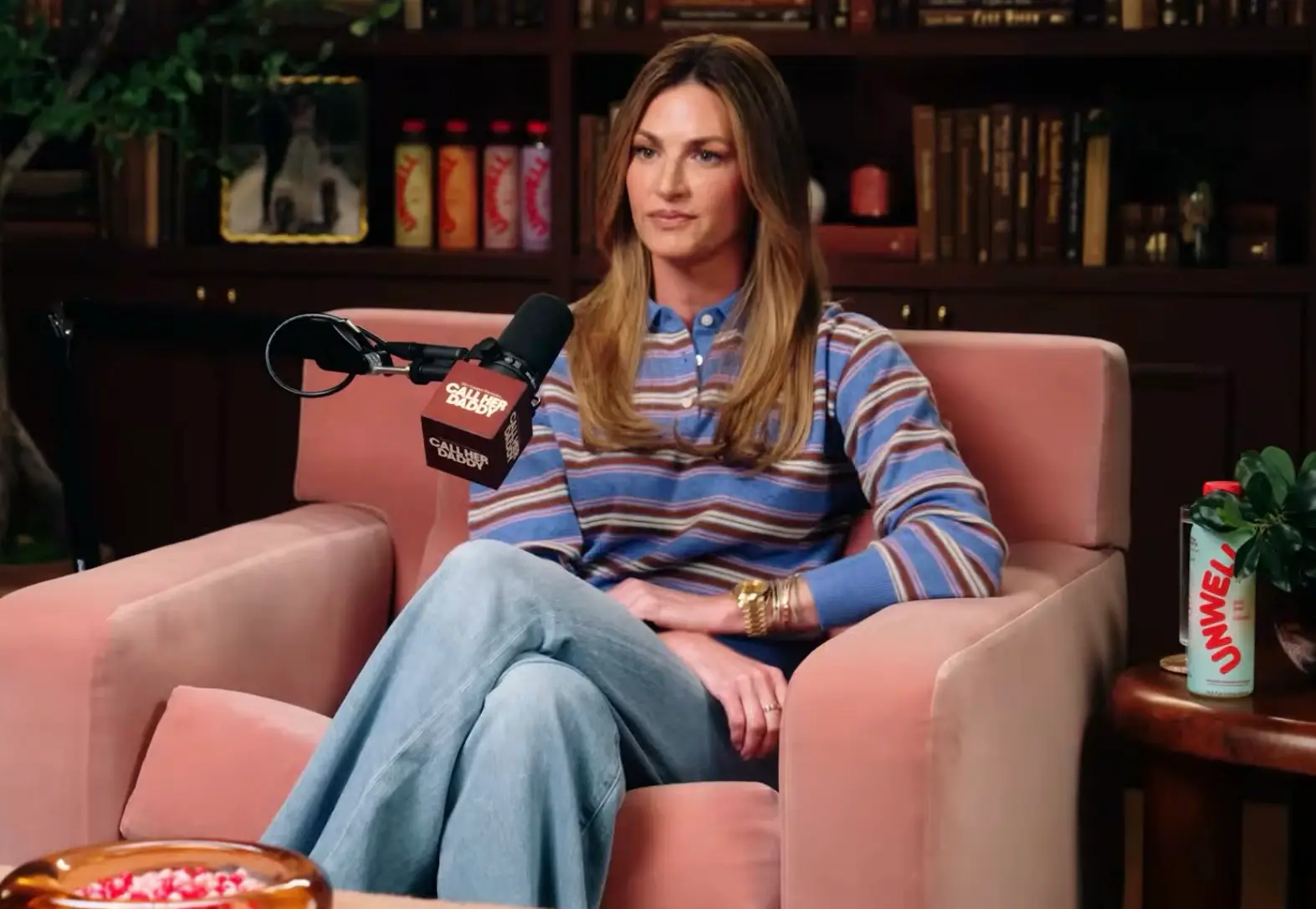
The 48-year-old broadcaster, who spoke with Alex Cooper on Wednesday’s episode of the Call Her Daddy podcast, traced her ongoing psychological struggle back to the 2008 incident that upended her personal life and early television career.
“I still need to continue therapy over it because little things will happen where like the PTSD of it comes up and you’re like, ‘Holy st, that’s from all of it,'” Andrews confessed during the wide-ranging conversation.
Her stalker, Michael David Barrett, had tracked Andrews’ travel schedule across multiple cities, booked adjoining hotel rooms, altered peepholes on her doors, and secretly filmed her undressed before distributing the footage online. The FBI arrested Barrett in late 2009 following a federal investigation, and he ultimately served 30 months in prison.
Andrews recalled the exact moment she learned of the violation during the podcast interview. She had been traveling for career meetings when a friend who worked in digital media began calling her repeatedly.
“I came back from a bunch of meetings and I got a call from my friend… And he had been calling me all day and he just said, ‘Erin, I have to talk to you,'” Andrews recalled. “And he’s like, ‘There’s naked video of you all over the internet.’ And I said, ‘No, there’s not. I don’t do that. I just don’t.’ And he got really really upset. And he goes, ‘Erin, I’m sending it to you.'”
Once she opened the file, the devastating reality became unmistakable.
“I looked at it and I said, ‘I have to go.’ I called my mom and dad right away. I was screaming, crying because it was me and it was me naked in a hotel room walking around,” she explained. “I just [had an] out-of-body experience, started screaming. My dad said when I called he thought I was in a car accident because I was screaming so hard.”
The immediate aftermath brought a crushing fear that her professional credibility had been permanently destroyed. Andrews had been building her reputation in an already demanding, male-dominated industry, and she worried the leak would reduce her to something she never intended to be.
“I just said to my dad, ‘It’s over. My career’s over. Like no one’s going to take me seriously ever again,'” she told Cooper. “That’s all I ever wanted, right? Was people to turn on me on and just say, ‘Oh my gosh, I would love to have a beer with her and talk football with her’… And I just thought, ‘This is so dirty. No one’s going to ever want to work with me again, talk to me again. This is gross. This changes who I am.'”
The public response only deepened her anguish. Rather than receiving support, Andrews faced intense scrutiny and accusations that she had orchestrated the entire incident for publicity.
“I did it to myself—that I was on the cover of newspapers, just a still frame of the video, my naked body, and it said ‘ESPN scandal,'” she recalled. “People thought I did it to myself for publicity or to, you know, help my career, which was the exact opposite of how I was feeling. I was feeling shame, like I would never get work again. I would never be taken seriously.”
The humiliation drove her into complete seclusion.
“I left my home in Atlanta and went to go stay with my mom and dad and I hid in my high school bedroom,” she admitted.
When Andrews eventually returned to broadcasting, the psychological burden accompanied her into packed stadiums across the country. She found herself consumed by the thought that tens of thousands of spectators had seen her without her consent.
“I remember walking around stadiums… Some stadiums have 100,000 people, thinking everybody in the stadium has seen me naked and I didn’t have a choice,” she confessed. “Just if I would talk to people, I feel like in the back of their head they’re thinking about it.”
Paradoxically, the football field itself became her refuge.
“My safe place, and I am so proud of this, was the football field,” she said. “Which is wild, because you’re sitting there and you’re reporting to 20 million people and how is that your safe place? But it’s been for a lot of stuff… That’s how I dealt. I threw myself right back into work.”
Andrews channeled her experience into a landmark legal battle that reshaped industry standards. In 2016, a Nashville jury awarded her $55 million in a civil lawsuit against Barrett and the hotel management companies, establishing that the hotel had been negligent in disclosing her room information and placing Barrett in the adjacent room.
“Hotels have to go about things differently… Luckily a lot of hotels had to watch my trial and see changes need to be made and security measures,” Andrews noted.
The verdict forced sweeping security overhauls throughout the hospitality industry, including strict policies preventing hotels from revealing guest room numbers to third parties.