

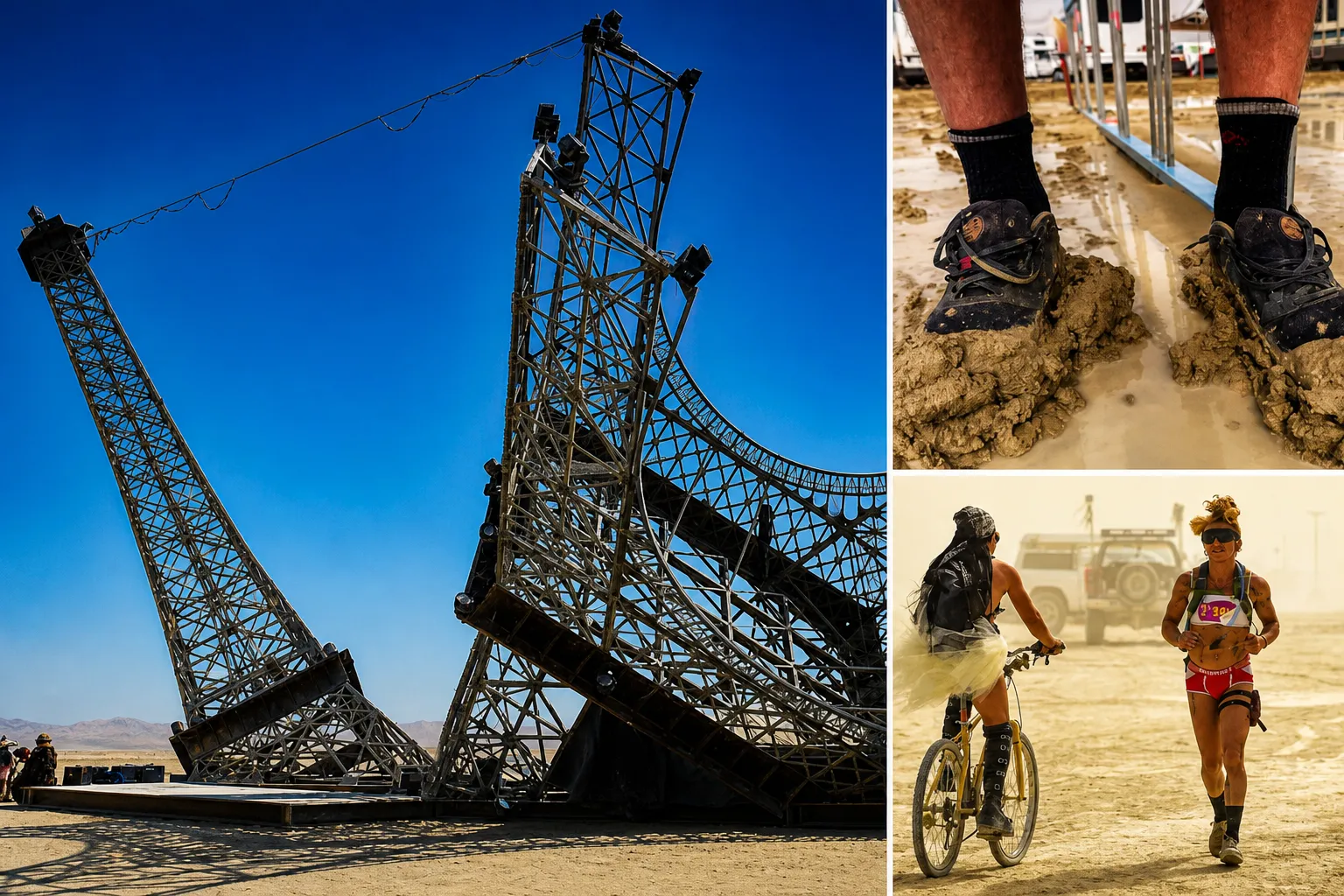
A man in his mid-50s died at the Burning Man festival after suffering a medical emergency amid severe weather that locked down the Nevada desert event.
The unidentified man was taken to the camp’s emergency care center and pronounced dead there, according to a notice from the Burning Man Project. His identity would not be released until his family had been notified, organizers said.
“Our thoughts and deepest condolences are with the participant’s family, friends, and those affected by this loss,” organizers said in their statement.
The death occurred Thursday as heavy rain forced organizers to close the festival’s main entry and exit gate in the Black Rock Desert. The closure left tens of thousands of attendees stranded in muddy conditions, with vehicles banned from movement.
Organizers instructed anyone still planning to travel to the event to delay their arrival entirely. Those already on the playa were told to avoid driving their vehicles and to shelter in place.
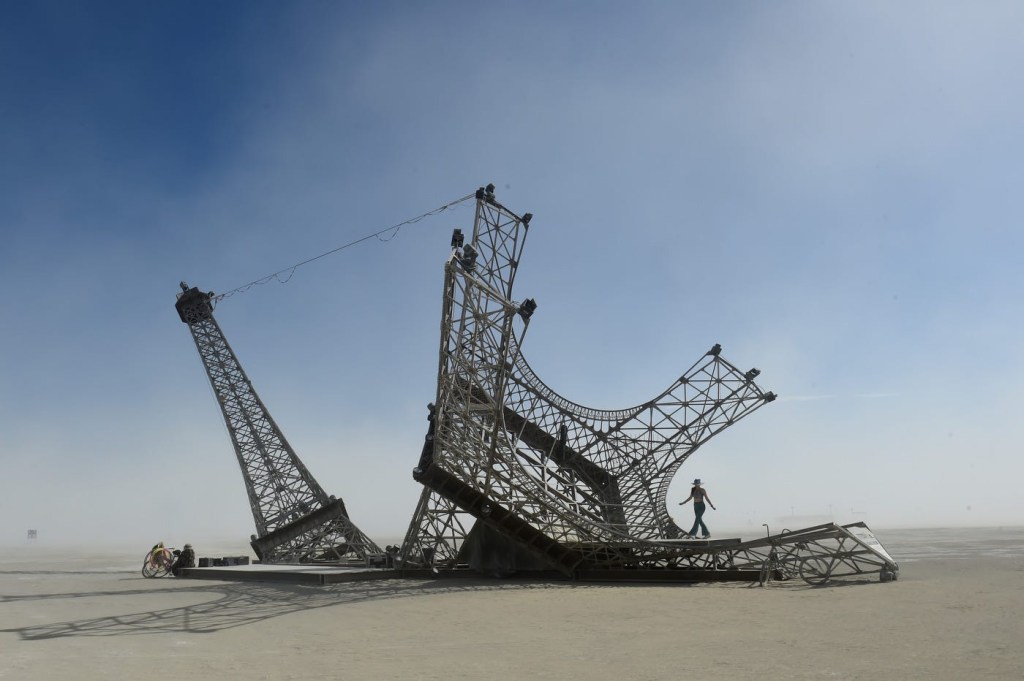
The medical emergency and subsequent death added a grim layer to an already chaotic situation that saw more than 70,000 attendees trapped without reliable access to food, water, or escape routes. The muddy terrain rendered many vehicles immobile, turning the temporary city into an isolation zone.
The timing carried an additional dark resonance. The death fell near the anniversary of the first recorded homicide in the festival’s history: the fatal stabbing of Vadim Kruglov, 37, on August 30. Kruglov was found stabbed in the neck inside a tent, a killing that had already marked a violent turning point for the decades-old counterculture gathering.
The Burning Man Project has faced mounting scrutiny over safety protocols as the event has grown from a small desert gathering to a massive commercial enterprise drawing global attention. Weather-related disruptions have become more frequent, though rarely with fatal consequences attached.
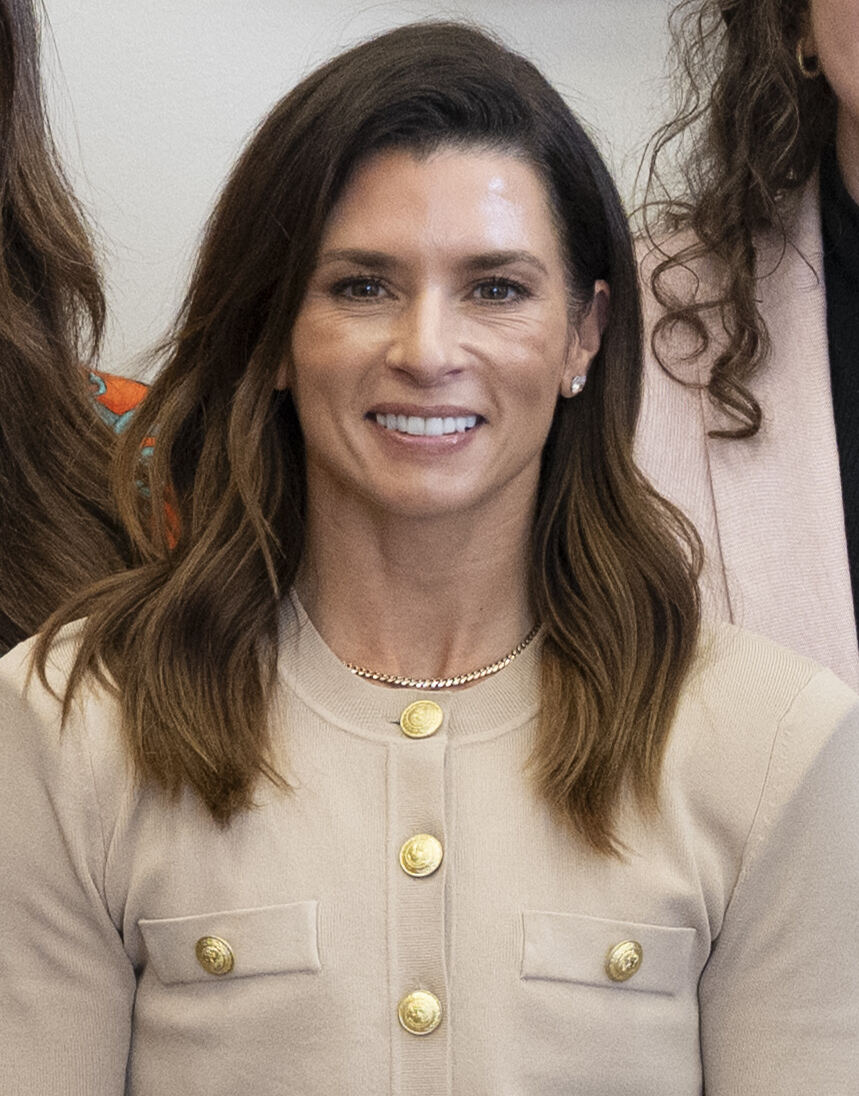
Former NASCAR star Danica Patrick was among those who documented her escape from the muddy conditions, posting on social media that she had been “stuck” but “made it out” as the situation deteriorated. Her account offered a rare celebrity window into the deteriorating conditions that most attendees could not flee.
The closure of the gate system represented an unprecedented level of disruption for an event that prides itself on radical self-reliance and the temporary suspension of conventional social structures. Medical emergencies in such isolated conditions face compounded response challenges.
Organizers have not indicated when full mobility will be restored to the remaining attendees, though weather forecasts suggested continued precipitation through the weekend.