

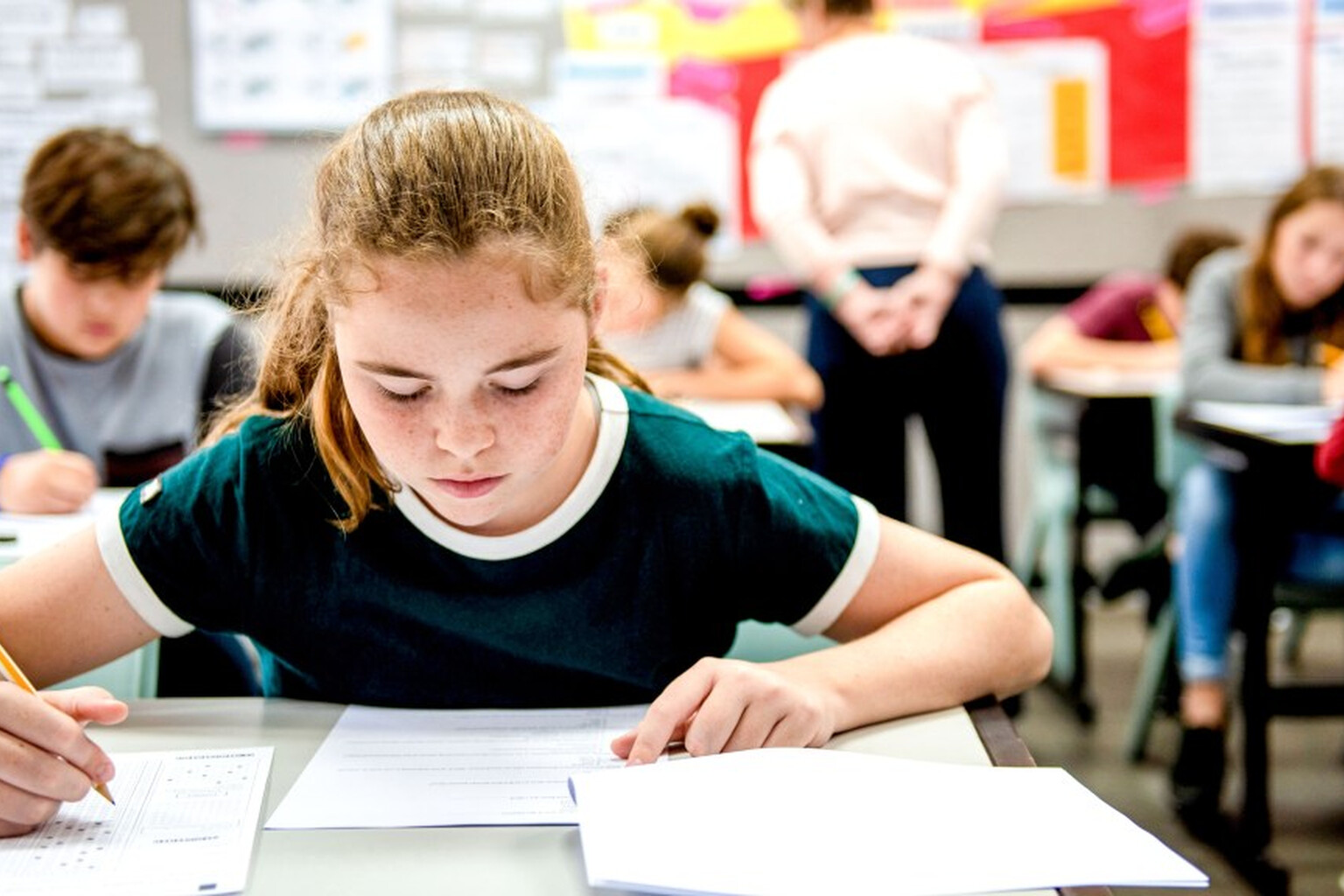
Global test scores have crashed to their lowest level in two decades, with the official who oversees the exam tying the collapse directly to students’ deepening dependence on artificial intelligence and social media.
The 2025 Programme for International Student Assessment (PISA), administered by the Organization for Economic Co-operation and Development (OECD), revealed that reading and mathematics scores among 15-year-olds plunged nearly 20 points this cycle alone. Some 760,000 students across 91 countries sat for the triennial exam, which experts and lawmakers worldwide treat as the leading indicator of global student aptitude.
Mathematics scores have now fallen on almost every PISA test since 2006, dropping 32 points across that span, while reading scores have sunk 34 points since 2000. Science scores declined 17 points since 2006, a comparatively modest slide that still alarmed researchers tracking the long erosion.
The 2025 reading results disturbed officials most profoundly, since reading proficiency correlates strongly with problem-solving ability across every academic discipline. Students today are performing at levels roughly a full school year behind their counterparts from earlier generations.
Mathias Cormann, OECD secretary-general, connected the dismal numbers to shifting student habits in remarks to reporters.
“In reading, more screen time and less reading for pleasure have gone hand in hand with weaker results,” Cormann said. “We’re also seeing more hasty reading, students rushing through a text and giving a quick wrong answer.”
The data exposed stark performance gaps tied to technology use. Students who rarely used AI outperformed regular users by approximately 30 points, with scores deteriorating further as usage intensified. Only three countries with widespread AI access managed reading score increases, alongside just four in mathematics and five in science.
Andreas Schleicher, OECD director for education and skills, delivered a blunt assessment to the Financial Times about what effortless technology access costs young learners.
“You don’t get fit by watching sport,” Schleicher said. “If AI makes things easy, it’s not great for you in the long run. It gives you better results, but it doesn’t enhance learning. You have to make an effort. If learning is easy, it’s not learning.”
Social media carved out its own devastating pattern. Students who used it excessively during school hours scored roughly 44 points lower in mathematics than those who barely touched it. The OECD report speculated that the mechanics of platform engagement may be rewiring cognitive approaches.
“We cannot say for sure, but skimming social media feeds and rapidly processing information may be contributing to worsening ability and motivation to engage with complex texts and data,” the report noted.

The United States mirrored most global downward trajectories while maintaining a 24-point cushion above the worldwide reading average. American science scores actually rose 3 points from 2022 and climbed 13 points since 2000, a rare bright spot in an otherwise grim portrait. Mathematics told a different story for the US, which trailed the global figure by 6 points and has fallen 24 points since its 2009 peak. The country failed to crack the top 10 in any subject, placing 27th in math and 13th in both science and reading.
Asian education systems swept the highest rankings across all three categories. China, Singapore and Japan occupied top positions in mathematics, science and reading, extending a pattern of regional dominance that the 2025 results only amplified.
The PISA assessment, launched in 2000 and conducted every three years, asks 15-year-olds to apply reading, mathematics and science knowledge to real-world problems. The 2025 administration marked the ninth cycle of the exam, with participating countries ranging from economic powerhouses to developing nations, making the synchronized global decline particularly striking to researchers who had anticipated isolated regional variations rather than a coordinated plunge.
The next PISA assessment is scheduled for 2028.