

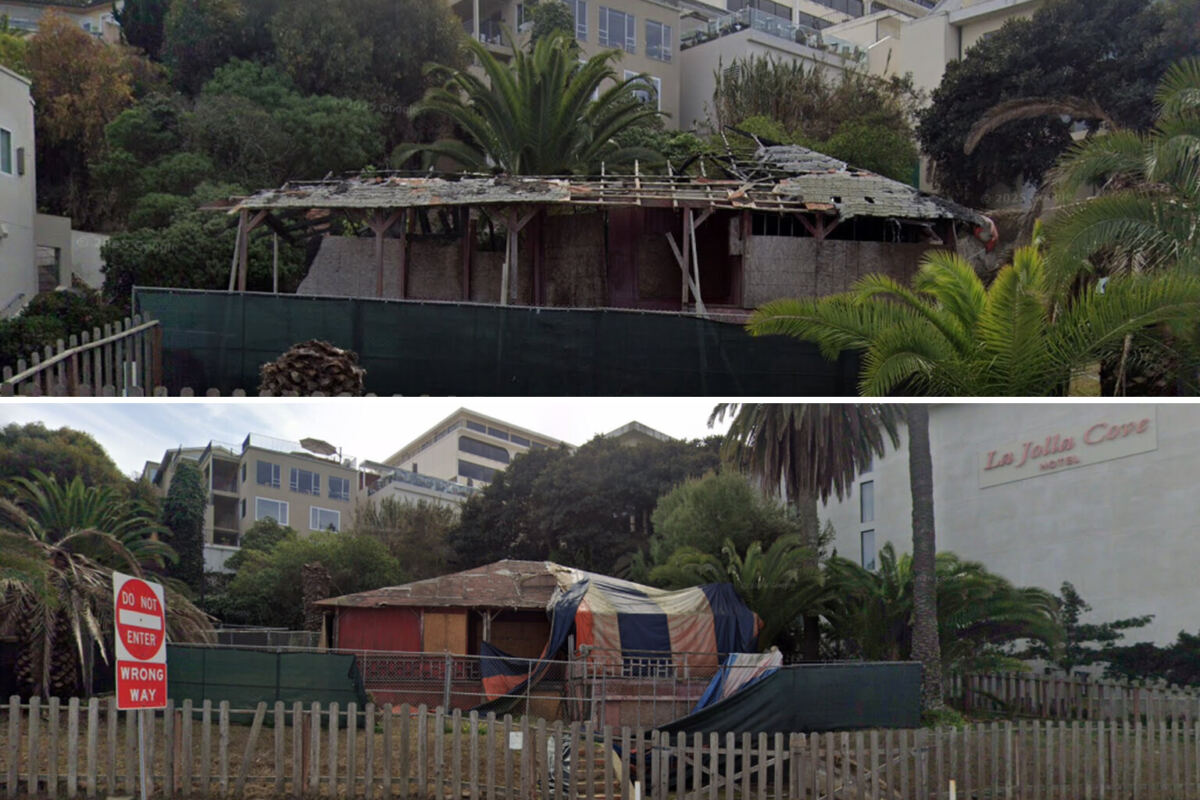
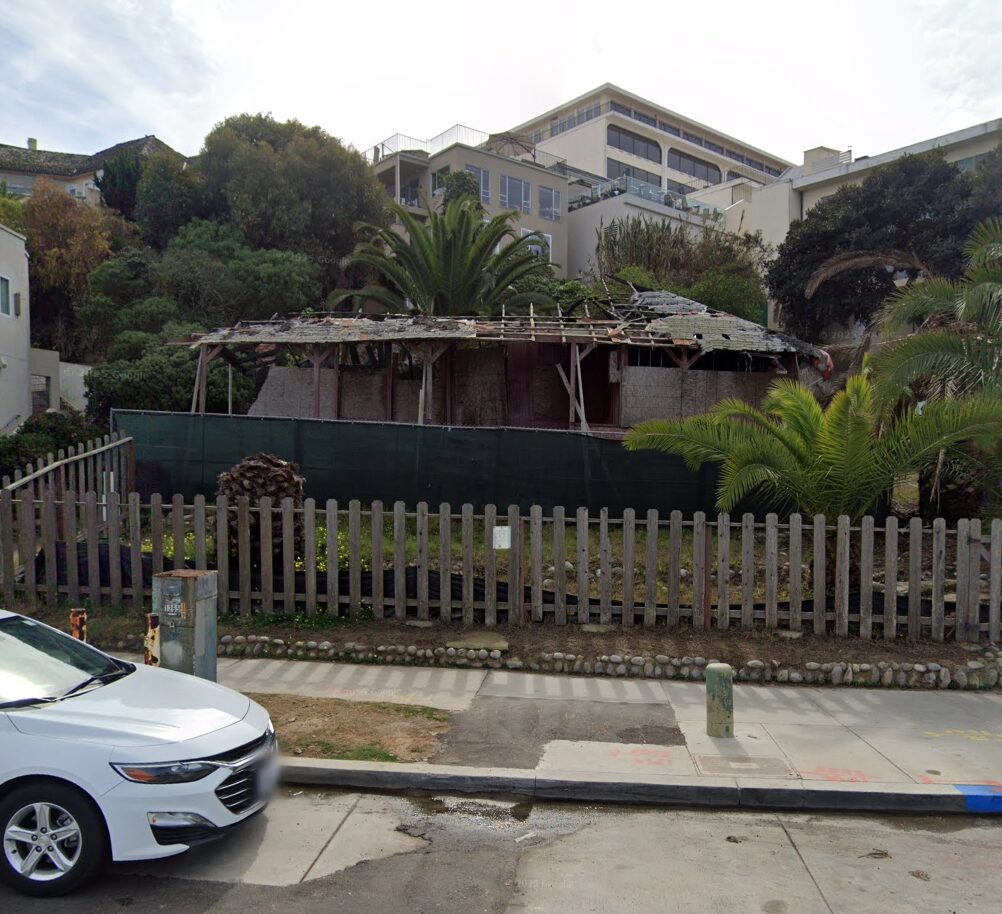
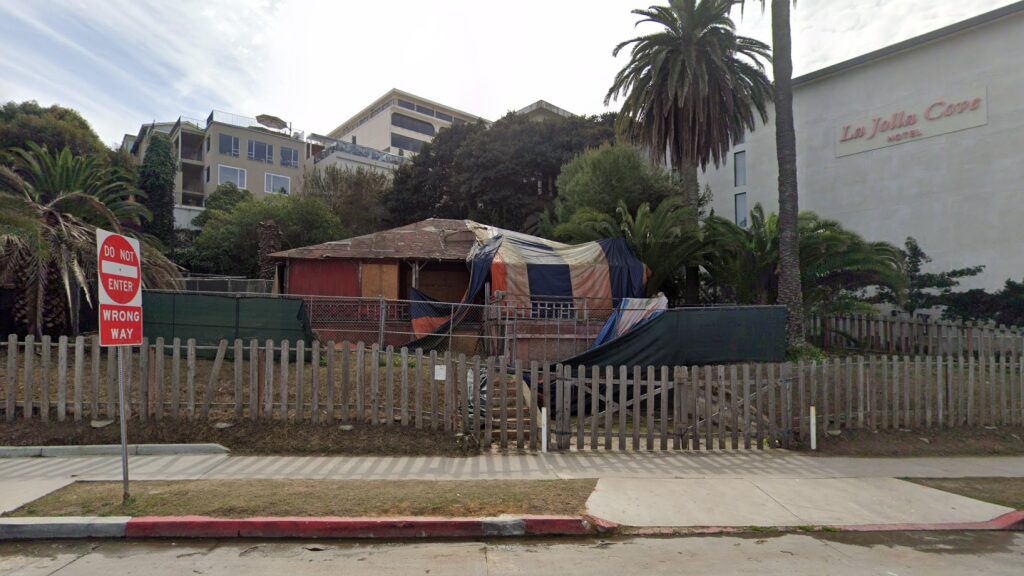
A San Diego community panel voted 22–2 to back an appeal aimed at blocking the demolition of a fire-scarred 1894 cottage overlooking La Jolla Cove.
The Red Rest and Red Roost at 1187 and 1179 Coast Blvd are considered among the oldest surviving wood-framed structures in La Jolla Village. A proposal to tear down the Red Rest while preserving its twin, the Red Roost, is now advancing through city permitting channels, drawing fierce opposition from preservation groups who say the move would gut a century-old coastal landmark.

Dr. Diane Kane, a preservation architect and former staff member of the city’s Historical Resources Board, addressed the San Diego Community Planners Committee on Aug. 25 about what she sees as a broken public trust.
“Over generations, we have created institutions to identify and protect the places that help tell us who we are. Those places are part of our shared inheritance. And that inheritance is held in trust — what happens when that trust is not upheld?”
The La Jolla Historical Society filed its appeal on June 16, contending that removing the Red Rest would damage the integrity of the La Jolla Park Coastal Historic District. Save Our Heritage Organisation, a preservation nonprofit that has long fought redevelopment plans for the site, also formally objected to the demolition.
Lisa Kreideman, president of the La Jolla Community Planning Association, told the Times of San Diego that she felt city officials had effectively surrendered.
“The city was throwing in the towel,” she said, adding that officials are essentially declaring, “demo it, and there’s nothing else historically relevant about this.”
The cottages sustained serious damage in an October 2020 fire, but preservation advocates argue that destruction should not be the endpoint. Community Planning Committee Chair Victoria LaBruzzo pressed that case in an Aug. 28 letter to San Diego City Council President Joe LaCava and the full council, explaining that her panel intervened “because of its potential citywide implications for designated historic resources and districts.”
She wrote that the committee “is concerned about the precedent that could be created when a designated historic resource deteriorates over time and that deterioration is later relied upon as a basis for determining that the resource no longer retains sufficient historic integrity to warrant protection.”
LaBruzzo’s letter also contended that the city failed to analyze how demolition would impact the surrounding cottage ensemble and neglected to meaningfully explore preservation alternatives, such as stabilization, rehabilitation, or reconstruction using salvaged materials.
The letter highlighted a 2002 Notice of Violation issued on the property — nearly eighteen years before the fire — for failure to maintain the structures. Preservation groups have seized on that history to argue that official neglect helped create the very conditions now being cited to justify demolition.
The Community Planning Committee’s lopsided vote signals that resistance extends well beyond niche preservation circles. Local leaders have framed the dispute as a major citywide issue with implications for how San Diego manages its stock of designated historic properties when owners allow them to decay.
The proposal now sits with city officials as appeals and formal objections stack up from multiple community organizations.