

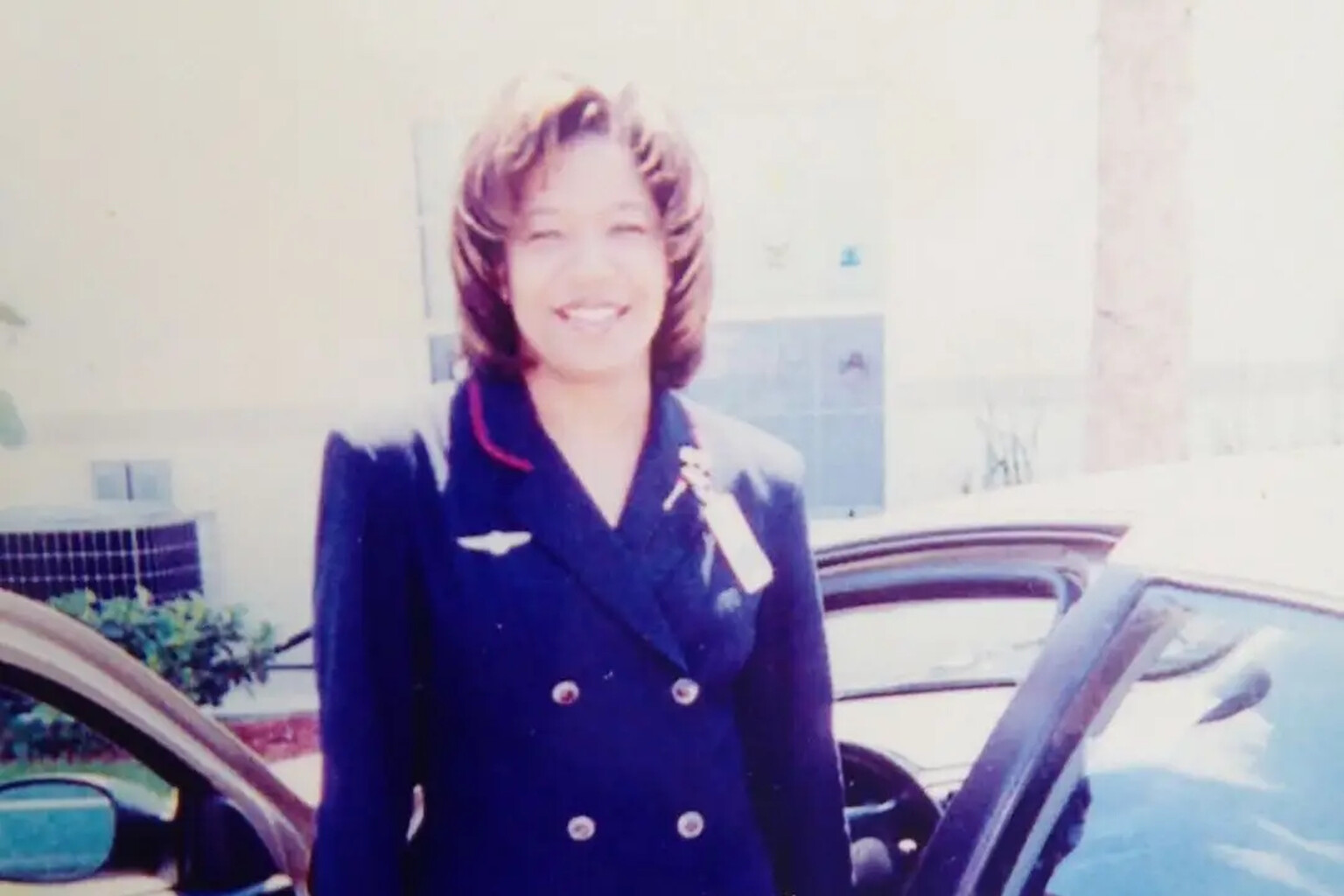
Lorne Lyles still keeps the voicemail his wife left him on the morning of September 11, 2001.
CeeCee Lyles, 33, was working as a flight attendant aboard United Airlines Flight 93 when al-Qaeda terrorists seized control of the aircraft after its departure from Newark International Airport. The plane had been bound for San Francisco before the hijackers rerouted it toward Washington, D.C. She was one of seven crew members on board that morning.
By the time CeeCee reached for a phone, news had already spread through the cabin that two other hijacked planes had struck the World Trade Center and the Pentagon. Unable to connect with her husband directly, she left a message at 9:47 a.m. In it, she told him: “You have to listen to me carefully. I’m on a plane that’s been hijacked.”
She continued, expressing her love for her children before adding: “They’ve hijacked the plane, I’m trying to be calm. We’re turned around, and I’ve heard that there’s planes that’s been, been flown into the World Trade Center. I hope to be able to see your face again baby. I love you.”
At 10:03 a.m., CeeCee reached Lorne again. This time he answered. She described a plan forming among the passengers and crew to retake the aircraft, one that involved throwing boiling water at the hijackers. The couple shared an emotional prayer together before CeeCee’s final words to him: “We’re getting ready to do it now, it’s happening!”
Those words marked the last time Lorne would speak with his wife. Flight 93 crashed into an empty field outside Shanksville, Pennsylvania, killing all 40 passengers and crew on board. The intended target in Washington was never reached.
CeeCee’s background as a former police officer had prepared her for moments of crisis. She had advanced from patrol officer to detective before leaving law enforcement to pursue travel and new experiences as a flight attendant. Colleagues and family members have credited that training with helping her maintain composure under extreme duress, supporting both fellow crew members and passengers as the situation unfolded.
The events aboard Flight 93 emerged as one of the defining stories of collective resistance during the September 11 attacks. Passengers, having learned through phone calls about the fates of the other hijacked aircraft, made the decision to confront their captors rather than allow the plane to reach another symbolic target. The boiling water tactic CeeCee described to her husband was part of this improvised effort to overwhelm the terrorists.
Lorne has preserved his wife’s voicemail for more than two decades, the recording now standing as both personal memorial and historical document. The message captures CeeCee’s deliberate effort to remain composed even as she confronted the likelihood that she would not survive.
Every year on the anniversary of the attacks, ceremonies at the Flight 93 National Memorial in Pennsylvania draw thousands of visitors to the rural crash site. The 40 passengers and crew are honored there for their actions, which investigators and officials have concluded prevented far greater loss of life had the aircraft reached its intended destination.
The National Park Service continues to maintain the memorial grounds, with the next commemoration ceremony scheduled to take place in Shanksville.