

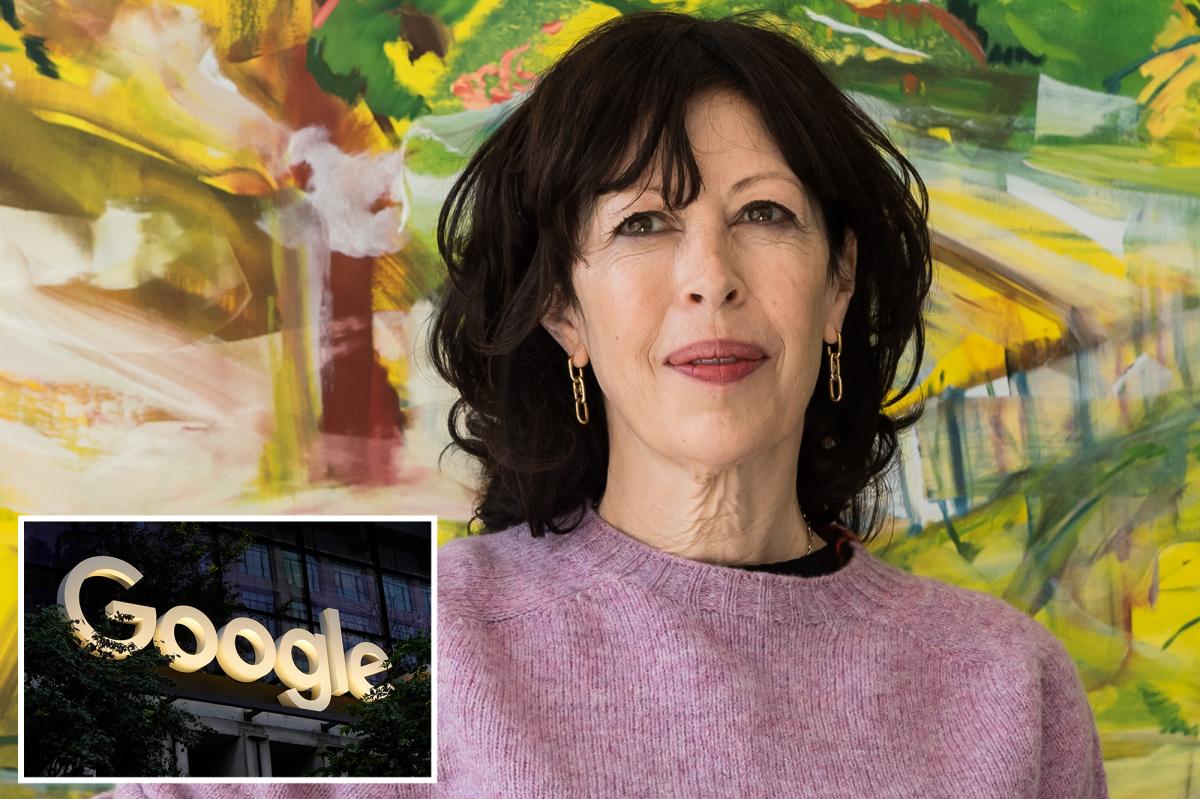
Cecily Brown has taken Google to court to force the tech giant to expose an impostor who has been using Gmail to pose as the celebrated British painter.
Brown, 57, filed a petition in Manhattan Supreme Court on Sept. 9 demanding that Google hand over identifying information tied to the fraudulent account “[email protected],” according to the filing. The address references “Aujourd’hui Rose,” one of her most recognized works held in the National Gallery of Art’s collection in Washington, DC, and mirrors her Instagram handle “aujourdhuirose.”
The acclaimed artist first discovered the scheme in July, when a fellow artist forwarded her a copy of an email sent from the mysterious address. The message opened with effusive thanks for online support before pivoting to a business pitch.
“I wanted to take a moment to express my sincere gratitude for the unwaveringsupport and encouragement you and other artists have shown me. Your engagement, likes, andcomments on my Instagram pages truly mean the world to me; your energy fuels my passion andkeeps me inspired every day,” the email allegedly read, per the filing.
The message then invited the recipient to join her for “an exciting professional opportunity.”
Brown fired off a cease and desist letter to the address shortly after discovering the emails, but received no response.

The painter took her warning public on July 28, posting to her roughly 28,000 Instagram followers that someone was sending emails “pretending to be me.” She made clear she had no part in the solicitations.

“I’m not inviting you to be in a group show and I’m really sorry if you’ve had an email from a scammer,” Brown wrote on the platform.
Her legal maneuver marks an escalation in her efforts to track down the unknown perpetrator, whom she intends to sue once their identity is revealed. The petition represents a necessary procedural step, as she cannot name a defendant in litigation without first knowing who they are.
Brown has spent two decades building a prolific body of work that has made her one of the most prominent painters in contemporary art. Her piece “High Society” fetched $9.81 million at a Sotheby’s New York auction in 2025, establishing a record price for her work.

The case highlights a growing vulnerability for public figures whose established social media personas can be co-opted to lend credibility to fraudulent schemes. The scammer appears to have leveraged Brown’s genuine online engagement with fans and fellow artists to craft a message that would feel authentic to recipients.
Neither Brown’s attorneys nor Google responded to requests for comment on the pending petition.