

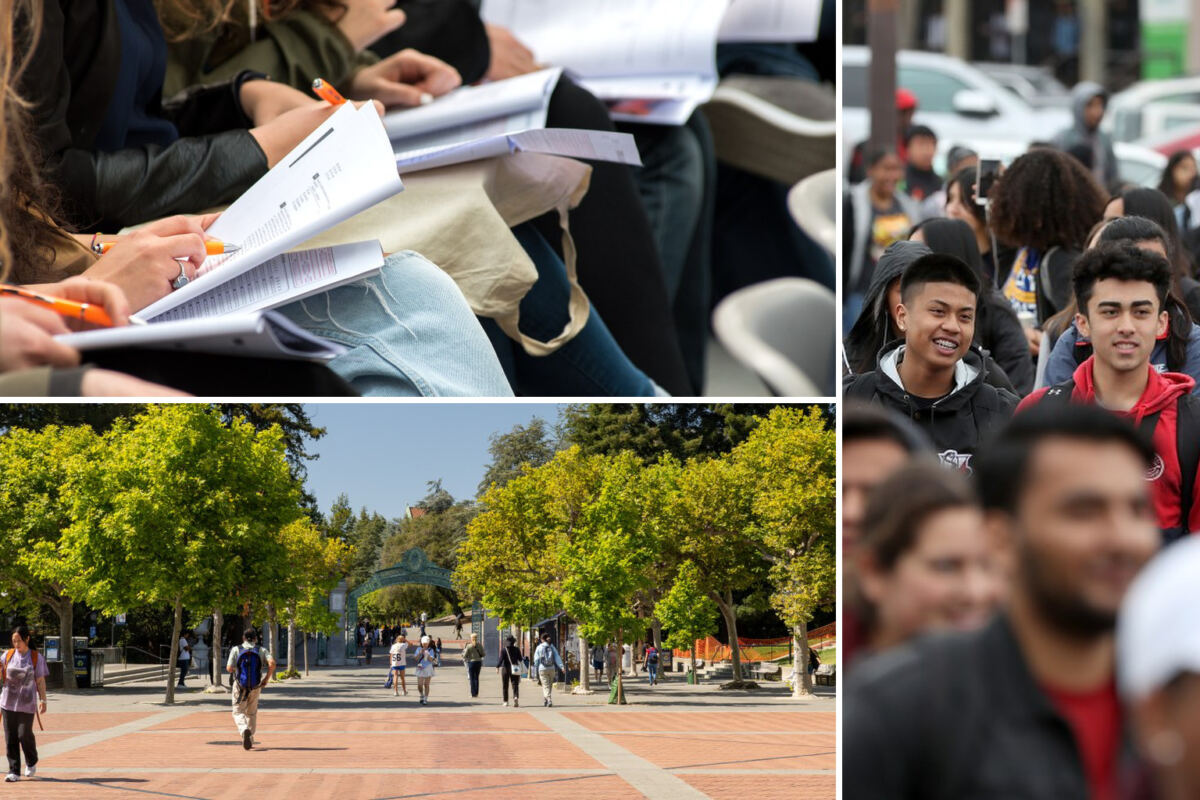
More than 1,200 University of California professors are demanding the return of SAT admissions requirements after finding themselves teaching middle-school math to students carrying flawless high school transcripts.
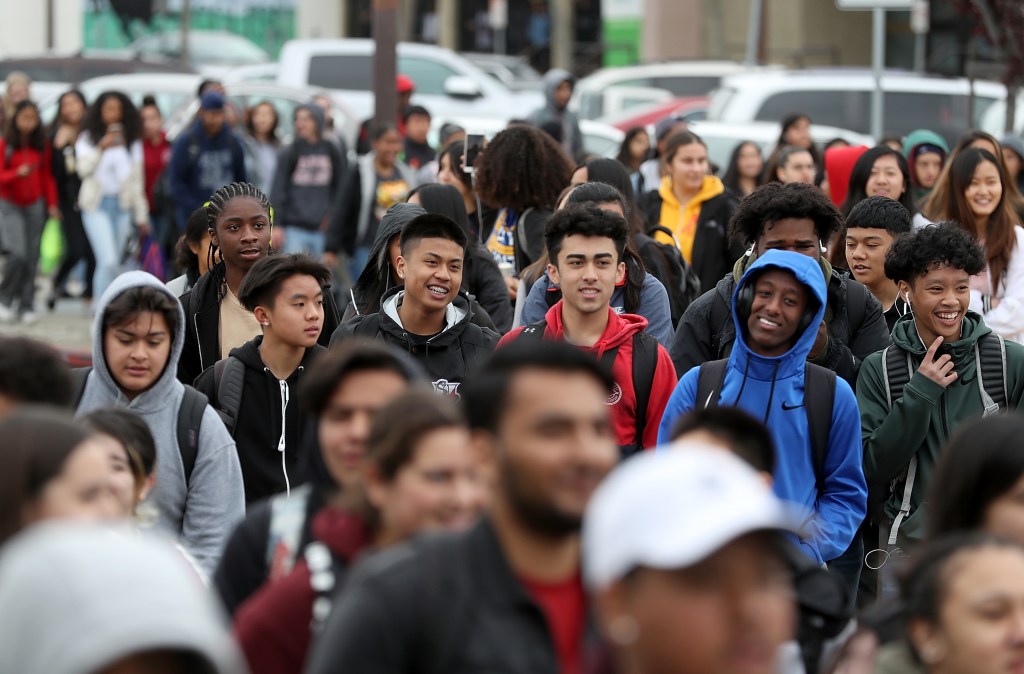
The faculty outcry comes as UC data shows the number of applicants reporting 4.0 GPAs or higher has doubled in a decade, climbing from 52,989 in 2015 to 103,138 for the class of 2025, with a sharp spike during the COVID-19 pandemic between 2020 and 2022. Nearly all of those applicants are California residents, yet state test results tell a starkly different story about what those grades represent.
California’s Smarter Balanced Summative Assessments found just 30.5% of 11th graders proficient in math during the 2024-2025 school year, while English proficiency sat at 57%. Both figures have barely recovered from pandemic lows of 27% and 54.8% in 2021-2022 and remain below pre-pandemic levels, according to state Department of Education data.
“The current admissions metrics, based primarily on GPA and essays, can no longer reliably distinguish readiness for university-level STEM majors in an era of severe grade inflation and AI-assisted application essays,” the professors wrote in an open letter to UC’s Board of Regents this year. They described calculus courses where students lacked foundational skills, forcing instructors to backtrack to arithmetic-level instruction.

The UC system dropped standardized testing requirements in 2020 amid activism claiming the exams disadvantaged non-white students. Now the same institution says it has “accelerated its timeline to review and provide recommendations on standardized testing” in response to the faculty petition, with officials considering whether to take up the request next year.
Glenn Sacks, a social studies teacher in the Los Angeles Unified School District, traced the grading collapse to administrative pressure that intensified during COVID and never relented.
“When I was hired at one LAUSD school, the administrator showing me my classroom — a man I liked and respected — told me, ‘Don’t fail too many kids–remember, it’s easier to replace one teacher than 35 students,'” Sacks told The Post. He said teachers were instructed that significant numbers of failing grades indicated flawed instruction rather than student failure, creating systemic incentives to eliminate D’s and F’s entirely.
Charles Cole, an education advocate who graduated from a California high school in 2001 after attending schools in Oakland, experienced the long-term consequences firsthand. He entered California State University with top marks only to discover he needed remedial coursework.
“Those classes were fairly easy for me. It didn’t take a lot,” Cole said of his high school A’s. “I’m happy and grateful for the grades because it helped me get into college. But the level of preparation was a huge letdown.”
Cole, whose organization Energy Converters supports underrepresented students nationwide, warned that inflated grades create dangerous false confidence. “A large swath of these students are functionally — they’re not on grade level,” he said. “They’re multiple grade levels behind, but they have the confidence of, ‘Hey man, I just graduated with a 3.0. I’m about to go to college.'”

Marc Zawel, co-founder of admissions consulting group AcceptU, confirmed the compression has made top grades nearly meaningless for selection purposes. “A 4.0 simply doesn’t distinguish a student in the way it once did,” he said. “In our work with students, we have absolutely seen grades become more compressed at the top.”
Simon Nicholas, who heads a test-prep tutoring company working with California students, identified pandemic-era “asynchronous classes” as a key accelerator of grade deflation’s opposite. The format let students attend whenever they chose, with material posted online for later access.
“The idea that we can do these things online, well maybe we can. But is it as effective as doing things in person? Probably not,” Nicholas said. He noted that artificial intelligence tools have since compounded the problem, letting students complete work without mastering material.
Sonja Shaw, a candidate for state superintendent of education, placed blame on district leadership passing accountability upward. “Some districts are handing out high marks to students who haven’t mastered basic reading, writing, and math, then passing the buck to colleges that are left dealing with underprepared kids,” Shaw told The Post. “That’s not helping anyone. It’s a disservice that Sacramento has ignored for far too long.”
Nicholas argued reinstating standardized testing would create immediate accountability pressure on high schools. “It would strongly disincentivize” grade inflation, he said, “because it’s embarrassing to say that, you know, we have 48% of our students or whatever with an A, and they can’t crack a 20 on the ACT.”
“It behooves the school then to be more honest, or to be more scrupulous, or more rigorous about its scoring,” he added.
The UC Board of Regents is expected to consider the professors’ request for standardized testing reinstatement next year.