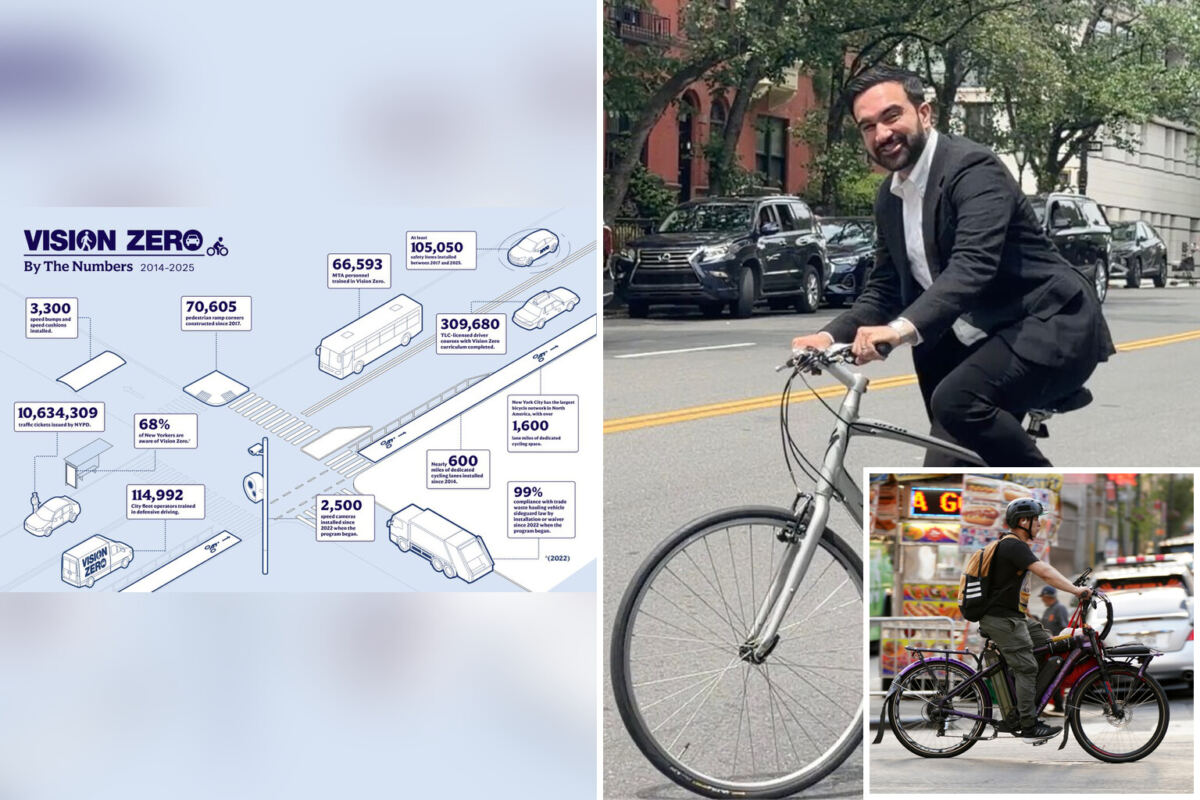
Mayor Zohran Mamdani has unveiled a sweeping 104-page blueprint to eliminate traffic deaths in New York City within a decade.
The plan, titled “Vision Zero Reimagined,” revamps former Mayor Bill de Blasio’s original 2014 initiative that promised to bring the city’s annual traffic death toll from 252 down to zero by 2024. Mamdani, who took office this year, is now resetting that ambitious target with a fresh decade-long timeline and a broader toolkit of car-limiting measures.
The most eye-catching proposal calls for expanding “pedestrian-only” zones and creating “pedestrian-priority districts” across the five boroughs. Yet the document offers scant specifics on where these car-free areas would materialize or what share of the city they would encompass. The vagueness extends to another headline pledge: instituting 20 mph speed limits across “entire neighborhoods,” with no map yet of which communities would see their streets slowed.
The blueprint does deliver some concrete enforcement mechanisms. The city would increase automated ticketing for parking violations, failure to yield, and distracted driving. More cameras would be mounted on MTA buses to catch vehicles that illegally veer into bus lanes and bus stops. These measures build on existing camera programs that have drawn both safety praise and privacy complaints from drivers.
On the pricing front, the plan pledges to investigate higher tolls for oversized passenger cars and to provide “disincentives to private automobile trips, ownership and on-street storage.” The language signals a philosophical shift toward treating car use as a costly privilege rather than a default right in the nation’s largest city.
The plan also proposes subsidizing Citi Bike, the bike-share system owned by Lyft. That detail has drawn notice because Lyft ranks as a major donor to Transportation Alternatives, the advocacy group that has pressed Mamdani to act. The organization staged a dramatic “die-in” protest over the summer demanding that the new mayor update de Blasio’s stalled blueprint.
De Blasio launched the original Vision Zero in 2014 after a year in which 252 people died in traffic crashes. While fatalities trended downward in subsequent years, the zero target proved elusive, and the program had languished without a comprehensive refresh until Mamdani’s announcement Tuesday.
The 104-page document outlines dozens of initiatives, though many remain aspirational rather than operational. The pedestrian-priority districts and neighborhood-wide speed limits would require extensive community board engagement, City Council legislation, and state approvals for certain camera and tolling programs.
Mamdani’s approach represents a notable escalation in the rhetorical war on cars, even as the practical path remains littered with political and logistical obstacles. Previous mayors have struggled to implement street redesigns in the face of fierce opposition from drivers, business owners, and elected officials in car-dependent outer-borough neighborhoods.
The plan arrives as cities worldwide experiment with post-pandemic streetscapes, from Paris’s car-free riverbanks to London’s expanded congestion zone. New York has already tested temporary pedestrian plazas in Times Square and elsewhere, but never at the systematic scale Mamdani’s document envisions.