

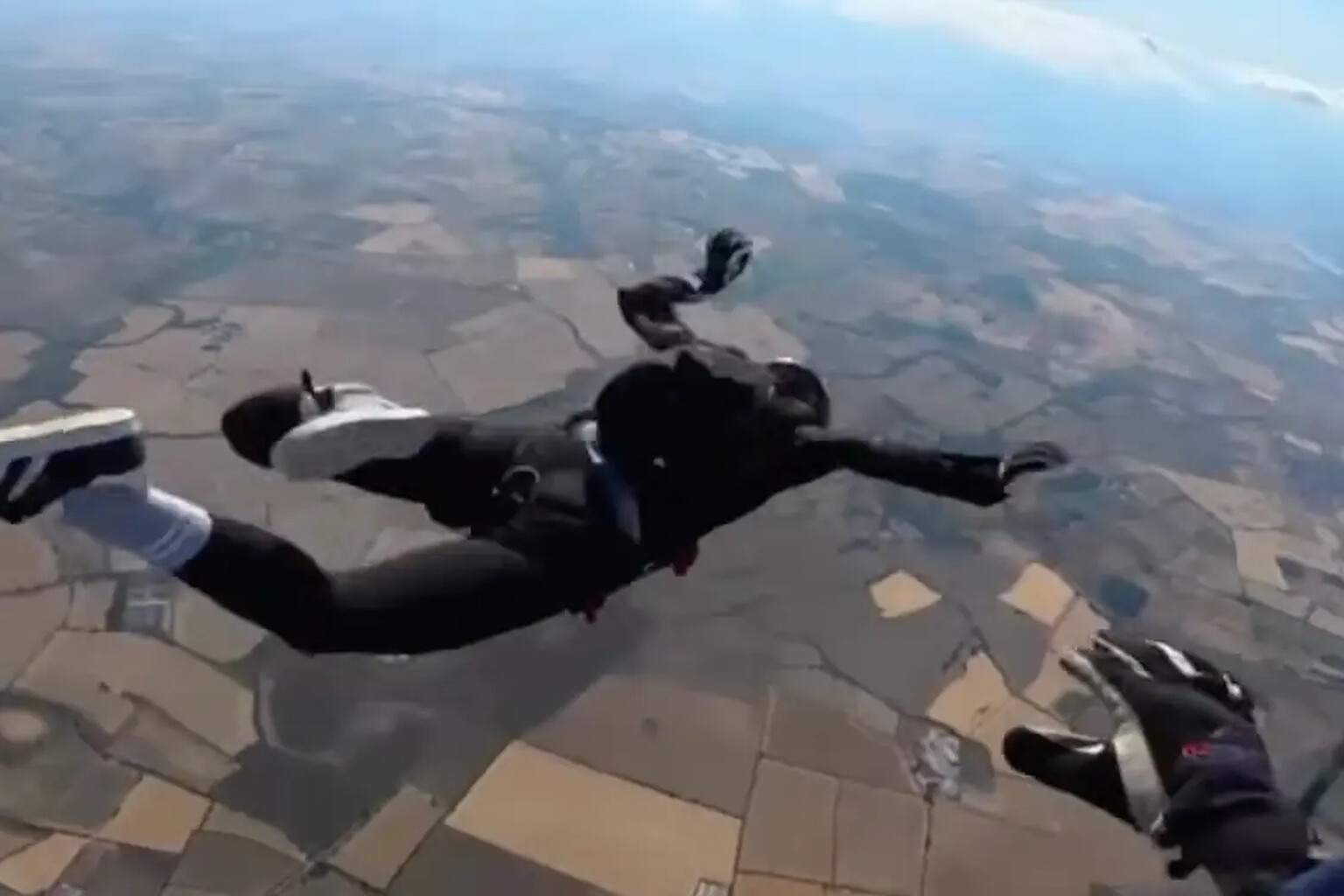
Holly Wiffen has broken her silence on the morning show circuit about how she lived through a 12,000-foot plunge with no working parachute.
Wiffen, 35, sat down with ITV’s This Morning hosts last month to detail the collision that knocked her cold and the eerie calm that followed. She had already completed three jumps that day at her local drop zone with friends before the fourth attempt turned catastrophic.
The impact came roughly 2,000 feet into her descent, when she misjudged her fall speed and slammed into another jumper. “Yeah, it was instant – it would just went black, I don’t even kind of remember leaving the plane,” she told the hosts. She was falling at approximately 150 mph with her parachute still closed.
What came next played out like a dream rather than a nightmare. “And then I just was dreaming of falling – it was just really surreal. I just thought, ‘I’m falling and I’m dreaming about falling’, it was really like kind of peaceful,” she shared.
Her training surfaced through the unconsciousness. “But then I kind of felt like I was a bit unstable, and then in my kind of mind, I was thinking back to my like training – I was thinking, ‘Right, if I’m falling and I’m unstable, I should be arching and trying to reach my parachute’ – and obviously, you can see in the clip that’s what’s kind of happening. But I was out, I was asleep.”
Technology, not training, ultimately saved her. A mandatory automatic activation device detected her rapid approach to the ground and deployed her reserve canopy mere seconds before she crashed into a large conifer tree. The tree’s dense, thick foliage provided a crucial buffer against what would otherwise have been a fatal impact.
Wiffen regained consciousness hanging high in the branches, shock-numbed and strangely practical. Her first concern was not her body but her equipment. “But I just looked down and thought right so there’s my reserve canopy – I must have been skydiving. I’ve still got my kit on,” she recounted.
She continued: “Right, get my kit off because if I’ve done something bad you know the paramedics are going to cut my stuff off me and it’s very expensive.”
Her self-assessment continued with the same methodical detachment. “And I looked down and I thought right let’s do a full body check. So I checked everything – no pain. I saw my kind of leg to one side and I saw the brake and thought well that’s broken, let’s ignore that.”
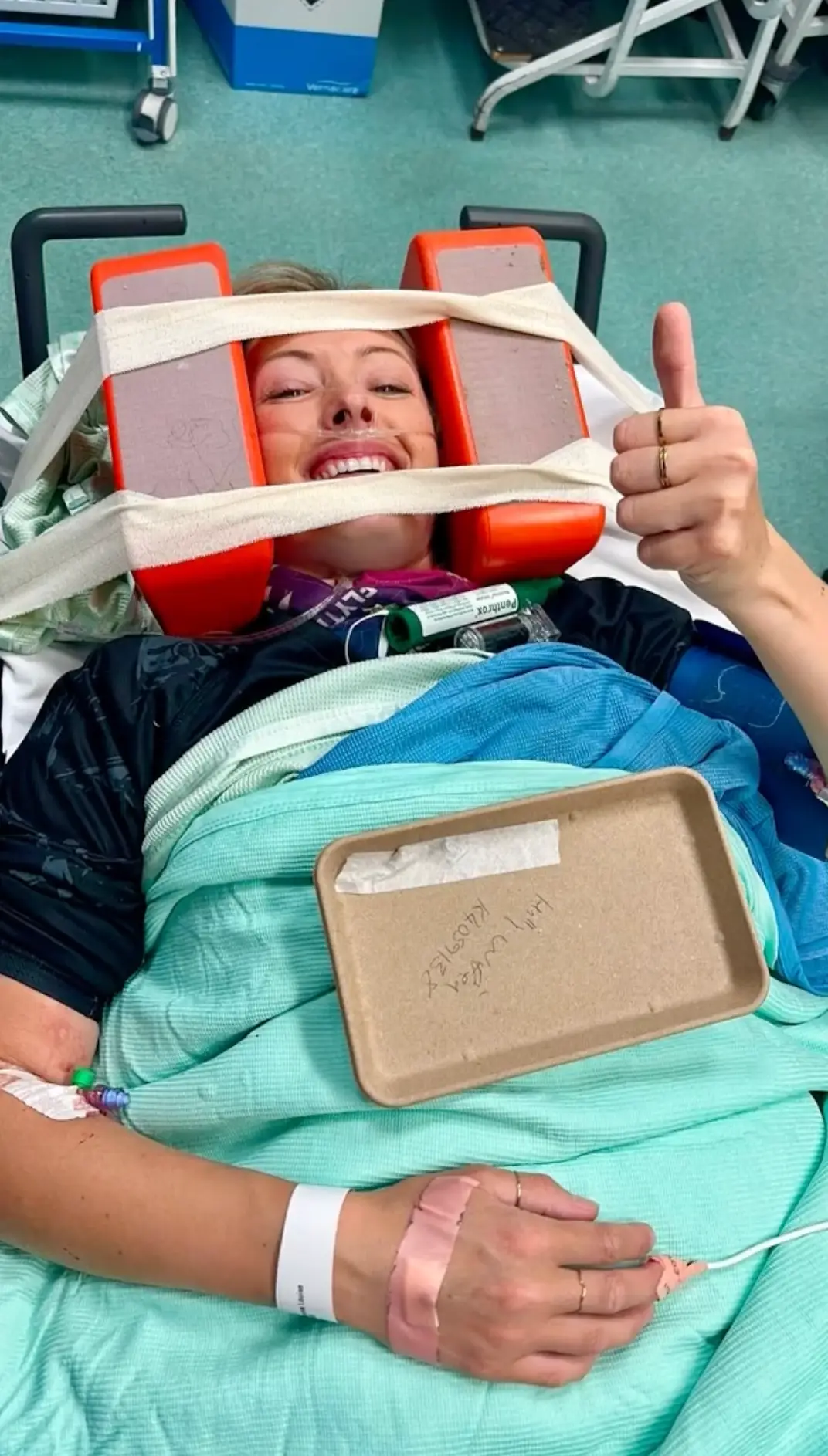
The damage was severe but survivable: a broken left leg and a small fracture in her spine. The injuries have not dimmed her enthusiasm for the sport. Despite the horror of the experience, she is already planning to jump again.
The incident began as a routine day of recreational skydiving with friends at Wiffen’s regular drop zone. She had successfully completed three jumps before the fourth, when she collided with another jumper at roughly 2,000 feet into her 12,000-foot descent. The impact rendered her immediately unconscious, leaving her plummeting toward earth at approximately 150 mph with her parachute undeployed. An automatic activation device fired her reserve canopy seconds before she struck a conifer tree, whose dense foliage cushioned the final impact. She woke suspended in branches, assessed her injuries with startling calm, and was later found to have suffered a broken leg and spinal fracture.
Wiffen belongs to an extraordinarily small group of people who have survived being knocked unconscious during a skydive, a scenario that almost always proves fatal without the intervention of automatic safety systems and favorable landing conditions.
She has indicated she cannot wait to make her next jump, though no specific return date has been announced.