

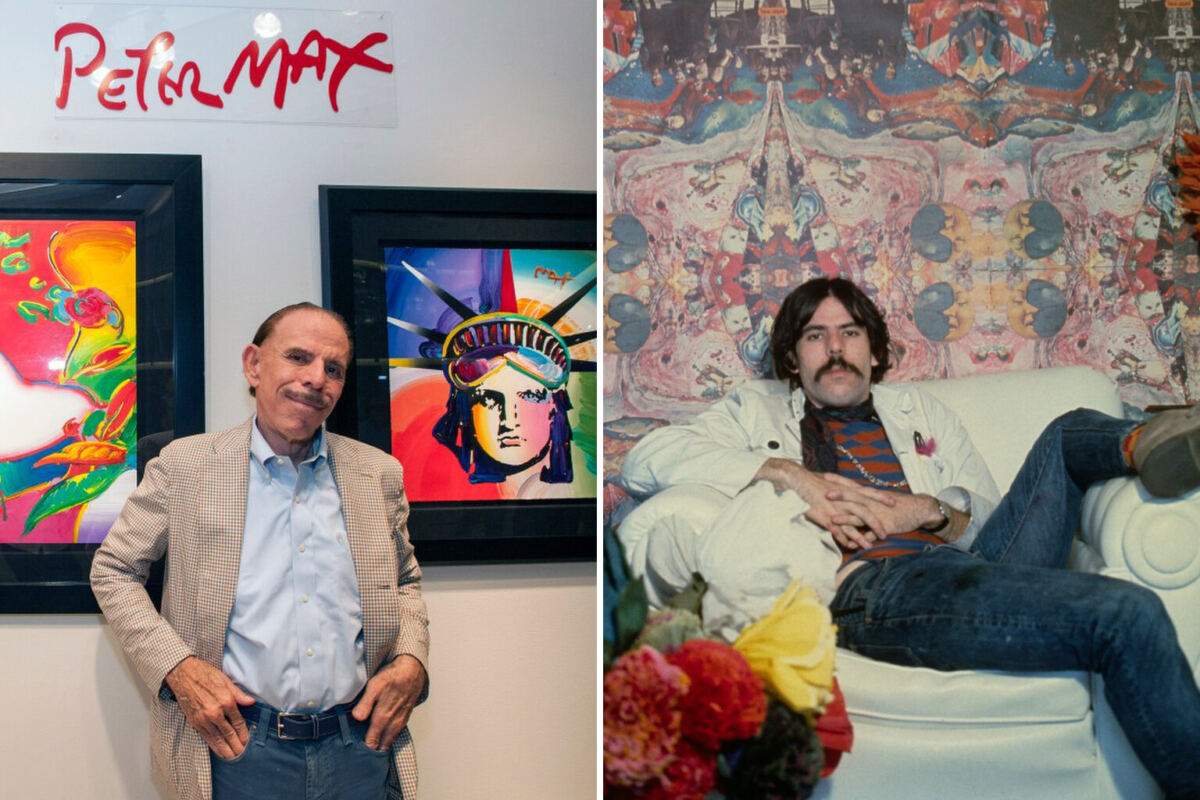
Peter Max, the psychedelic pop artist whose kaleidoscopic visions defined the 1960s “flower power” era, died Monday at 88, his son announced Wednesday.
Adam Max confirmed the death in a written statement, noting his father had been suffering from advanced dementia. No cause was given.
“We will remember his extraordinary creativity, his warmth, his curiosity, and the way he saw beauty and possibility everywhere,” Adam Max said in the statement. “His art became part of American culture, but the man behind that art — the father we knew and loved — is the person we will miss most.”
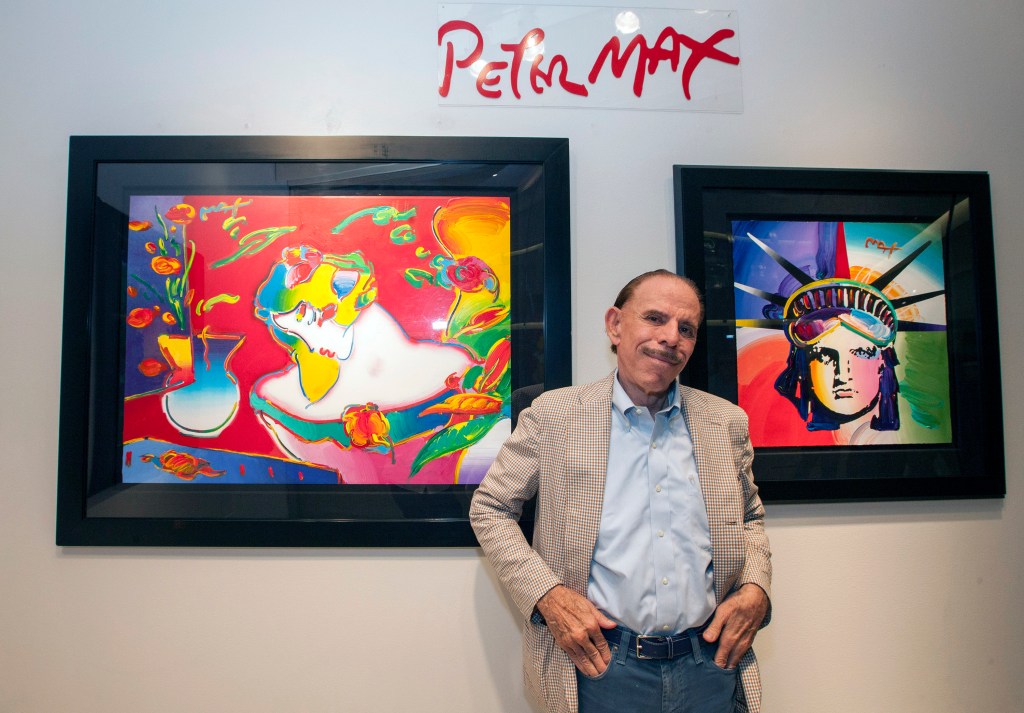
Born Peter Max Finkelstein in 1937 to a Jewish family in Berlin, Max fled Nazi Germany as an infant when his family escaped to Shanghai. They later lived in Tibet, Israel and Paris before settling in New York City when he was 16. By then, he already considered himself “a huge fan of American culture”: comics, movies and “all the jazz music.”
Max trained at the Art Students League, the School of Visual Arts and Pratt Institute in New York. In 1961, he launched a graphic design studio with friends, and his bold, swirling style — drenched in turquoise, orange and neon green — immediately caught fire with advertisers, magazines and corporations.
The commercial explosion was staggering. “My work was really, I would say, almost exploited,” Max said in an interview. “It was on mugs, it was on bedsheets, it was on dresses, it was on silks and scarves and ties — 70 product lines.”
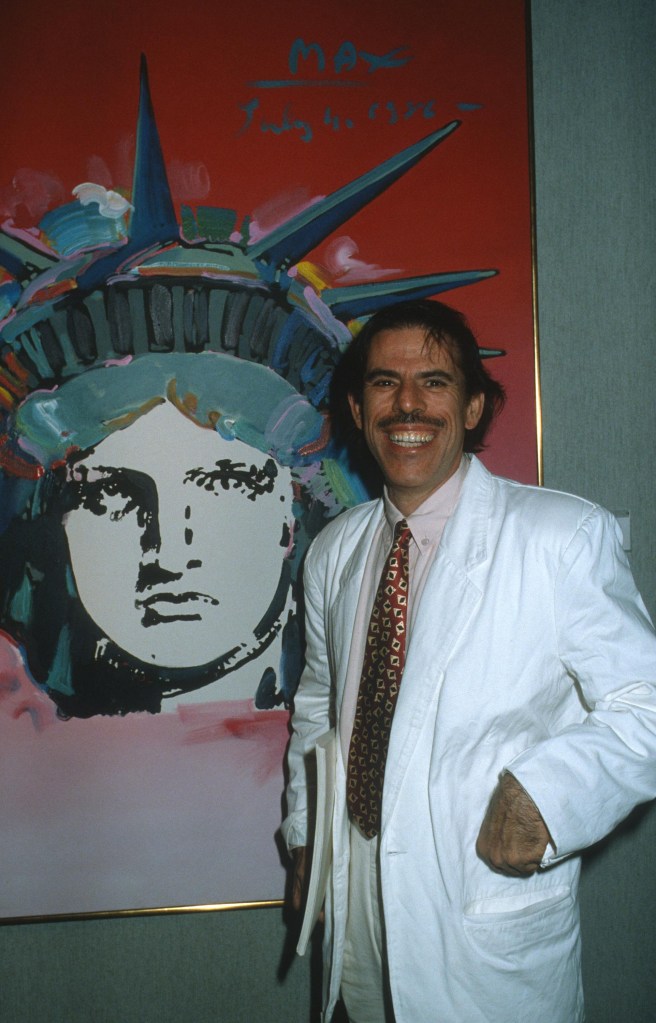
That ubiquity came at a creative cost. What “bothered” him, he said, was that he “wasn’t painting anymore.” He shut the business down in the early 1970s to reclaim his artistic practice. One of his most prominent projects after returning was a series of Statue of Liberty portraits painted at the White House at first lady Nancy Reagan’s invitation in 1981.
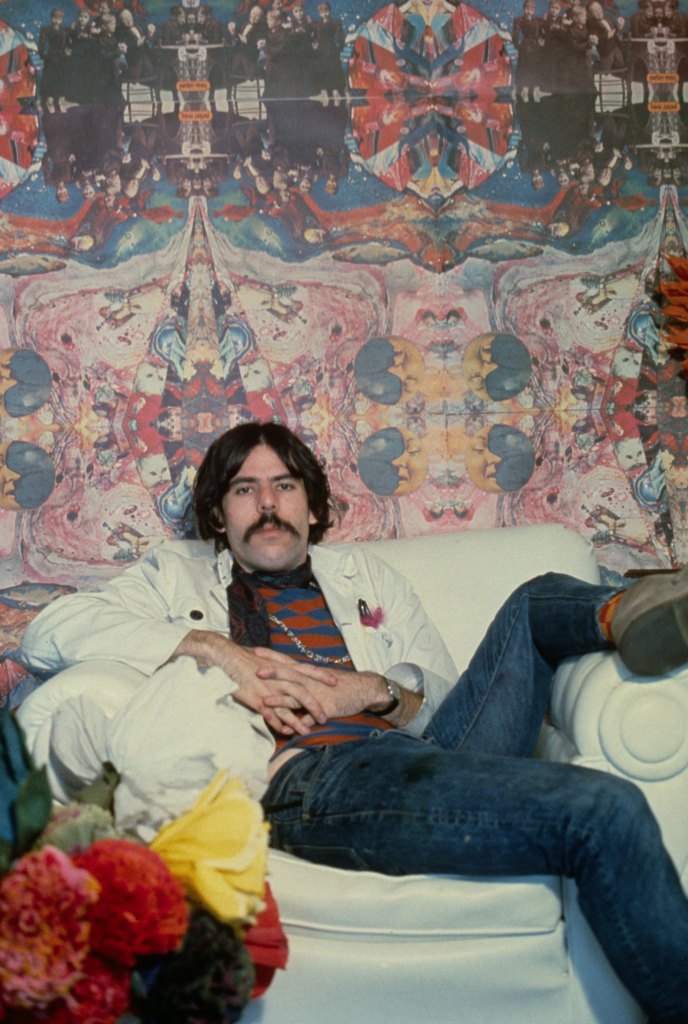
Max’s commercial reach extended far beyond dorm-room posters and household goods. He served as official artist for the Olympics, the Super Bowl, the Indianapolis 500, the World Cup, the World Series and numerous other events. His art wrapped a Boeing 777 airplane and a Norwegian Cruise Line ship. He painted U.S. Presidents and pop stars, including Taylor Swift. He even designed covers for the Manhattan Yellow Pages. In 1969, Life magazine put him on its cover, his trademark dark, bushy mustache framing a hearty grin.
Despite his mass-cultural footprint, Max insisted his work stayed rooted in optimism. “The colors are strong, sometimes loud, sometimes raw and sometimes harmonious, but always powerful, and the images are always on the side of the peaceful nature,” he said. “I don’t discuss in my paintings negative things, I don’t dwell on it in my mind and don’t dwell on it in my canvasses.”
He distilled his worldview even more simply in another interview: “I see everything through rainbow eyes.”
Max’s personal life carried complications that clashed with his art’s relentlessly cheerful surface. He pleaded guilty to tax fraud in 1997 after the IRS accused him of concealing more than $1 million in income. Originally sentenced to two months in prison, he instead served through a work-release program, paid back taxes plus a $30,000 fine, and completed 800 hours of community service teaching art in Harlem schools.
Family turmoil erupted into public view in 2015 when his second wife, Mary Max, and his son Adam became locked in legal conflict. Adam Max and a guardian alleged Mary Max had depleted his finances and browbeat him; she countered that they had kept him from her against his will and stolen paintings belonging to her. Court accounts described him as frail. Mary Max died by suicide in 2019, two weeks after the outlet detailed the legal battles over his work.
Max’s cultural connections ran deep. He was friends with the Beatles — though the “Yellow Submarine” album and film art is officially credited to the late Heinz Edelmann, not Max, despite Max’s 2012 claim that he did the original design before handing it off. Park West gallery, a longtime dealer, characterized his involvement as “early consulting work.” Max also helped bring “Swami” Satchidananda Saraswati to the U.S. And aided in popularizing yoga stateside.
Though some accounts noted the art establishment did not always take him seriously, his work hangs in dozens of museum exhibitions worldwide, with New York’s Museum of Modern Art holding seven pieces.
Max’s first marriage to Elizabeth Nance ended in divorce. Besides Adam, he is survived by a daughter, Libra Astro.