


The Congressional Budget Office projects the U.S. Total fertility rate will hit 1.58 births per woman this year, a level that would have been unimaginable just two decades ago.
That figure marks a 25.5% collapse from 2.12 in 2007, the last year American fertility sat above the 2.1 threshold required for natural population replacement. The drop has been steep and sustained, with no reversal in sight through the coming decades.
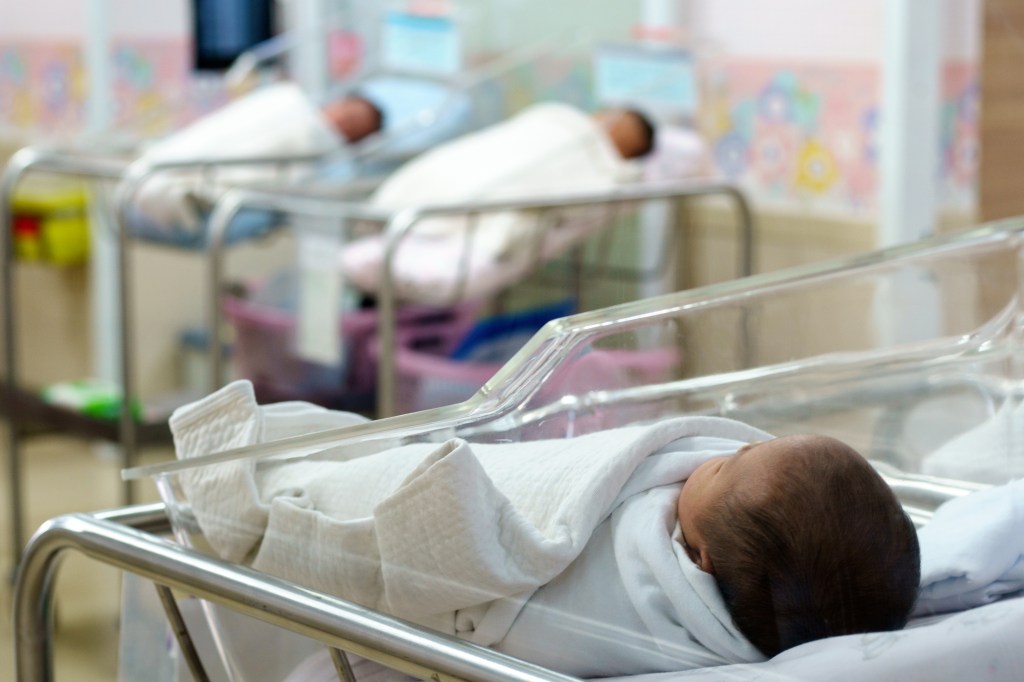
Foreign-born mothers now deliver roughly one in four babies born in the United States, accounting for between 22% and 25% of annual births. That translates to approximately 800,000 to 900,000 children each year born to immigrant women, whose fertility rate of 1.79 births per woman still exceeds the 1.53 rate among U.S.-born women.
Both groups remain far below replacement level, and the gap between them is poised to narrow. Between 2026 and 2056, the fertility rate for foreign-born women is projected to fall from 1.79 to 1.66 births per woman, a 7.3% decline. The drop for U.S.-born women will be gentler, sliding from 1.53 to 1.50, or just 2% over the same three-decade span.
The overall U.S. Fertility rate is expected to edge down from 1.58 to 1.53 births per woman through 2056, a modest 3.2% decrease that masks sharper divergences beneath the national headline.
By 2030, the annual number of deaths in America is forecast to exceed the annual number of births. Without immigration, the country’s population would begin contracting within four years. Even with continued immigration, the demographic momentum is fading.
Population growth is set to slow dramatically, averaging 0.3% annually through the next decade before dropping to just 0.1% per year from 2037 to 2056. The CBO data suggests America may face outright population shrinkage in the second half of this century, immigration notwithstanding.
The 2007 peak now stands as a distant marker of a different era, one year before the Great Recession began reshaping economic expectations and family planning across the country. Since then, the downward trajectory has defied temporary fluctuations and policy interventions alike.
The aging of America accelerates as these trends compound. A society with fewer births, more deaths, and slower growth faces fundamental pressures on everything from labor markets to old-age support systems. The Social Security and Medicare frameworks built on assumptions of robust population expansion now rest on increasingly shaky arithmetic.
The immigrant contribution to U.S. Births, while substantial, is itself eroding over time rather than stabilizing the national fertility picture. The convergence toward lower rates across both native and foreign-born populations points to deeper forces at work than any single policy lever can easily address.