

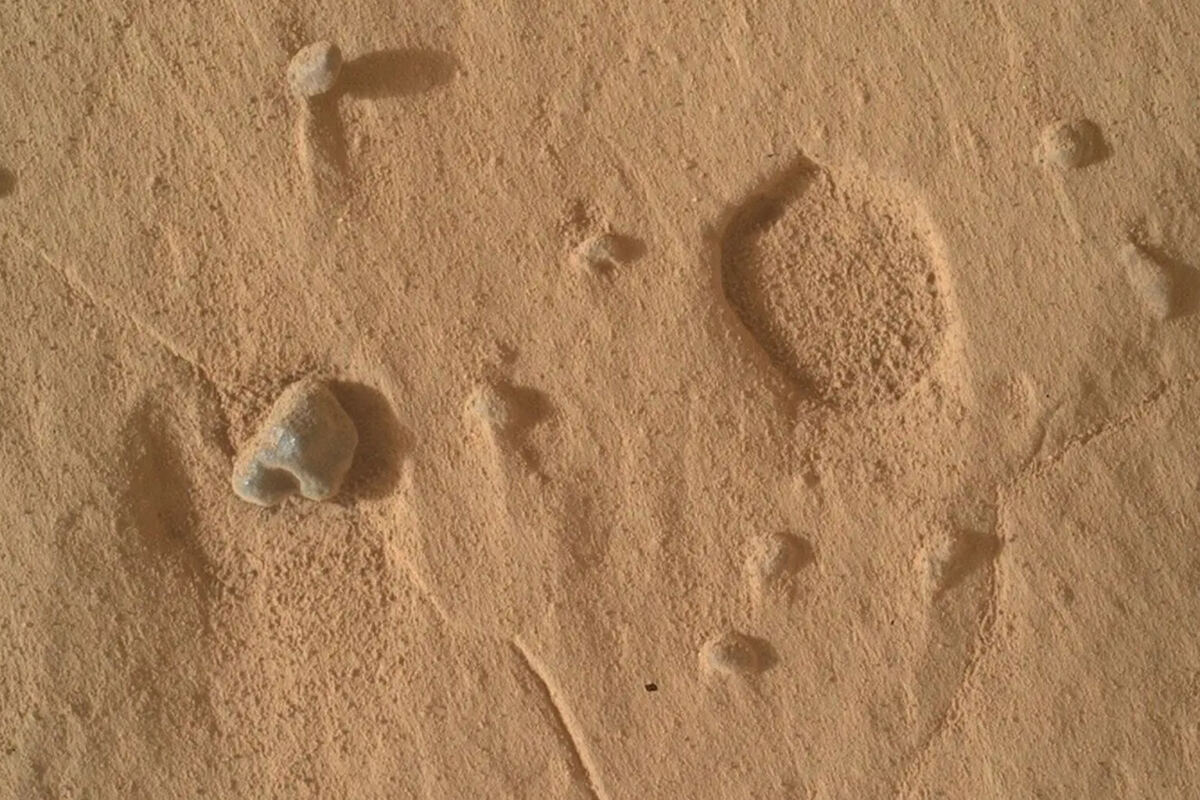
NASA scientists are puzzling over a set of unusually broad, shallow pits photographed by the Curiosity rover during its climb up Mount Sharp.
The formations, captured in overlapping images by the rover’s MAHLI and Mastcam instruments, resemble footprints in their shape and spacing but do not match anything documented during Curiosity’s nearly 14 years on Mars, according to NASA. Curiosity, which touched down in 2012, has been crawling across Gale Crater and its central mountain ever since.
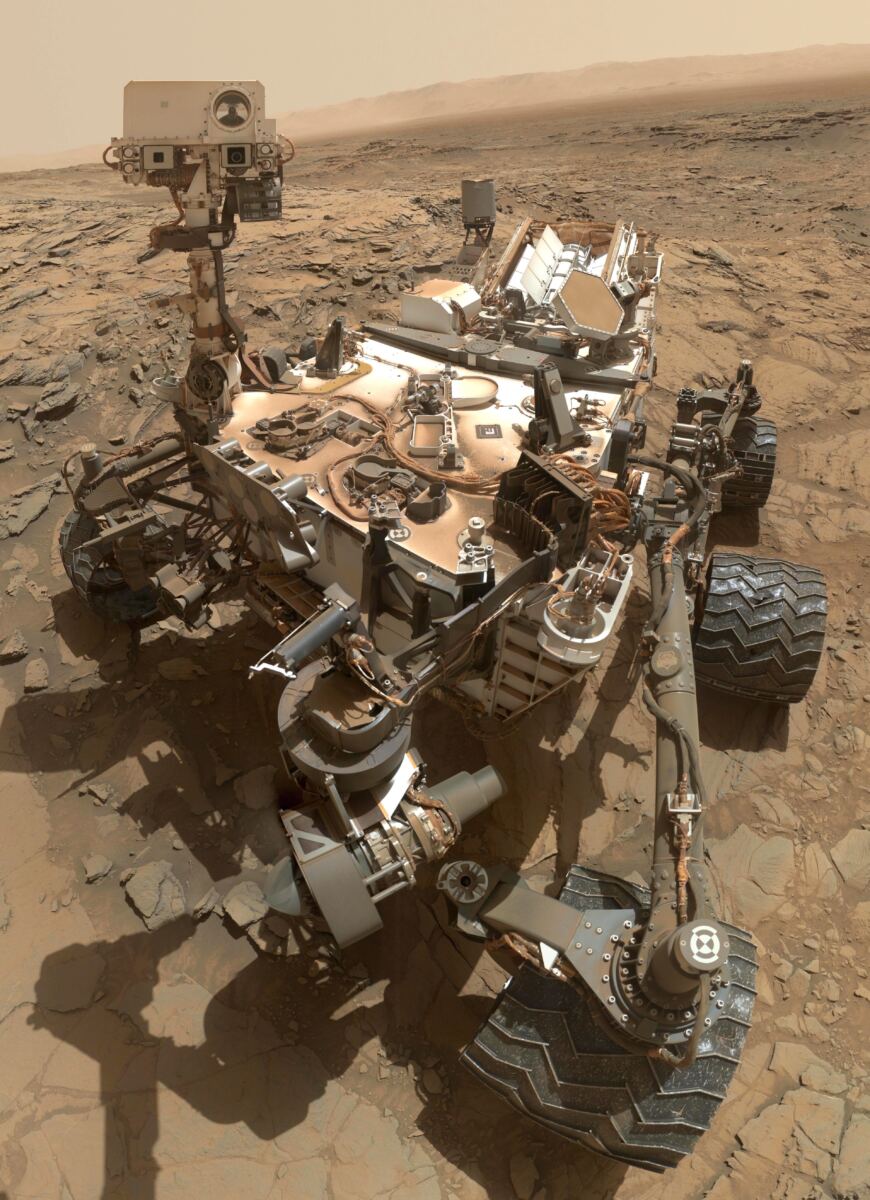
Typically, small pits on Mars form when tougher pebbles or nodules embedded in rock erode away, leaving hollows where the objects once sat. What distinguishes these new formations is their size and shallowness, plus the fact that researchers have not identified anything that might have once filled them. The team turned to three-dimensional modeling built from the overlapping images to study the pits’ structure without relying on flat photographs alone.
The surrounding bedrock offered additional scientific material. Mastcam imagery combined with ChemCam data revealed rock layers whose texture and structure shifted noticeably over short distances, suggesting changing conditions when the sediment was originally deposited. Curiosity also examined rough, grey-colored rock layers nearby that appeared more resistant to erosion than the surrounding bedrock. Three instruments—ChemCam, MAHLI, and the Alpha Particle X-ray Spectrometer—were used to study this material, which scientists suspect may differ chemically from adjacent rock.
The mission team is not suggesting actual footprints or visitors to Mars. The pits remain unexplained, and NASA continues analyzing the data as Curiosity advances further up Mount Sharp.
Curiosity has developed a reputation for findings that capture public imagination. In 2013, an image prompted online speculation that the rover had photographed a mushroom growing on Mars, a claim that was never substantiated but became widely discussed at the time.
The newly discovered pits add another entry to that catalog of oddities, though researchers emphasize they are treating the formations as a geological puzzle rather than anything more exotic. The three-dimensional models derived from the instrument data are expected to help refine understanding of how the pits formed and what they reveal about this stretch of Mount Sharp’s history.
Curiosity continues its ascent of the mountain, which dominates the floor of Gale Crater, with its science team monitoring for additional clues.