

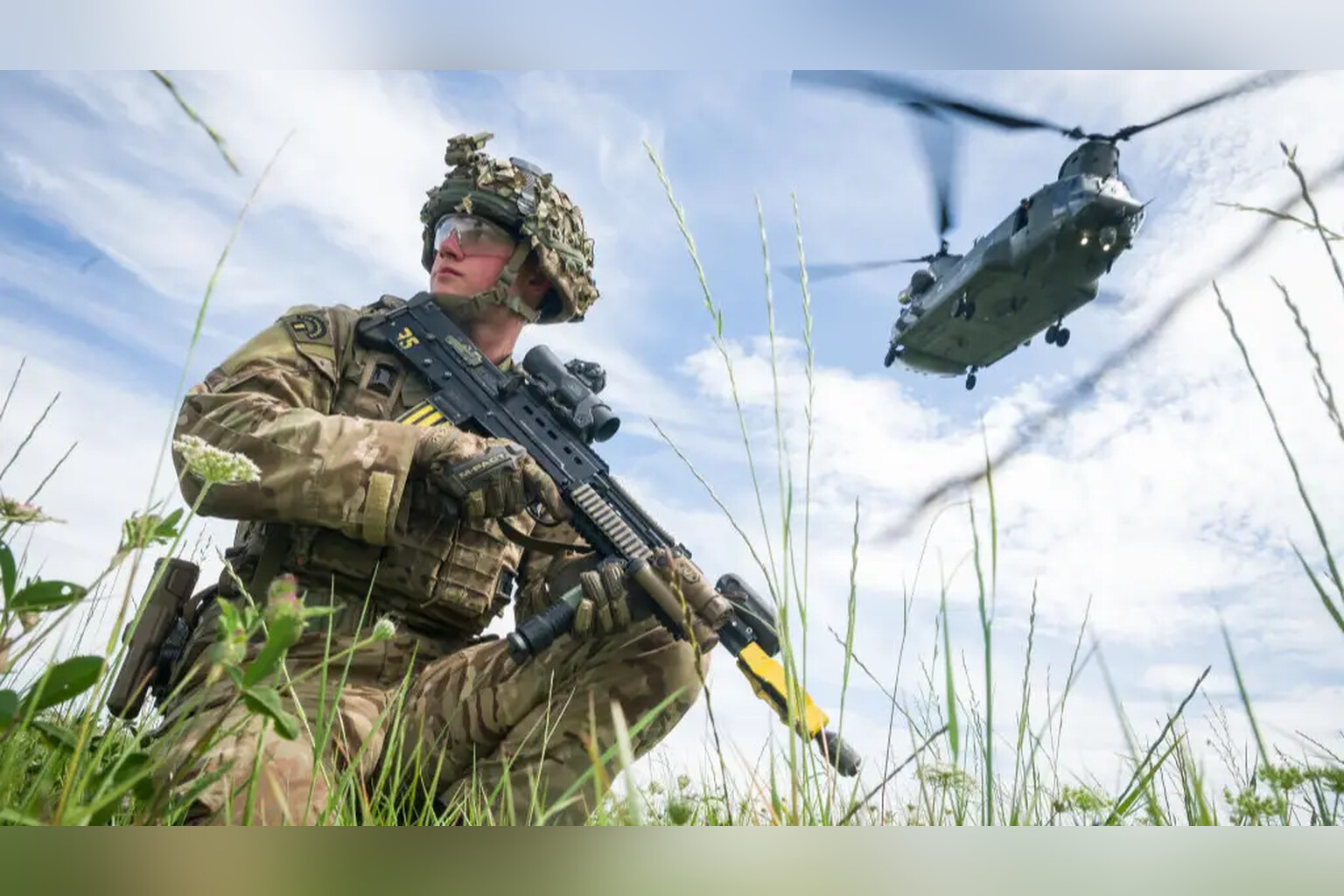
UK officials have ruled out military conscription despite mounting global tensions, though historical exemptions reveal who would likely be spared if draft laws ever returned.
Cabinet Office minister Pat McFadden appeared on Sunday Morning with Trevor Phillips over the weekend to address public fears head-on. “We are not considering conscription, but of course we have announced a major increase in defence expenditure,” he said.
McFadden, speaking on the Sky programme, added context to the government’s position on European defense responsibilities. “We do have to recognise that the world has changed. The phrase ‘step up’ is used a lot. Europe does have to step up in terms of its own defence.”
He continued: “President Trump isn’t actually the first president to say that, but he said it more loudly and with more force than his predecessors – so, I think we have got to recognise that moment.”
The minister’s comments follow Prime Minister Keir Starmer’s own firm dismissal of draft fears. A spokesperson for the Prime Minister stated there is “no intention” of introducing conscription, emphasizing that “the British military has a proud tradition of being a voluntary force. There are no plans to change that.”
Despite these assurances, international pressure for compulsory service is building. Latvian President Edgars Rinkēvičs has urged European countries to follow his nation’s lead and “absolutely” introduce conscription, adding a notable voice to the debate.
The last general mobilization on UK soil occurred during World War II, more than 80 years ago, when the National Service Act of 1939 established the framework for compulsory military service. That legislation was adjusted during the conflict, eventually requiring men between ages 18 and 51 to serve, expanded from the original 18 to 41 range.
Historical records from that era show exemptions fell into several clear categories. Health conditions, age, gender and profession all determined who could avoid the call-up. Essential industry workers received particular protection, with farmers, engineers, medical professionals, bakers and coal miners among those classified as too vital to remove from civilian work.
Medical unfitness also provided a broad exemption path. The British Armed Forces currently maintain extensive lists of disqualifying conditions that would likely form the basis for any future draft exemptions. Hearing and vision problems render candidates ineligible, as do bone and joint issues including chronic knee injuries, shoulder problems and hypermobility syndrome.
Neurological conditions, cardiovascular problems, severe skin conditions and psychiatric diagnoses also bar enlistment under present rules. These standards suggest a modern conscription system would similarly screen out individuals with such health challenges.
Gender represents another significant shift since the WWII era. British women were barred from combat roles during the last major conflict, but policy changed dramatically in 2018 when all military positions opened to female service members. This development means women would presumably face draft eligibility on equal footing with men should conscription ever resurface.
The current global climate has amplified public anxiety despite official denials. The Russia-Ukraine conflict continues without resolution, and former US President Donald Trump’s recent meeting with Vladimir Putin produced promises of a ceasefire that have yet to materialize. Meanwhile, tensions between the US and Iran have escalated following Iran’s blockade of the Strait of Hormuz, with Trump threatening military action over alleged Iranian nuclear weapons development.
Starmer had previously committed that Britain would avoid involvement in these widening conflicts, though that pledge has not fully quelled domestic concern about potential military escalation.
Any future conscription system would almost certainly preserve profession-based exemptions for essential workers, mirroring WWII precedent. The specific job categories protected would likely evolve to reflect contemporary economic priorities, potentially encompassing technology specialists, energy sector workers and other roles not imagined in the 1940s.
The government’s message remains consistent across multiple official channels: no draft is coming, no plans exist to change the voluntary service model, and Britain is not preparing for imminent war involvement. McFadden’s careful phrasing about future “decisions needed in the future that respond to a new reality” leaves theoretical space for policy evolution, but current administration figures have given no indication such decisions are actively under consideration.

McFadden’s full statement on the Sunday programme captured this balance between present assurance and future uncertainty. “We are not considering conscription, but of course we have announced a major increase in defence expenditure,” he repeated, tying the conversation back to budget rather than personnel mandates.