
Christa Pike has requested an all-female execution team if her September 30 lethal injection proceeds.
Pike, 50, made the demand through her lawyers as Tennessee prepares to put her to death at 10 a.m. Local time at a Nashville facility. The request, filed in the final days before her scheduled execution, stems from documented childhood abuse she says has left her with post-traumatic stress disorder and a terror of men.
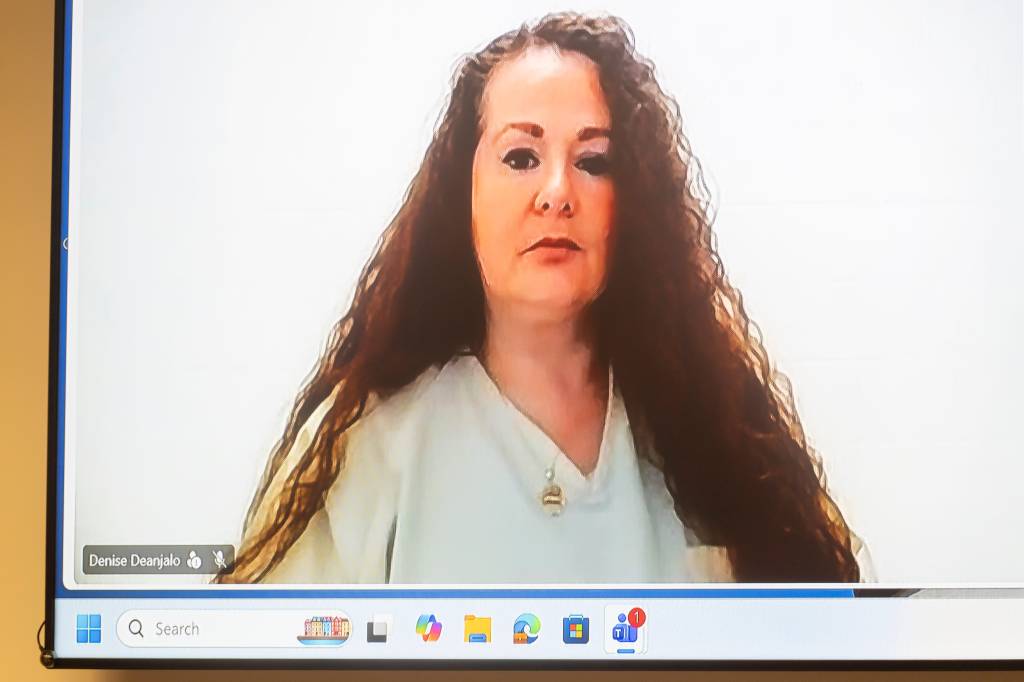
Her attorneys argue in a 226-page clemency petition that male executioners would compound her trauma. They cite abuse beginning when Pike was just two years old, including sexual violence at the hands of her grandmother’s boyfriend. The petition describes how that early trauma spiraled into cycles of depression, mania, and self-medication that shaped her entire life.
“There is a picture of Christa as a child that I often think about,” her lawyers wrote in the clemency filing. “She is outside; her curly red hair is slightly blown by the wind. She has big brown eyes, and her mouth is drawn tight in a straight line.”
“I think about this picture for two reasons. First, it is a beautiful picture, not unlike the pictures I have of my own daughter at the same age. I am sure you have similar pictures of your daughters.”
“Second, I think of this picture because I know that it was taken about the time Christa was first sexually abused. Her grandmother’s boyfriend had already begun orally raping her. To me, this picture represents a devastatingly sad turning point, where the chaos that surrounded Christa began to leave marks on her that were too much to overcome.”

The legal team also contends Pike’s death would be “prolonged and agonizing” due to a rare blood disorder that could complicate vein access and alter her reaction to pentobarbital, the single-drug dose Tennessee now uses. Her fear of lethal injection runs deep enough that she took the state to court in August seeking hanging as an alternative method.

“(Lethal injection administered by men) will increase the likelihood that an 8th Amendment violation will occur,” her lawyer Stephen Ferrell said in court filings. “There is an increased risk of pain and suffering.”
The state’s legal team has pushed back hard. They maintain Pike has failed to produce scientific evidence warranting any change to her sentence.
“It was Ms Pike’s burden to come forth with scientific evidence (to overturn execution); she has completely failed to do that,” prosecutors argued.
Pike’s ultimate goal remains taking execution off the table entirely in favor of life without parole. She has spent roughly 30 years in solitary confinement since her conviction.

A documentary titled “Christa Pike’s Last Fight to Stop Her Execution” captured her mental state as the date approached.
“I know I said I believed a date would never be set, but now that one has been set, it’s like a roulette wheel of thought and your actual brain is the ball bouncing around,” Pike said in the film.

“My nerves are shredded. When I do sleep, my brain eats itself.”
“I have the most horrible nightmares, but I think what has been worse is that they told me a year ahead of time. And so, every day I’ve woken up and lived that thought all day, every day, every waking moment.”

The case that put Pike on death row began January 12, 1995, when she lured fellow Job Corps student Colleen Slemmer to a Knoxville park with a story about hidden marijuana. Pike was 18; her boyfriend Tadaryl Shipp was 17. With help from Shipp and another student, Shadolla Peterson, Pike beat Slemmer, slashed her throat multiple times, and carved satanic symbols into her body. She later showed a friend a piece of Slemmer’s skull she had kept as a souvenir and was carrying in her pocket at breakfast the next morning.
Court records detail Pike’s confession: she admitted slamming Slemmer’s head against concrete, using a box cutter and meat cleaver, and hearing voices telling her she had to silence her victim. A witness, Kim Iloilo, told authorities Pike danced in a circle singing “la, la, la” while describing the killing. A University of Tennessee employee who found the body initially mistook it for an animal corpse due to the severity of the beating.

Co-defendant Shipp received a life sentence because Tennessee law barred executing offenders under 18. That age distinction, with brain development differences her lawyers now call “almost insignificant,” has become central to Pike’s argument that her sentence is disproportionate.
Governor Bill Lee holds the power to grant clemency before the scheduled 10 a.m. Lethal injection. Pike’s routine if the execution proceeds has been outlined: wake at 5:30 a.m., clean her cell, shower, dress, receive a last meal, and have final visits with family or a spiritual adviser.