


The nursery rhyme that made Lizzie Borden a household name botched nearly every detail of the 1892 killings it memorializes.
Borden, 32, was tried and acquitted for the murders of her father Andrew Borden, 69, and stepmother Abby Borden, 64, in Fall River, Massachusetts. The case has resurfaced in public conversation following the release of Monster: The Lizzie Borden Story, a true crime anthology series now streaming on Netflix.
The famous verse chanted by generations of children gets the weapon, the relationship and the body counts wrong. “Lizzie Borden took an axe, and gave her mother forty whacks,” it begins. “When she saw what she had done, she gave her father forty one.”
The actual murder weapon was a hatchet, a tool notably smaller and lighter than an axe. Abby Borden suffered approximately 19 blows, not the roughly 40 claimed in the rhyme. Andrew Borden was struck an estimated 10 or 11 times.

The “mother” referenced in the rhyme was actually Borden’s stepmother, a distinction the verse erases entirely. Borden was formally acquitted after a lengthy trial, and no one else was ever charged in the killings.
Police initially suspected an outsider had committed the murders on the morning of August 4, 1892. Attention shifted to Borden after she offered multiple conflicting accounts of her whereabouts. She first claimed she had been in the barn, then said she discovered her father’s body, and gave inconsistent statements about when she had last seen Abby.
Investigators and newspaper reporters who observed Borden noted her apparent lack of emotion after finding her father brutally killed. Her demeanor became a focal point of suspicion.
Days before the murders, Borden had allegedly tried to obtain prussic acid, a deadly poison. The attempted purchase, reported by a local druggist, added to the mounting case against her.
Following the killings, a friend staying at the Borden home reported seeing Lizzie burn a dress in the kitchen stove. The garment was believed to be stained with her parents’ blood, and the incident contributed to her eventual arrest.
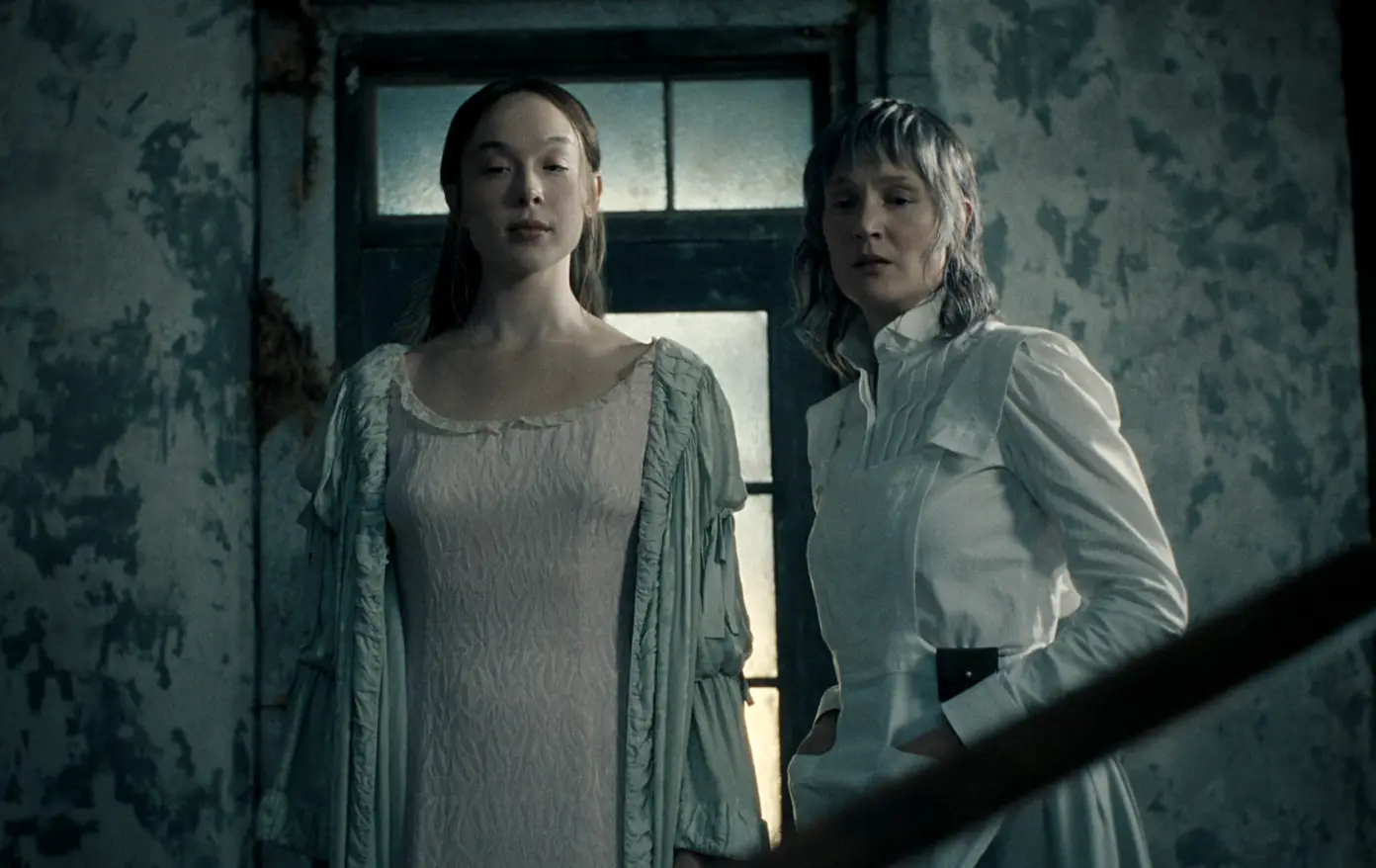
The trial that followed gripped the nation. Despite the circumstantial evidence and public fascination, a jury found Borden not guilty. She lived out the remainder of her life in Fall River, her guilt or innocence remaining one of American criminal history’s most debated questions.
The Netflix series Monster: The Lizzie Borden Story revisits the case with the anthology format that has previously examined other controversial figures. The show dramatizes the brutal circumstances of the Borden household and the social dynamics of 1890s New England.
The endurance of the nursery rhyme despite its factual failures speaks to how folklore often outpaces history. Borden remains among the most notorious women in America’s criminal past, never convicted yet permanently linked to a crime the popular imagination refuses to forget.
The Borden family home, now a bed and breakfast and museum, was recently sold to new owners who plan to preserve its historical significance.