

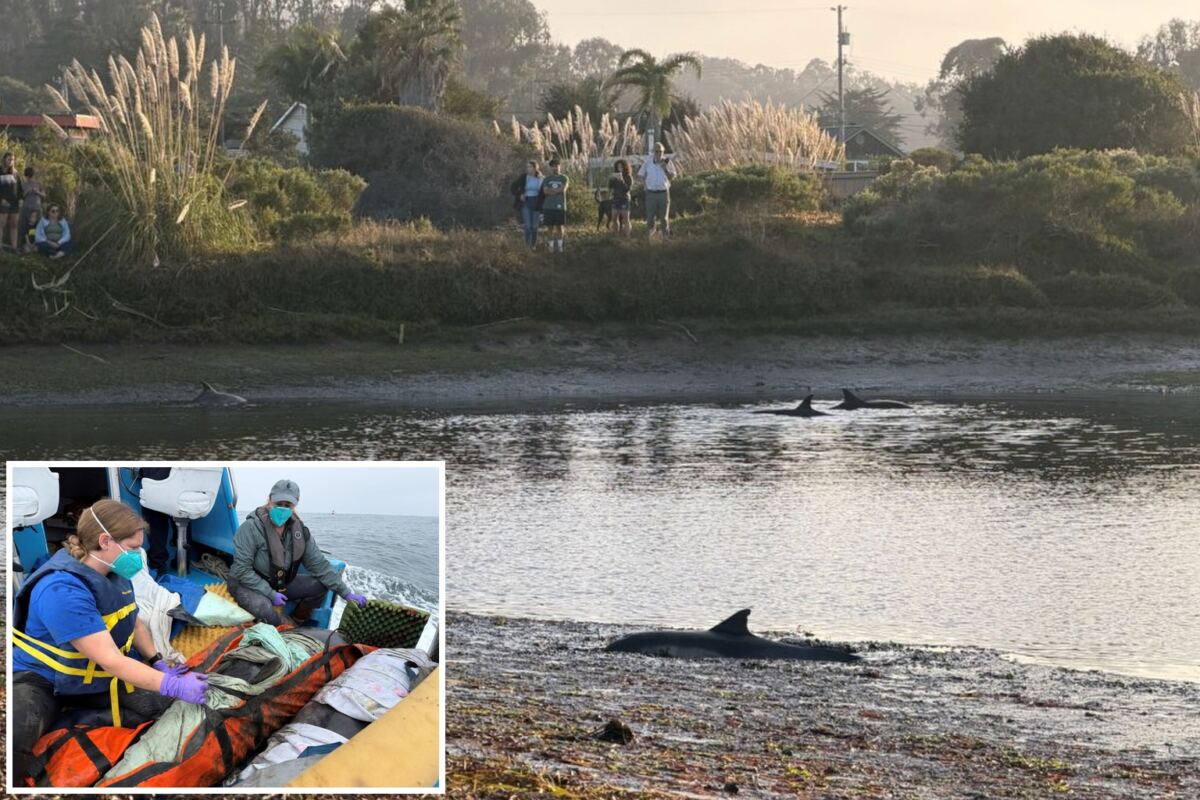
A pod of dolphins that swam into a California inlet near Morro Bay has left one animal dead and a fifth still unaccounted for after a two-day rescue operation.
The Marine Mammal Center confirmed Wednesday that a deceased common dolphin was found in the mud at Cuesta Inlet, while three others were successfully extracted and released back to the ocean. A fifth dolphin spotted earlier in nearby Shark Inlet could not be located during the rescue push.
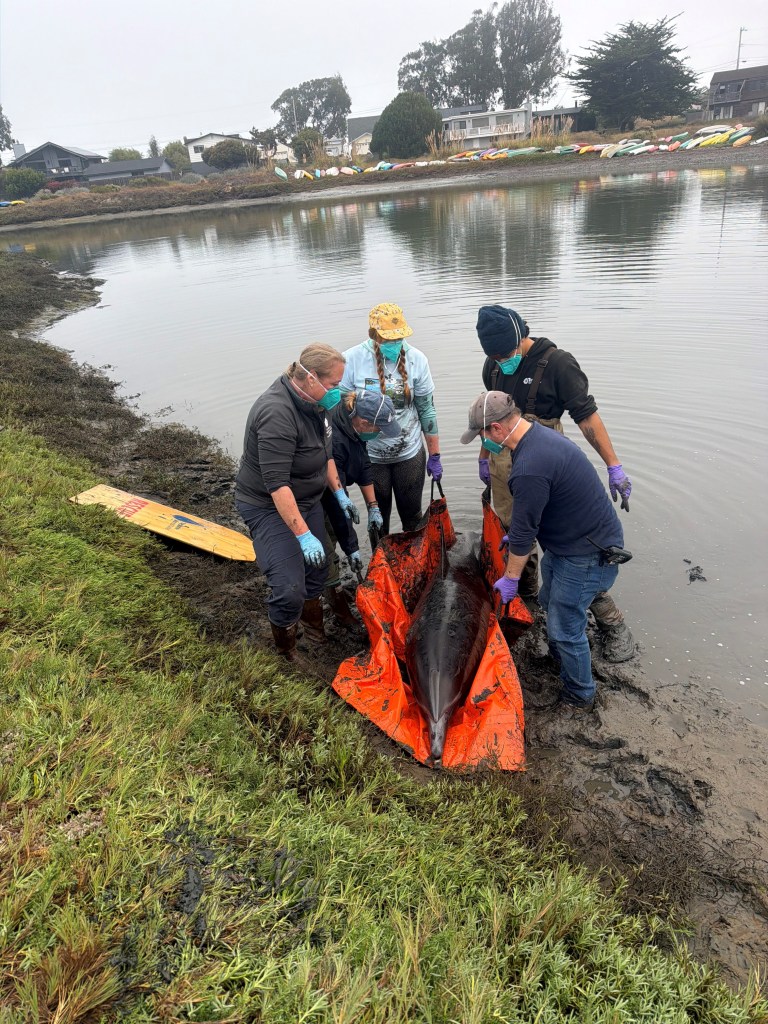
Sarah Pattison, Director of Hospital Operations at The Marine Mammal Center, addressed the emotional toll on responders. “Seeing an animal in distress is emotionally difficult, and our team feels that too,” she said in a statement. “This has been a heroic effort by many partners, including Harbor Patrol and the community, to give these animals a second chance.”
The ordeal began when the dolphins attracted considerable attention from onlookers after arriving in the area. Spectators gathered as the animals swam outside the bay, but excitement turned to concern when the tide receded Tuesday afternoon and the pod failed to find its way back to deeper water.
“Because these were wild, native animals exhibiting normal behaviors prior to the strandings, the best-case scenario was for the dolphins to make their way out of the inlet on their own,” the Marine Mammal Center said in a statement.
The center and the California Department of Fish and Wildlife had responded following multiple reports of the stranded animals. By Tuesday afternoon, worsening tidal conditions left four dolphins stuck in the mudflats with no route to safety.
Giancarlo Rulli, a representative of the Marine Mammal Center, pointed to broader environmental factors that may have disoriented the pod. “Past marine heat waves, such as the ‘Blob,’ have contributed to warmer waters, which can influence where dolphins live and the prey available to them,” he told KSBY.
“Warmer waters can also shift the distribution of fish and other prey, potentially requiring dolphins to adapt their feeding behavior and seek new food sources,” Rulli continued.
Officials have not determined exactly why the dolphins traveled off course, though they noted that unusual ocean conditions linked to the approaching El Niño event could have played a role.
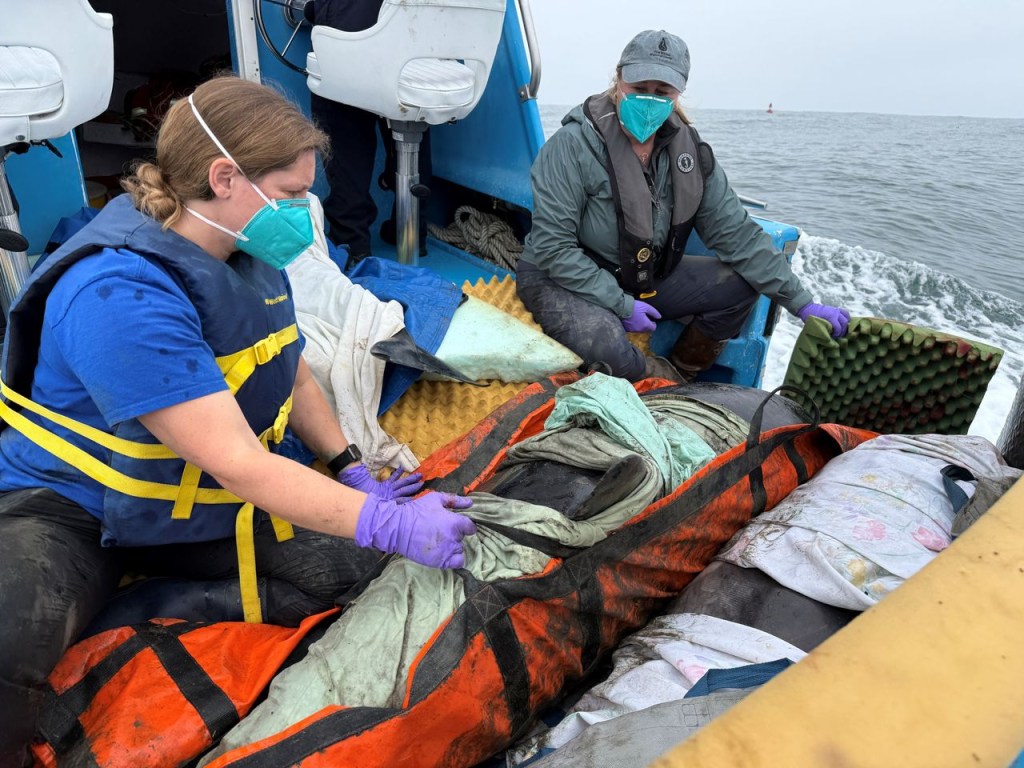
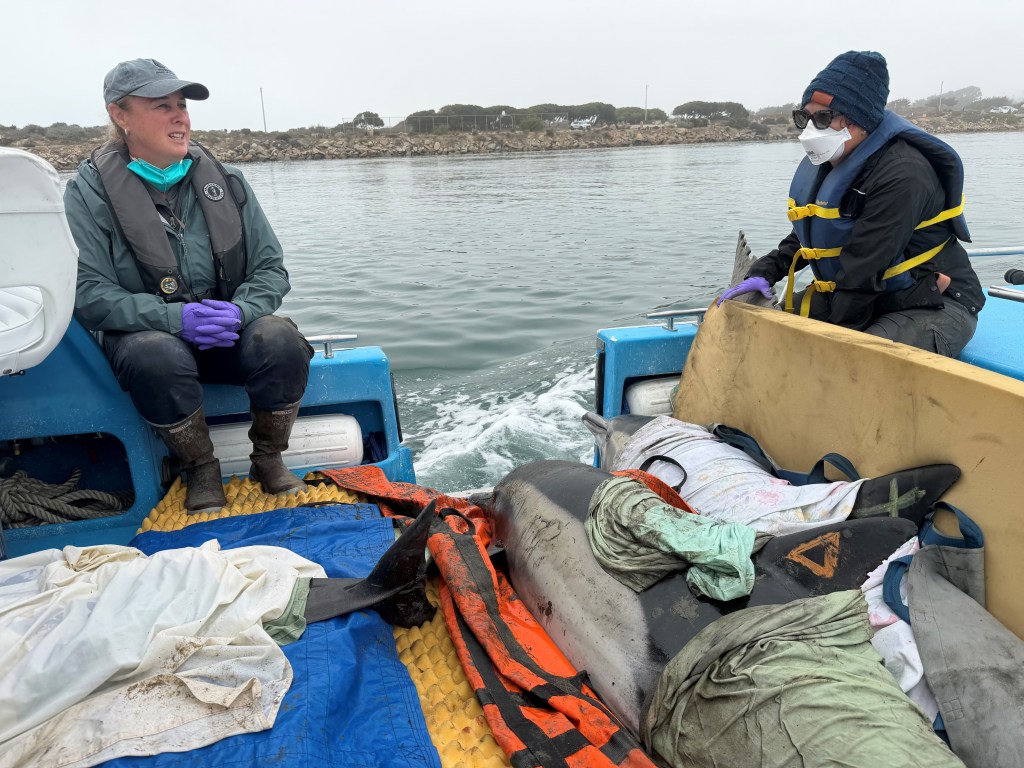
Wednesday morning brought more favorable conditions for intervention. “On Wednesday morning, September 30, Center experts safely responded to three of the four dolphins at Cuesta Inlet and successfully released all three outside of the bay, with assistance from Harbor Patrol,” the Marine Mammal Center stated.
The successful releases offered some relief amid the broader tragedy. “We’re grateful that three of these dolphins were able to be safely returned to the ocean, and we continue to monitor the situation closely,” Pattison added.
The deceased dolphin will undergo necropsy to help determine what factors contributed to its death. The Marine Mammal Center indicated it will maintain surveillance of the inlet area in hopes of locating the fifth dolphin that was last seen in Shark Inlet.
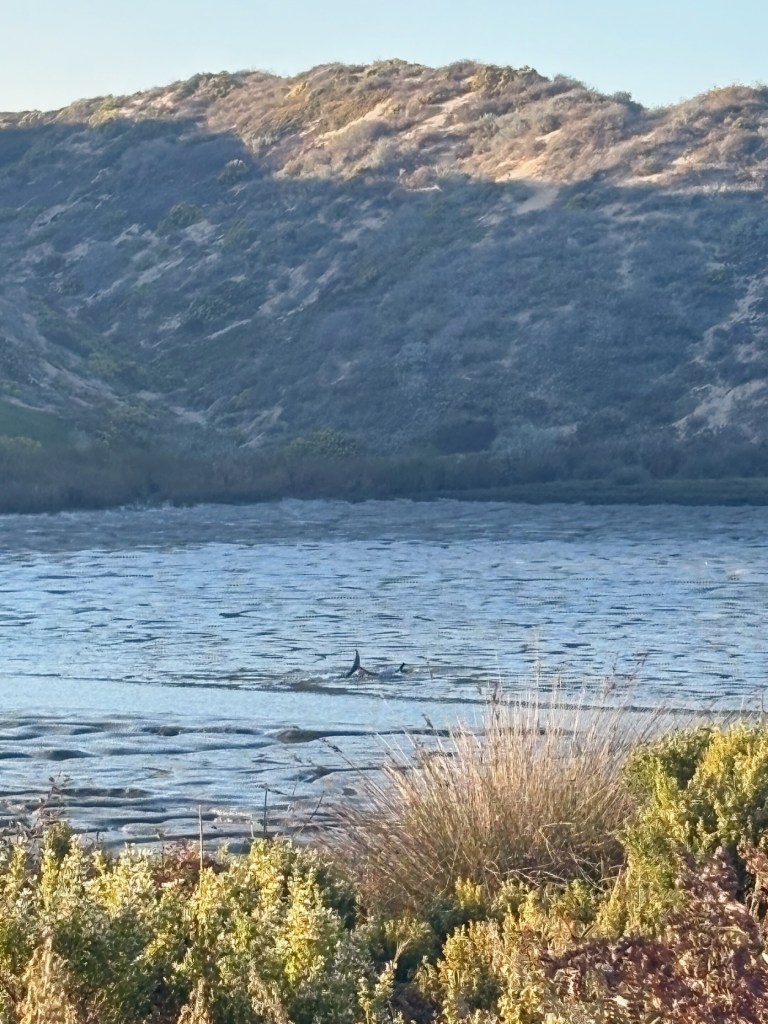
The incident highlights the vulnerability of marine mammals to rapid environmental shifts, particularly as warming oceans alter traditional habitat ranges and food web dynamics along the California coast.
Rescue teams will continue monitoring the Morro Bay area for signs of the missing dolphin.