

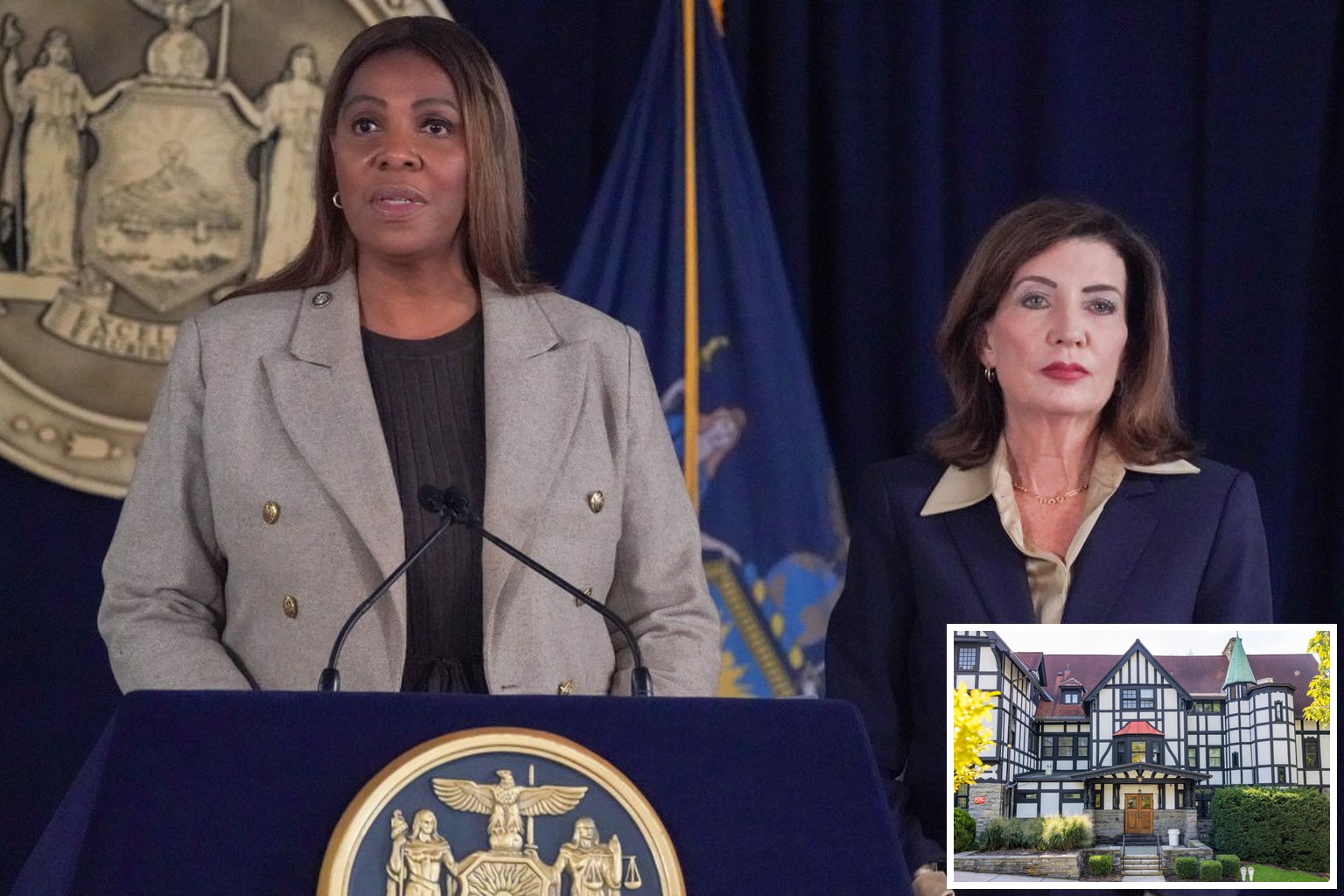
Gov. Kathy Hochul appointed a special prosecutor to take over the criminal probe of seven Cornell fraternity brothers accused of gang-raping a female student.
The move strips Tompkins County District Attorney Matthew Van Houten of the case after he declined to prosecute in 2024, claiming the six-page statement from campus police omitted key details from the woman’s account. New York Attorney General Letitia James will now lead the investigation into the alleged assault at the Chi Phi fraternity house on Oct. 19, 2024.
The accuser, identified only as Jane Doe, filed a civil lawsuit last month alleging she was drugged and raped while intoxicated on rum, weed and ketamine. She did not report the incident to campus police until nearly three weeks later, and exchanged text messages with one of the men afterward, according to a Cornell Title IX investigation completed in early 2025.
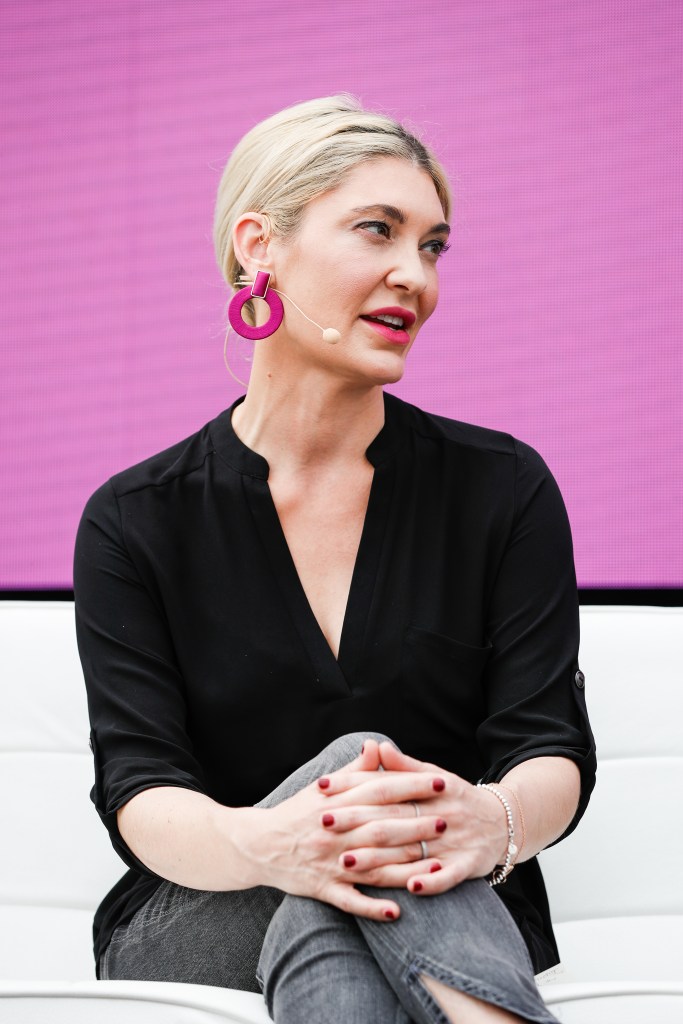
Legal experts say prosecutors face significant hurdles in securing criminal convictions. Sarah Klein, a former gymnast who was convicted sex abuser Larry Nassar’s first known victim, predicted the defense strategy.
“The defense will use every text message, every inconsistency and every day she waited to report, to attack her credibility,” Klein told The Post.
“And that’s exactly why so many sexual assault survivors are reluctant to come forward,” she added.
New York law presents particular challenges for cases involving voluntary intoxication. Prosecutors must meet a high bar to prove lack of consent when a victim willingly consumed drugs or alcohol. Klein noted a crucial distinction in this case: the accuser “alleges she was pressured into taking ketamine she had never used before, and was repeatedly pushed to take more.”
“Whether that was truly ‘voluntary’ is a real question,” Klein said.
Sexual harassment attorney Megan Thomas suggested prosecutors could counter credibility attacks by calling a trauma expert to explain how survivors process abuse.
“I think it is challenging to prosecute criminally, but I don’t think it’s impossible,” Thomas said. “And here’s why: I think a good expert on trauma can help explain a lot of those text messages.”
Thomas acknowledged the civil case offers a more favorable path for the accuser than criminal court.
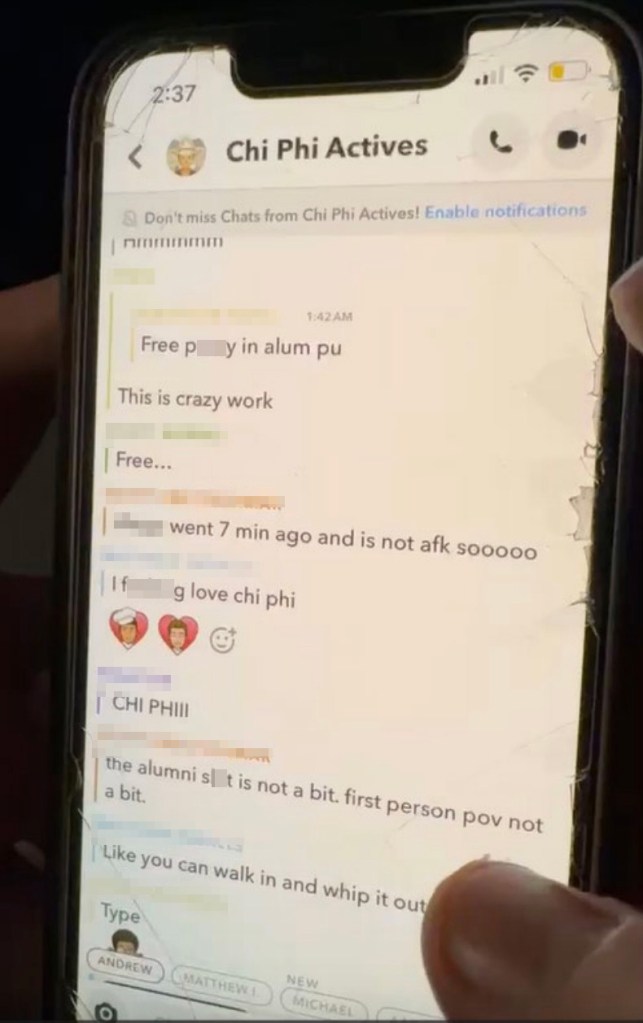
One piece of evidence could substantially aid prosecutors. A screenshot from a Chi Phi group chat shows one of the men inviting others to join the assault with the promise of “free p—y in alum pu,” referring to the alumni room. Defense attorney Pat Harris assessed the message bluntly.
“The text messages make clear she was raped,” Harris said.
Thomas agreed the message severely damages the defendants’ position.
“As bad as her changing her stories is, which again is totally consistent with trauma, it is so much worse to see these [free p—y] text messages, and that’s a way worse burden,” Thomas said.
However, identifying individual perpetrators presents another obstacle. The accuser stated she was passed out during the alleged assault, and with seven men present, each defendant can deny personal involvement.
“They are going to have a very difficult time proving which guys were involved because the woman says she was passed out,” Harris said.
“Clearly, every guy involved is going to argue they didn’t do anything other than be there at the party,” he continued. “It is not going to be hard to prove that she was gang-raped — it is going to be very hard to prove who did it.”
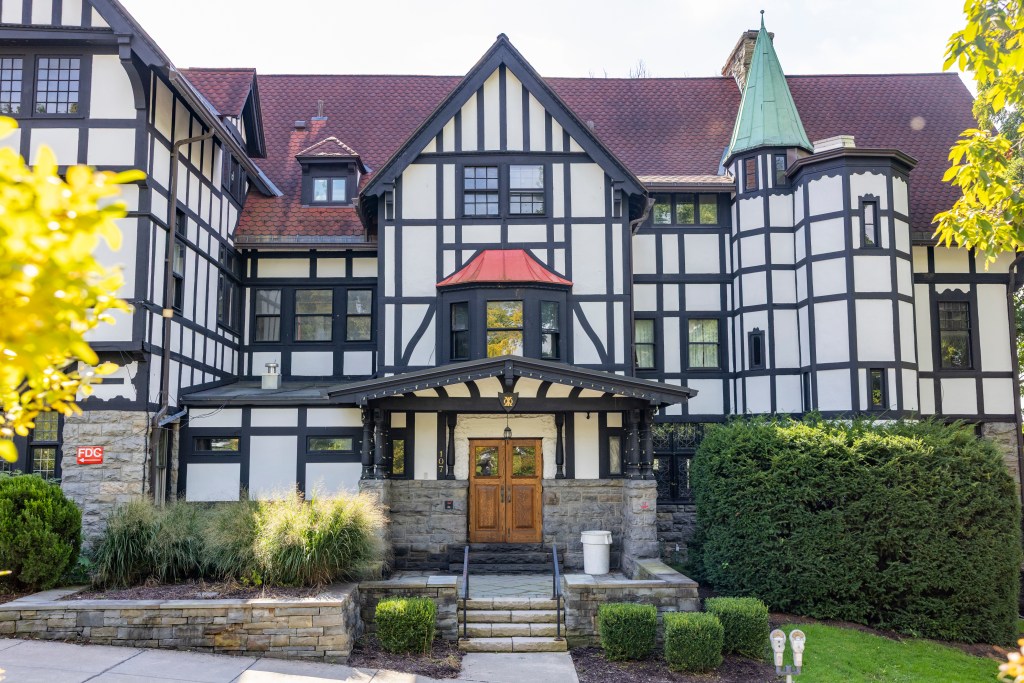
Cornell conducted an extensive Title IX investigation spanning months, with 12 days of hearings and testimony from over 50 witnesses. The 100-page findings report resulted in expulsions, suspensions and lesser penalties including “reflective essays” for various men involved. The university permanently banned the Chi Phi chapter.
Van Houten had cited the incomplete initial police statement as his reason for declining prosecution, noting it lacked her unequivocal statement that she had been raped and omitted the group chat screenshot entirely.
The case has drawn comparisons to other high-profile campus sexual assault investigations, including the “Hockey Canada 5” scandal, as experts examine how consent and trauma are treated in institutional proceedings versus criminal courts.
James’s office has not announced a timeline for charging decisions in the case.