

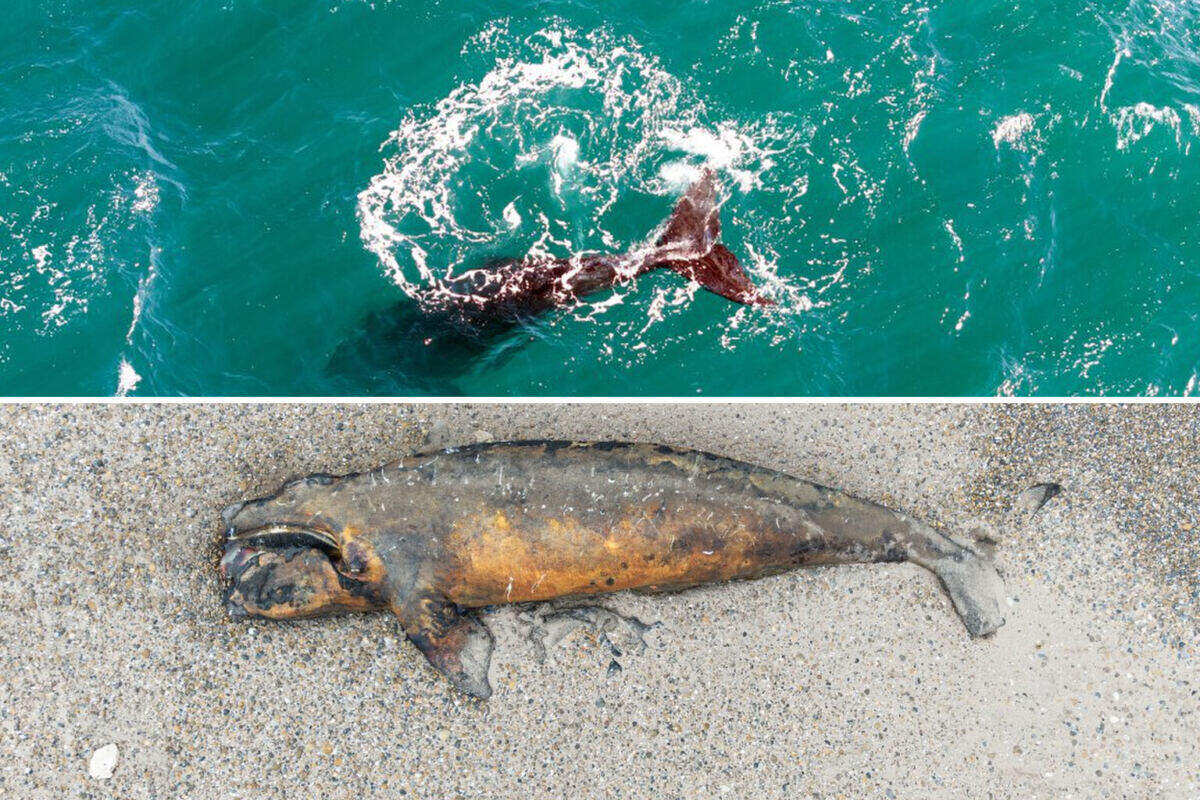
Investigators are scrambling to explain why baby southern right whales are dying in alarming numbers along Argentina’s Patagonian coast.
Marcela Uhart, a veterinarian with the One Health Institute at the University of California, Davis, is leading the probe as head of the Southern Right Whale Health Monitoring Program. She and her team have spent 23 years tracking this same population, a dataset that makes the current surge unmistakably abnormal. “We’re looking into the whale calf deaths based on 23 years of monitoring that we have of this same population,” Uhart said. “That’s what allows us to say that this is an unusual event.”
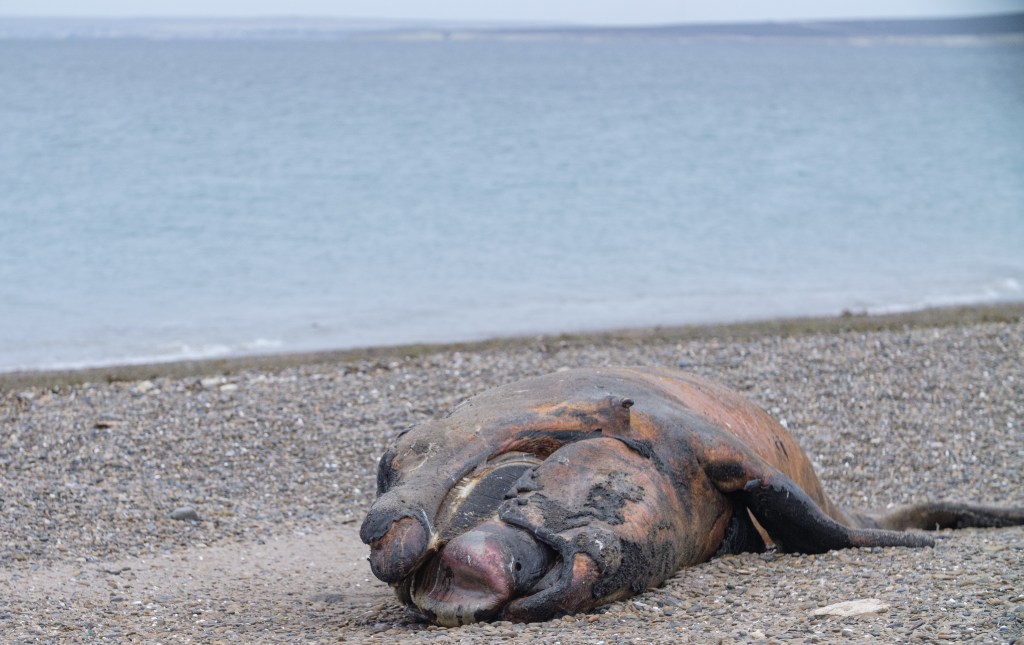
The carcasses have been piling up around Peninsula Valdes in Chubut province, a protected breeding ground where the species gathers to give birth and nurse. Dead calves have also drifted into the gulf city of Puerto Madryn, some coming to rest near the central waterfront where locals and tourists encounter them. Residents have described hundreds of bodies, though researchers are withholding any official death count until the season closes around late November.
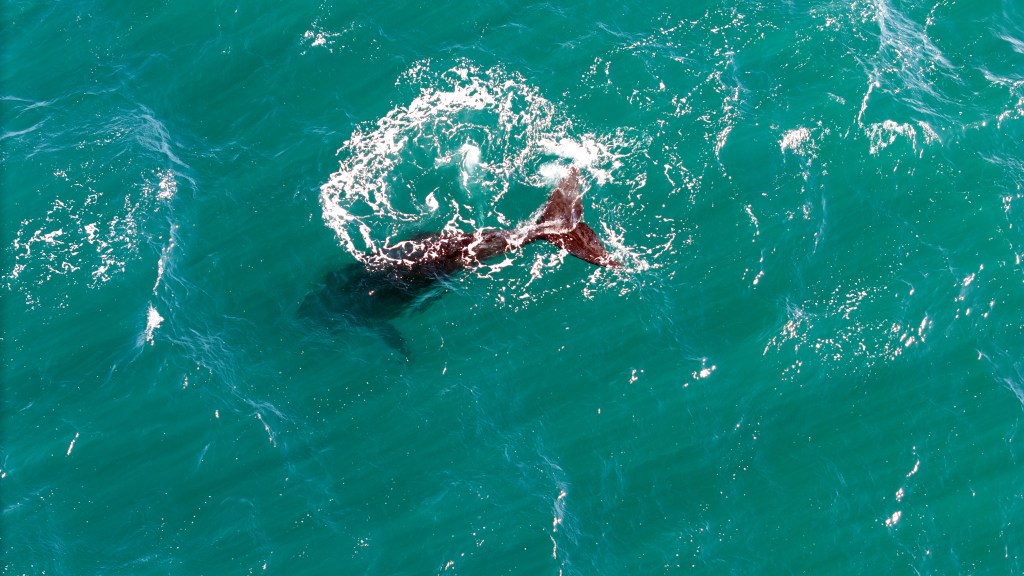
Uhart’s leading theory points to marine bacteria entering through wounds inflicted by kelp gulls. For decades, these seabirds have attacked surfacing whales, tearing at skin and blubber. Adult whales learned to surface with only their blowholes exposed, keeping their backs submerged and beyond reach. Calves have not mastered that maneuver, leaving them exposed to repeated pecking that opens pathways for infection.
The investigation demands grim fieldwork. Uhart works alongside biologists, veterinarians and park rangers, combing beaches and scanning from boats, planes and drones. They photograph and examine decaying bodies, working against time to extract skin and organ samples. Those tissues travel north to a veterinary school in Tandil, where testing has already confirmed bacterial presence. Researchers are now culturing samples to pinpoint the exact microbes and establish whether infection killed the animals.
Even confirmed bacterial culprits would leave a deeper question unanswered. Uhart noted that something must explain why these infections have turned lethal this season specifically. Shifting marine conditions offer one possible thread. Warming sea temperatures, whether driven by climate change or El Nino patterns, might be creating conditions where bacteria overwhelm calf immune systems. “So to the extent that we can, we’ll try to identify at least what factors may be triggering this event and making it so massive,” she said.

Southern right whales once faced commercial whaling that pushed them to the edge of extinction across the 19th and 20th centuries. Whalers favored them because they swam slowly, hugged coastlines and floated after death. Illegal hunting persisted into the 1970s even after international protection began in 1935. The population has climbed back gradually since, though it remains vulnerable to food shortages, fishing gear entanglements, oil spills and ship collisions. A sustained pattern of calf deaths on this magnitude could stall that fragile recovery.
Uhart framed the stakes in direct terms. “If the cause relates to something that we are doing as humans, then we need to change that,” she said. “We don’t want to endanger these whales again.”

The research team will continue sampling through late November, when the breeding season ends and a clearer mortality picture should emerge.