

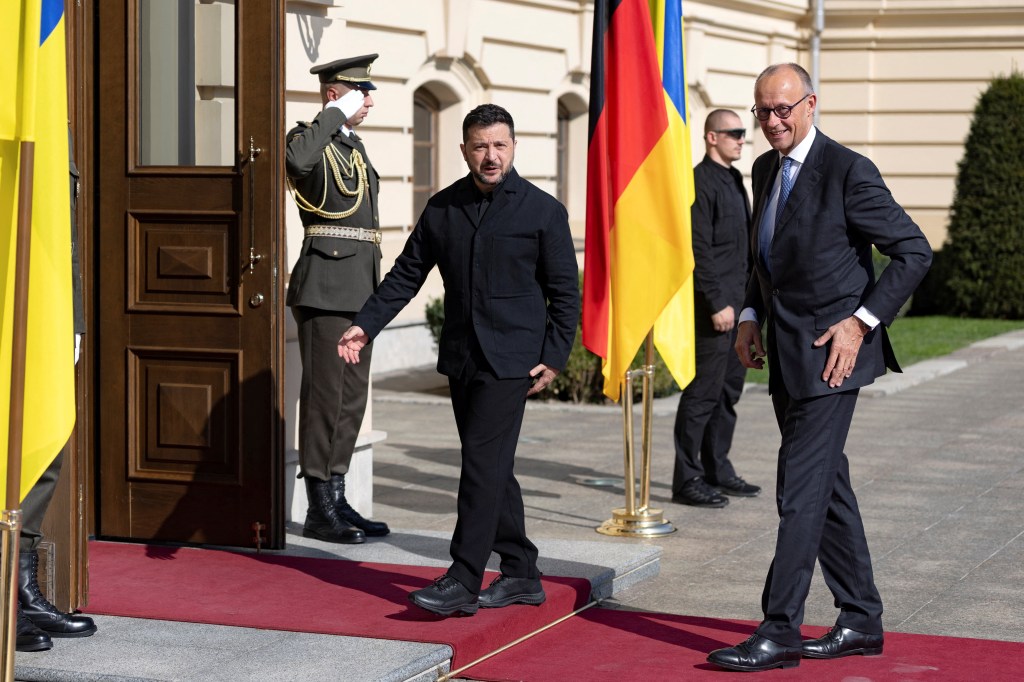
German Chancellor Friedrich Merz arrived in Kyiv on Sunday to air raid sirens and explosions as Russia pressed one of its most sustained drone campaigns against the Ukrainian capital since the 2022 invasion began.
Merz, 69, made the trip alongside Economy Minister Katherina Reiche and a delegation of defense and energy executives from companies including Siemens Energy, Hensoldt, Diehl Defence and Quantum Systems. The group visited the badly damaged building of Ukraine’s Academy of Sciences, where a drone strike last week killed at least two people in the heart of Kyiv.
“I can only repeat it once again from this point: Mr. Putin, put an end to this senseless war,” Merz said during the visit. “We are ready for talks, we are ready to discuss bringing this war to an end, but these barbaric attacks on the civilian population of Ukraine must stop,” he added.
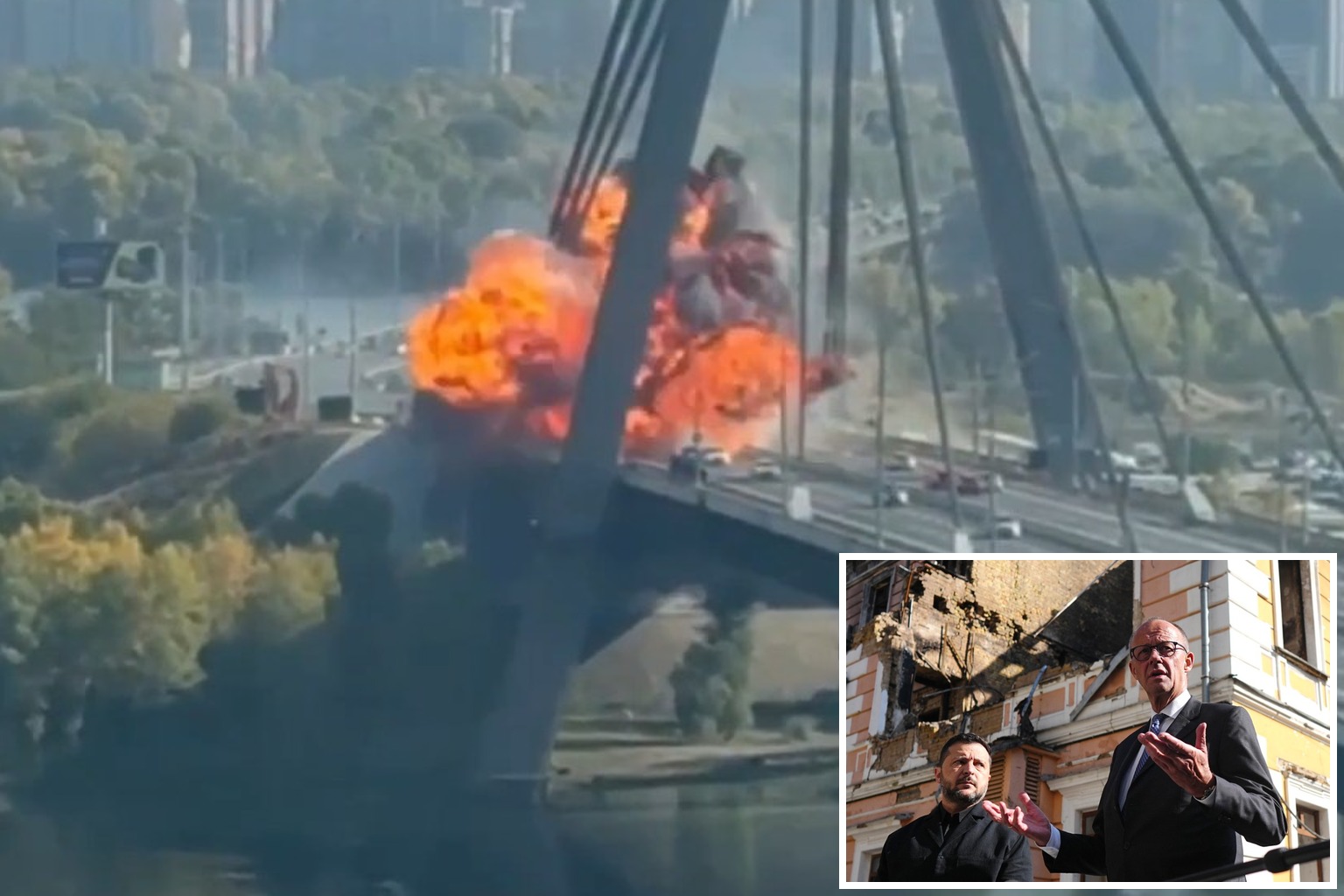
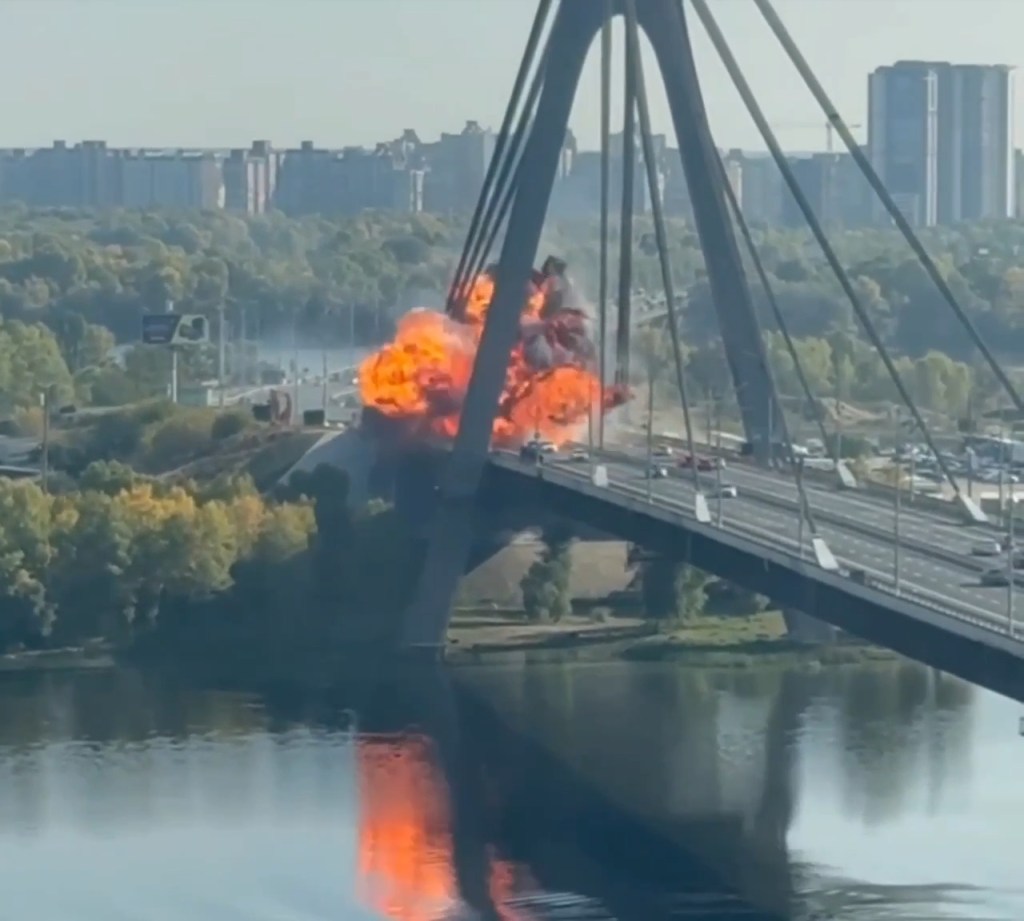
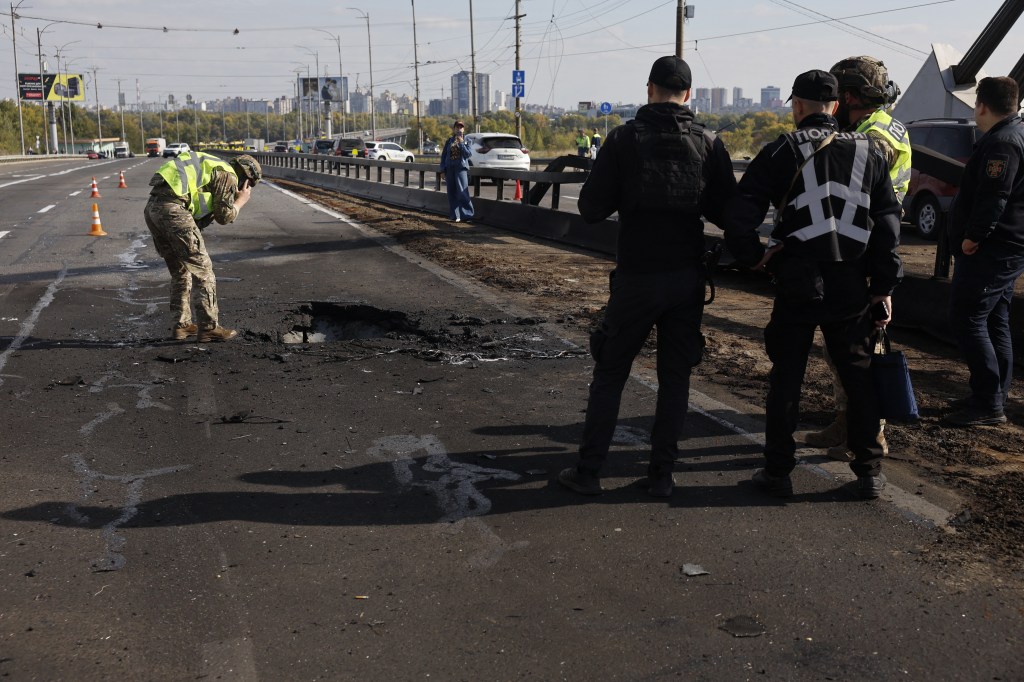
Four air raid alerts sounded across the capital on Sunday morning, with explosions and air defense systems active throughout the city. One Russian strike hit the Northern Bridge across the Dnipro River, damaging its roadway and injuring two people, Kyiv Mayor Vitali Klitschko said on Telegram. The attack also damaged a hot water supply system in the area.
Russia has targeted Kyiv’s bridges since last week, seeking to sever links between the capital’s two banks and disrupt logistics routes connecting central and eastern Ukraine.
The German delegation came bearing substantial military and economic commitments. Government officials said Merz will announce €1 billion ($1.13 billion) in military aid and €350 million ($394 million) for energy sector repairs. A deal for joint drone production is also set to be finalized.
President Volodymyr Zelensky, 46, had signaled the approaching agreement on Wednesday after a phone call with Merz, stating that Ukraine would soon finalize terms with Germany for producing drones, missiles and related software. A central element involves rapid production of anti-jet drones, which German defense-technology firm Quantum has successfully tested. Since summer, Russia has deployed dozens of high-speed jet attack drones daily against civilian and military infrastructure.
Quantum and Ukrainian manufacturer WIY Drones had already announced in April the creation of Quantum WIY Industries, a joint venture to produce the Strila interceptor drone and associated air-defense technologies. The broader deal also covers joint development of weapons with ranges exceeding 1,000 km (600 miles) that Ukraine could use for strikes deep inside Russian territory.
Merz is additionally expected to push Ukrainian officials for progress on reforms sought by EU partners, including anti-corruption measures.
The intensified Russian campaign comes after Moscow’s Foreign Ministry said Saturday that it would continue systematic strikes on Ukrainian targets as retaliation for Ukrainian attacks on Russia in recent months. The ministry warned foreign nationals and diplomatic staff against staying in or traveling to Ukraine.
Zelensky said on Saturday that Ukrainian forces would escalate their attacks on Russian oil refineries in response to what he called Moscow’s “new doctrine” of targeting civilian infrastructure, which he said aimed to drive residents from Kyiv and other cities.
The Academy of Sciences building that Merz and Zelensky toured stood as a stark illustration of that strategy, its damage still fresh from the deadly strike that killed at least two people in one of the most persistent waves of drone attacks on central Kyiv since the war began over three years ago.
Merz’s visit marks his first trip to Ukraine since becoming chancellor, bringing with it both immediate aid pledges and longer-term industrial cooperation meant to bolster Ukraine’s capacity to defend against and strike back at the aerial bombardment that greeted his arrival.