


President Trump pledged U.S. Assistance to Russia on Monday after a laboratory worker died at a plague research facility in Siberia, prompting local authorities to quarantine dozens of people.
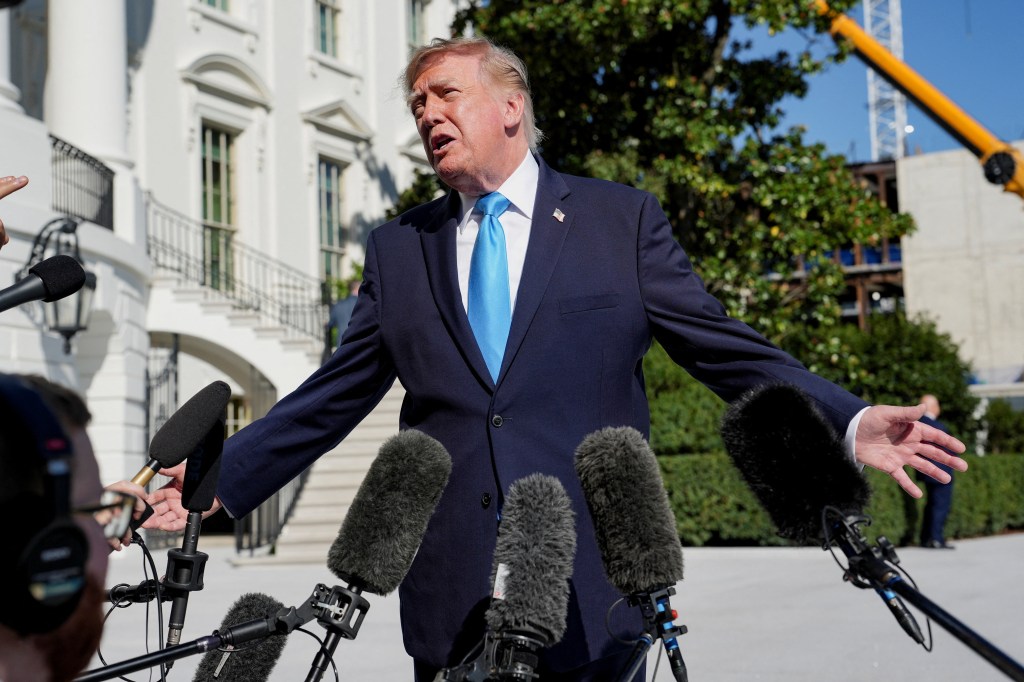
Speaking to reporters at the White House before departing for Nebraska, Trump, 78, framed the outbreak as a humanitarian concern transcending geopolitical tensions. The death occurred at a plague research institute in Siberia under circumstances that have not been publicly disclosed, and Russian officials moved swiftly to isolate those potentially exposed.
“Well, I hate to see them having it,” Trump said. “It’s a rough disease.”
The president indicated that American support would be forthcoming regardless of the adversarial relationship between Washington and Moscow. Russia’s ongoing war against Ukraine has severely strained bilateral ties, yet Trump has repeatedly characterized Russian President Vladimir Putin as a leader he can work with.
“We’ll help,” Trump continued. “Anybody that has that kind of a problem, we’re always will to help.”
Russian authorities sought to calm mounting anxiety as news of the death spread across social media platforms. On Monday, officials insisted the situation remained under control despite the quarantine measures and the opacity surrounding how the worker became infected.

The specific pathogen involved has not been officially confirmed, though the institute’s focus on plague research has raised concerns about potential pneumonic plague, a severe and highly contagious bacterial lung infection. Such facilities historically handle Yersinia pestis, the bacterium responsible for bubonic and pneumonic plague.

Trump’s offer marks a notable moment of diplomatic outreach toward Russia, a country he has approached with consistent warmth throughout his political career. His stated willingness to collaborate with Putin’s government on public health matters stands in contrast to the broader U.S. Policy of isolating Moscow economically and politically since the 2022 full-scale invasion of Ukraine.
The president’s remarks came unprompted as he fielded questions during his departure. He characterized the outbreak as a “big problem for Russia,” signaling his personal attention to the developing situation.
He said the US would do what it could to help Russia.
The quarantine of dozens of individuals suggests Russian health officials are treating the incident with significant caution, even as they publicly downplayed risks. Plague research institutes in Russia date to the Soviet era and maintain some of the world’s largest collections of dangerous pathogens.
Laboratory-acquired infections, though rare, represent a persistent concern for facilities handling biosafety level-3 and level-4 agents. The Siberian institute’s death marks the latest in a sporadic history of such incidents globally, including a 2019 Russian military lab explosion that raised questions about local containment protocols.
Trump’s spontaneous pledge of aid follows a pattern of unpredictable diplomatic gestures toward traditional U.S. Adversaries. The practical mechanisms for delivering American assistance remain unspecified, and neither the State Department nor health agencies have outlined concrete plans.
Trump is scheduled to continue his domestic travel with additional Midwest appearances this week.