
Tennessee Governor Bill Lee is standing firm against demands to spare Christa Pike from a second trip to the death chamber.
Pike, 50, has regained consciousness and is speaking after surviving two doses of lethal injection one week ago, a recovery her lawyers call “medically unprecedented.” The botched execution has left the state weighing whether to try again, a prospect her attorney Stephen Ferrell calls unconscionable.
“I don’t think that attempting another execution is going to bring justice,” Ferrell said Sunday.
“The least that could happen now is that we at least take the death penalty off the table and start looking for what the future could be for her,” he added on “CBS Mornings.”
Lee has shown no inclination to grant clemency. The outgoing governor maintains his duty is to enforce sentences handed down by Tennessee juries, not second-guess them.
“My responsibility is to uphold the sentences that Tennessee juries have handed down,” he said.
“The people of Tennessee have determined that the death penalty is the appropriate penalty for the most heinous crimes in the state. The people of Tennessee make that decision, and my job is to make sure that those sentences are carried out.”

The legal landscape surrounding a second attempt is murky at best. No federal precedent has been set on the question since 1947, when the Supreme Court declined to block Louisiana from executing Willie Francis, a Black teenager convicted by an all-white jury, after he survived a malfunctioning electric chair the year before.
“We’re in uncharted territory,” Robin Maher, executive director of the Death Penalty Information Center, said Tuesday.
“The US Supreme Court has not decided whether a second execution attempt would violate the constitution since 1947,” he continued. “These are questions that have never needed to be asked before and no one knows the answers.”
Maher suspects a second attempt would “likely be unconstitutional.”
“Of all the unknowns we have at the moment, the only thing I’m certain of is that she should not be subject to a second one,” he said. “She has already endured a torturous experience in that execution chamber.”
Pike’s physical condition remains grave despite her unexpected return to consciousness. Her lawyers said she suffered “severe damage” to her arms from the dual pentobarbital doses and warned it could be a “long time” before she can participate in legal proceedings.
“Her prognosis remains unclear but, at a minimum, we expect a long recovery,” they said in a statement.
The botched procedure has also reignited debate over execution methods in Tennessee. Senator Marsha Blackburn, 72, who is expected to succeed Lee as governor in November, has seized on the failure to advocate for restoring electrocution.
“While there should be a thorough review of what happened and why the process failed, the answer is simple: bring back the electric chair and deliver justice for these victims swiftly,” Blackburn said.
“As your governor I will do just that.”
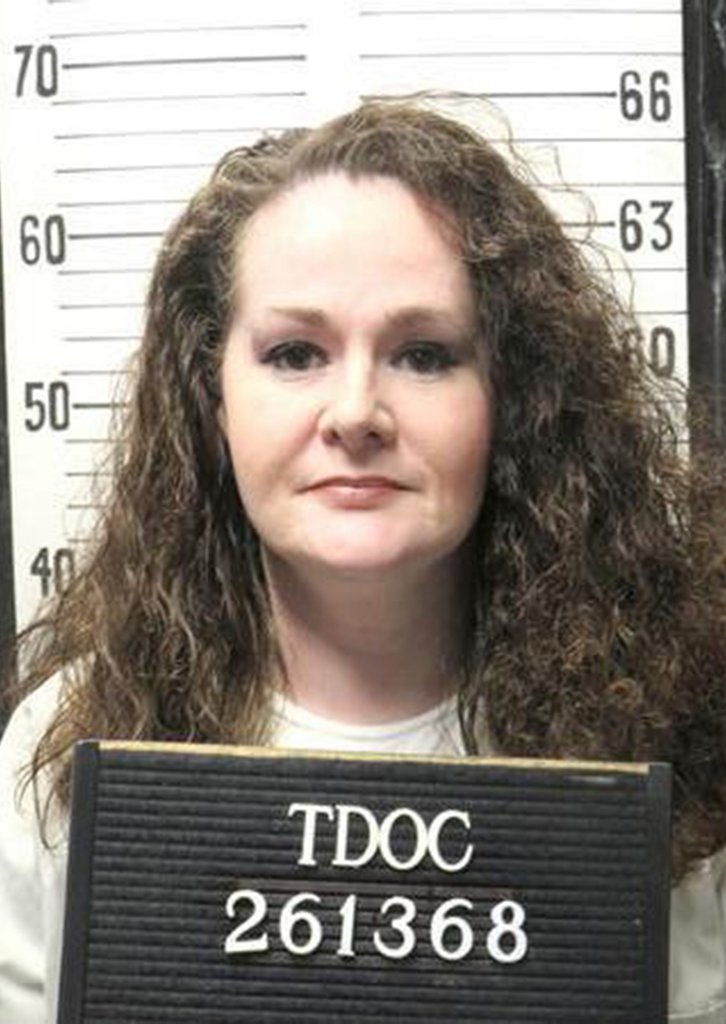
All state executions scheduled for this year have been suspended in the wake of the incident, though Lee has not ruled out Pike being put to death at a later date. Pike has spent more than three decades on death row for the 1995 murder of her Job Corps classmate Colleen Slemmer, whom she beat to death with a chunk of asphalt and carved a pentagram into her chest.
Pike’s survival marks the first known botched lethal injection in Tennessee history and has thrust the state into a constitutional and ethical quagmire with no clear resolution.