


Christa Pike has won a legal reprieve after a judge reopened her challenge to Tennessee’s lethal injection protocol.
Pike, 50, became the first death row inmate in U.S. History to survive a lethal injection attempt when executioners failed to kill her on Sept. 30. In an order issued Thursday, Judge I’Ashea Myles ruled that Pike’s case should be reopened in the Davidson County Chancery Court in Nashville, finding she had established “extreme, unique, exceptional, or extraordinary circumstances” warranting judicial relief.
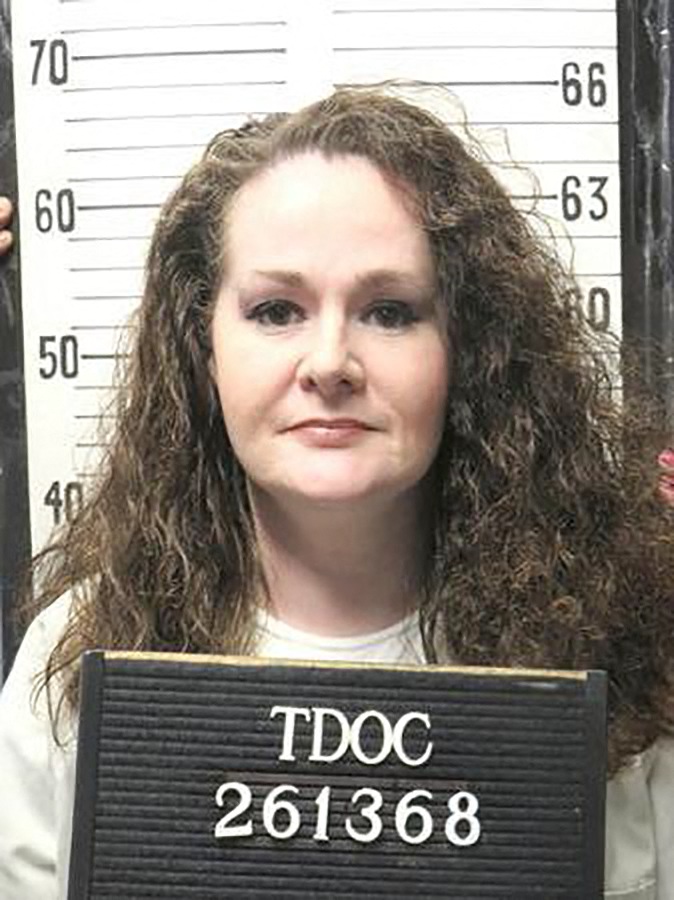
The ruling revives a complaint originally filed in January by Pike’s legal team challenging the state’s single-drug pentobarbital protocol. The Tennessee Supreme Court had dismissed that complaint in May, according to court documents. Her attorneys argued the protocol was “plagued with the same issues that have marked botched executions for decades.”
“Tennessee’s new lethal injection protocol, calling for a single drug (pentobarbital), is plagued with the same issues that have marked botched executions for decades: secrecy, intentional omission, inattention to detail, and untrained and unlicensed prison personnel attempting to fill medical role,” Pike’s lawyers wrote in the original filing.
“As the State of Tennessee seeks to execute its first woman in 250 years, and the only woman on Tennessee’s death row ––– Christa Gail Pike ––– those problems have come to head.”
Pike’s attorneys also contended her “physical characteristics,” including small veins, made needle insertion difficult and that the protocol was unconstitutional as applied to her unique medical conditions under both the U.S. And Tennessee constitutions.
The botched execution has drawn intense scrutiny to Tennessee’s capital punishment procedures. At a court hearing before Judge Myles on Wednesday, Tennessee Assistant Attorney General William Ayers replied “I can’t answer that question” when the judge asked whether Pike’s execution would be rescheduled.
Her legal team revealed harrowing details of the failed procedure: Pike was administered two doses of pentobarbital using at least seven needles, with one needle emerging from her arm bent at a 90-degree angle. She remained unconscious and in critical condition afterward, and her lawyers said they were told Monday she was brain dead and would be removed from life support the following day.
In a stunning development, Pike woke up on Tuesday and is now reported to be talking and walking.
Pike suffered a blood clot in her arm, developed pneumonia, and cannot eat following the botched execution, her attorney Randy Spivey told a press conference Wednesday.

The case has also raised questions about the constitutionality of Pike’s execution at the hands of an all-male team given her history of childhood rape and sexual violence. In July, the Tennessee Supreme Court appointed a senior judge to review that evidence. The investigation concluded in August that Pike’s legal team had failed to prove she faced substantial risk of pain, serious illness, or needless suffering, clearing the way for the Sept. 30 execution date.
Pike was sentenced to death for the 1995 murder of her 19-year-old Job Corps classmate Colleen Slemmer, committed when Pike was 18. She has been the only woman on Tennessee’s death row and was scheduled to be the first female executed by the state in over two centuries.
The failed execution was Tennessee’s second since May, prompting Governor Bill Lee to pause all remaining capital punishment for the year and order an independent review into what went wrong. The Texas Attorney General’s Office, which has faced its own scrutiny over execution protocols, declined to comment on Pike’s case due to pending and anticipated litigation, though it noted the governor had called for an investigation.
Pike’s attorneys did not immediately respond to a request for comment following Thursday’s ruling.