

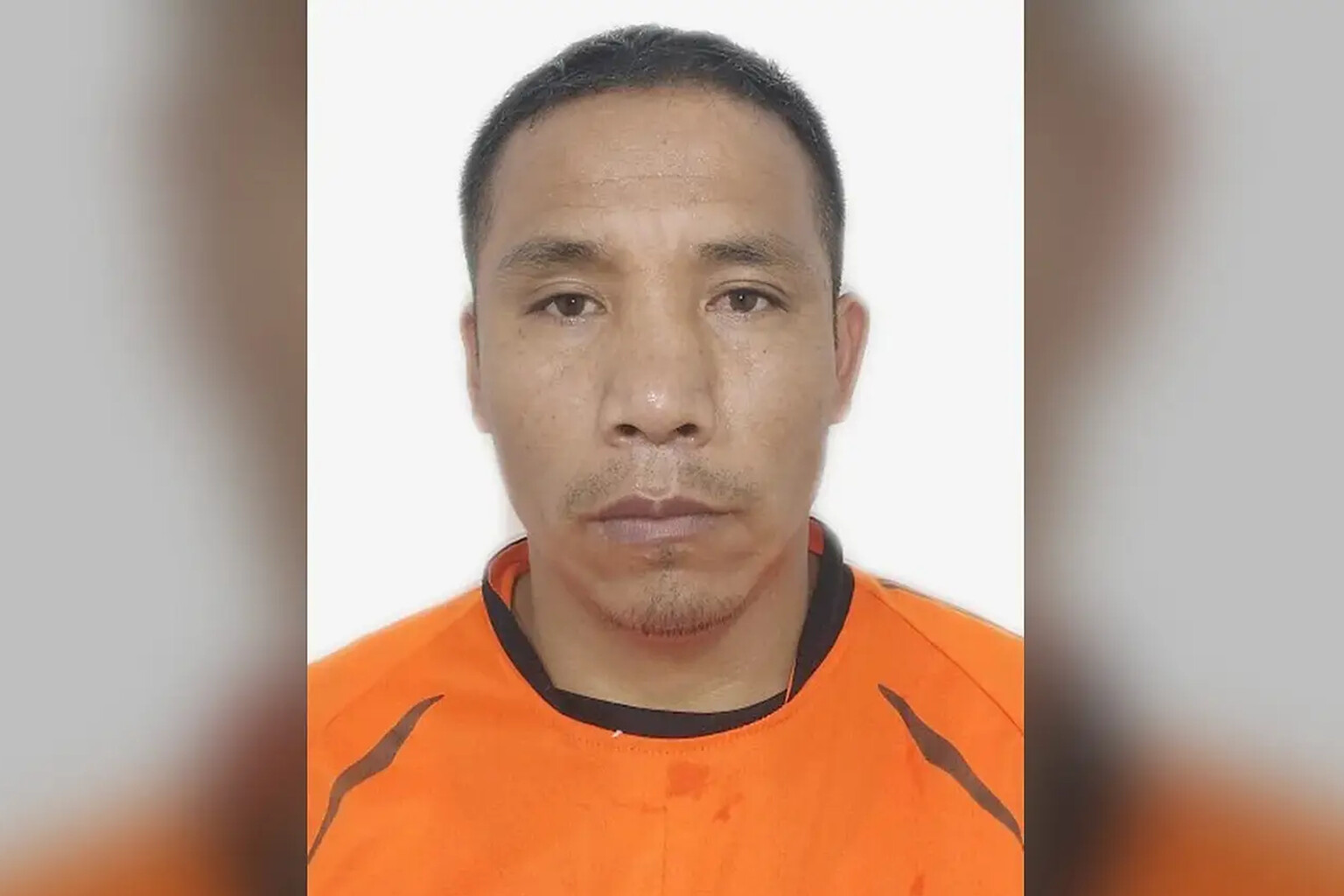
Hitler Mussolini Simeón Flores has broken his silence after winning a mayoral race in Peru’s remote Andes mountains.
Flores, 45, captured the mayor’s office in Queropalca, a district of roughly 730 residents, running on the centre-left Ahora Nación ticket. His victory came by a razor-thin margin of just 25 votes over runner-up Gaspar Benilde Osorio Zambrano, who pulled 204 votes to Flores’s 229. The tight race saw only 45 votes separate the top three finishers among 663 valid ballots cast, a common feature in the sparsely populated region.
The newly elected mayor had switched political allegiances shortly before his campaign. He resigned from the right-wing Popular Force party just one year prior to seeking office under Ahora Nación’s banner, a move that positioned him on the opposite end of Peru’s political spectrum from the ideology typically associated with his namesakes.
Flores is not the first person with the first name Hitler to win elected office in Peru. Hitler Guesclin Alba Sánchez claimed the mayor’s post in Yungar back in 2018, brushing off questions about his unusual name during that campaign.
“Maybe it’s a coincidence that my name is Hitler,” Sánchez said during the 2018 elections. “I really don’t have any objection to Hitler. It’s like any other name. For me, it’s as if my name was Juan, Lucas, or Sebastian.”
Sánchez maintained that his father had not understood dictator Adolf Hitler’s historical legacy when choosing the name. Flores, by contrast, has not publicly addressed whether his parents were aware of the connotations when naming him after both the German dictator and Benito Mussolini, the Italian fascist leader who allied with Nazi Germany and Japan during World War II and served as Prime Minister from 1922 until 1943.
The phenomenon of politicians bearing the Hitler name extends beyond Peru’s borders. In Namibia, Adolf Hitler Uunona swept to victory in 2020 local elections with 85 percent of the vote, then won re-election for a fifth term last year. His experience illustrates how attitudes toward such names can evolve over a political career.
“As a child I saw it as a totally normal name,” Uunona said following his initial win. “It wasn’t until I was growing up that I realised: This man wanted to subjugate the whole world.”
Uunona initially insisted he would keep his full name, telling the outlet that his wife called him Adolf and he had no plans to change. He later reversed course, dropping Hitler entirely and now going by Adolf Uunona.
“I have seen in the past people calling me Adolf Hitler and trying to associate me with someone I do not even know,” he explained to Namibian media about the decision.
The original incident that sparked international attention came in 2018, when Sánchez’s mayoral victory in Yungar first demonstrated that Peruvian voters would elect candidates despite—or without regard to—names tied to 20th-century fascism. That precedent established a pattern now repeated in Queropalca, where Flores’s dual dictator names failed to prevent his narrow electoral success in a community where personal relationships and local issues appear to outweigh historical associations at the ballot box.
Flores has yet to outline specific policy priorities for his term leading Queropalca, whose isolated location in the Peruvian Andes keeps it far from national political centers.