

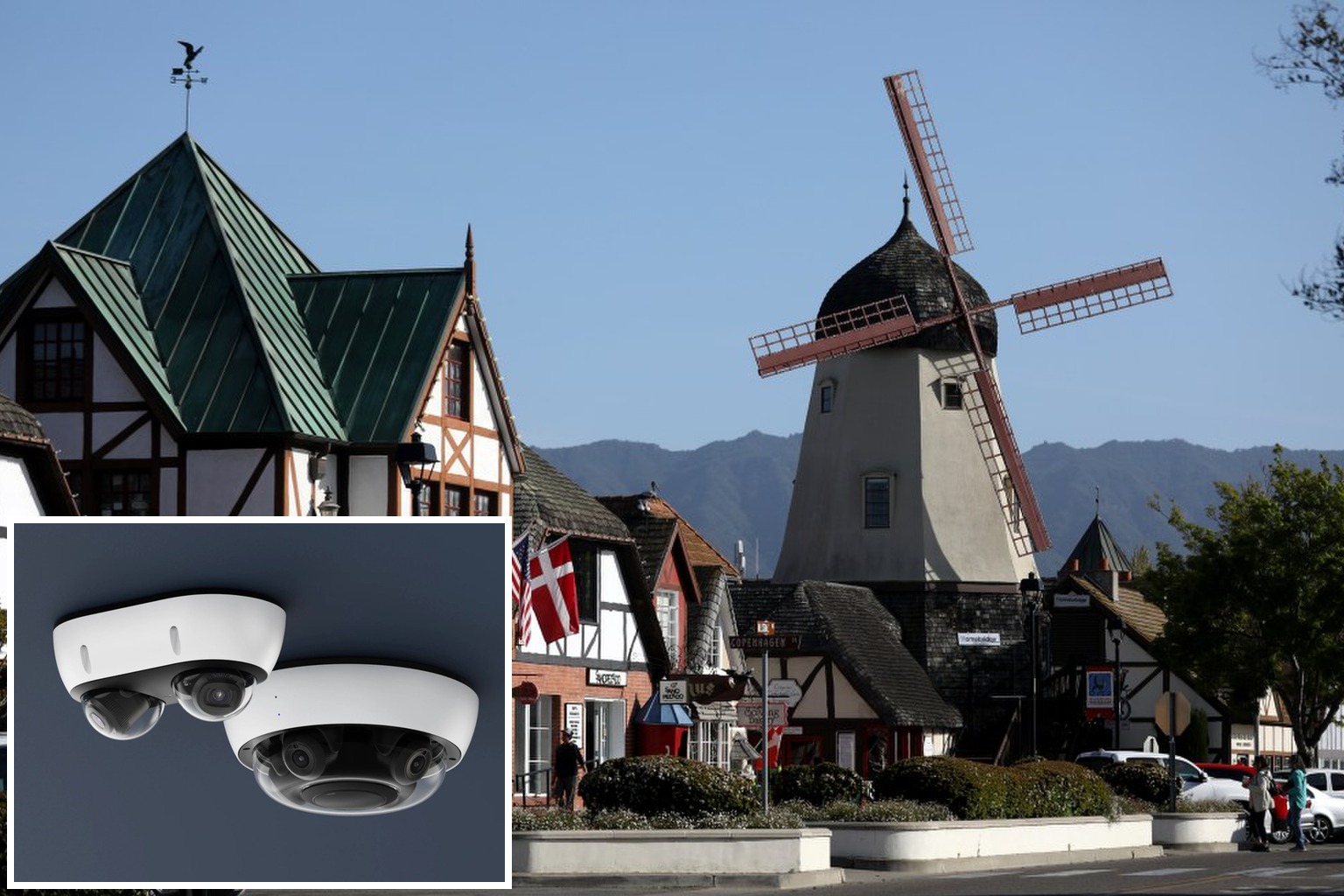
Solvang officials are reconsidering their AI camera policy after public backlash over surveillance of residents and tourists.
The Solvang City Council will re-examine its three-year contract with XIT Solutions, approved in July 2025, to install Verkada cameras across the Danish-themed tourist destination. The system was set to cover Solvang City Hall and its annex, Solvang Park near the public restrooms, First Street, and intersections along Alisal Road at Oak Street and Copenhagen Drive.
Councilmember Elizabeth Orona pushed for the review during the Sept. 14 City Council meeting, acknowledging the council had failed to scrutinize the technology before approving it.
“We said yes to an installation organisation, XIT Solutions … What we didn’t do was investigate what the camera technology really does and where the data gets stored and who has access to it and who’s governing that access to it,” Orona said.

Orona raised specific alarms about Verkada’s security record. She noted that the camera company had suffered hacks compromising super admin credentials, a breach that exposed the system’s vulnerability to unauthorized access.
The councilmember tied her request directly to Solvang’s broader expansion into artificial intelligence surveillance tools. She warned that the city is introducing facial recognition and license plate recognition without adequate legal guardrails.
“There is no California law in place for facial recognition anymore. So only our policy is in between the public’s expectation of some level of privacy and what we’re doing with that content and how we’re governing it and who has access to it and how secure it is,” Orona said.
The Santa Barbara City Council moved in parallel the very next day, abandoning its own planned Verkada contract until a comprehensive review of license plate reader policy could be completed. That decision, reported by the Santa Barbara News-Press, signaled widening regional resistance to unchecked surveillance deployment.
Solvang’s camera network would have monitored roughly 5,000 residents plus the millions of visitors who flock each year to the self-styled “Danish Capital of America,” a Central Coast destination known for its windmills, bakeries, and Scandinavian architecture.
The XIT Solutions contract covers multiple high-traffic locations mixing government facilities, commercial corridors, and public gathering spots where tourists and locals alike would be captured on camera.
Orona’s intervention marks a sharp reversal from the council’s unanimous July approval, which came without the technical due diligence she now says was missing. Her focus on data storage location, access governance, and breach history suggests the council had prioritized installation speed over privacy safeguards.
The absence of statewide facial recognition regulation leaves municipalities to craft their own policies, creating a patchwork of protections that Orona argued is insufficient for the technology’s risks.