

Madeline Enos has revealed the centuries-old origin behind the name El Niño.
Enos, a language trends expert for the learning app Preply, said that Peruvian fishermen coined the term in the 1600s after noticing warm ocean water was disrupting their catch. The phenomenon typically surfaced around Christmas, leading them to call it “El Niño de Navidad,” meaning “the Christ Child.”
The warm water peaked in late December, Enos noted, which coincided with the birth of Jesus Christ. Over generations, the full name compressed into the shorter form used today. “In later years, this was shortened to ‘El Niño’, translating to ‘the boy’ or ‘the little boy’ in Spanish,” she said, “describing a climate event where sea temperatures become unusually warm, affecting weather patterns.”
The counterpart phenomenon, La Niña, follows the same naming logic. Enos pointed out that “La Niña,” meaning “the little girl,” marks the opposite condition, occurring when oceans become cooler than usual. She added that the paired names serve a practical purpose beyond tradition: “What’s significant about these names, ‘El Niño’ (little boy) and ‘La Niña’ (little girl), is that they make it easier to distinguish between the two opposite climates, while reflecting their Spanish-speaking origins of the South American coast.”
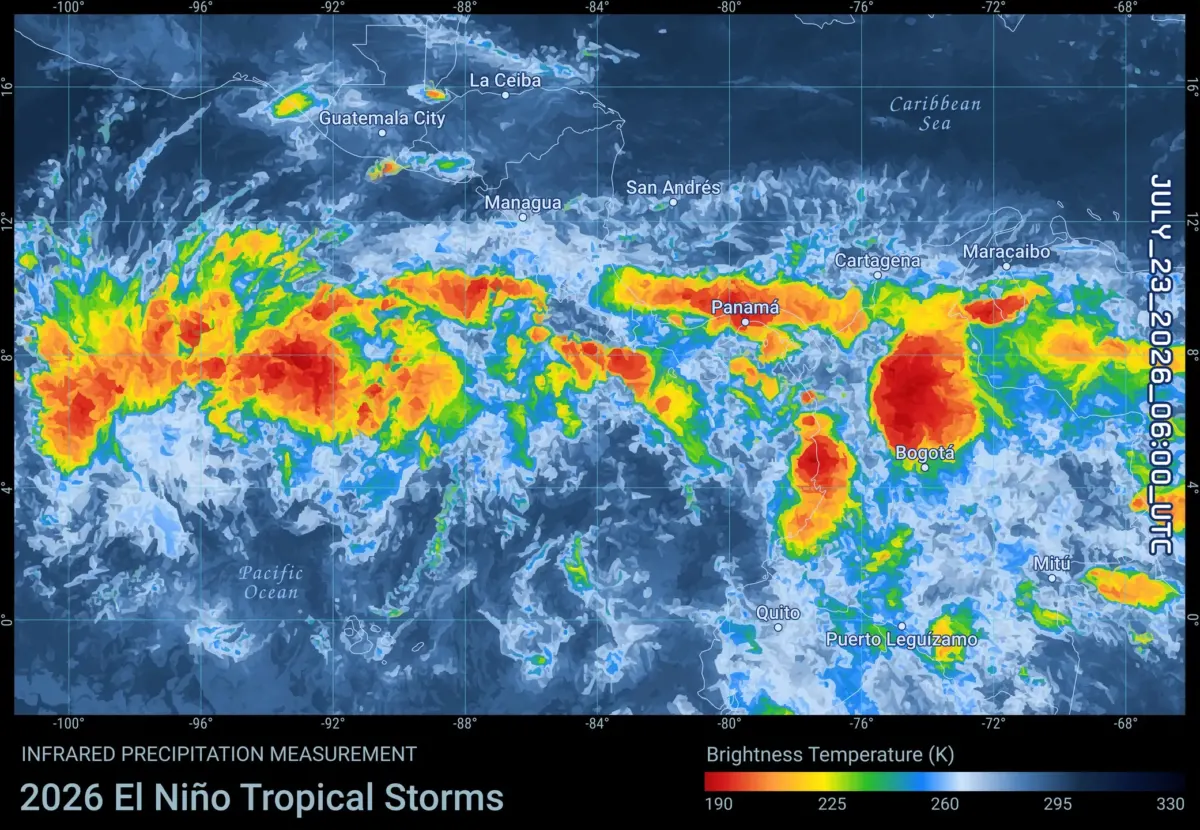
Forecasters have warned that the current El Niño could hit up to 19 states with severe weather through winter and into 2027. The affected corridor stretches from southern Maine down to Florida’s tip, with Alabama, Mississippi, Louisiana and Texas also in the zone. California faces a separate barrage of rain, snow, sleet and hail.
These events are not rare intrusions on Pacific hurricane season, though they vary dramatically in strength. When they intensify, regions can face dangerous spikes in precipitation or conversely crippling drought.
AccuWeather’s Paul Pastelok offered a contrasting forecast in a statement, suggesting 2027 might break from typical patterns. “It may be more about rainfall this year, coastal flooding, and rivers rising,” he said. “That’s something you talk more about during the spring, but it could be the opposite this year.”
The National Weather Service and other agencies continue monitoring the developing system as communities along both coasts prepare for potentially record-setting conditions.