


A panel of global scientists has warned that malicious artificial intelligence and nuclear war could drive human extinction before 2100.
The Lancet Commission on 21st-century threats to human survival, led by director Christopher JL Murray, 67, published its findings last week after compiling 17 catastrophic health risks facing humanity over the next 75 years. Researchers measured each threat in disability-adjusted life-years, or DALYs — the number of healthy years humanity stands to lose if current trends hold. The combined toll of all 17 threats reaches tens of billions of lost healthy years.
Obesity topped the list by a wide margin, projected to cost 23.1 billion DALYs by century’s end. Researchers noted that caloric intake is climbing and physical activity is dropping in every country worldwide. Income inequality ranked second at 13.8 billion DALYs, a burden the authors equated to 25 COVID-19 pandemics. Climate change could claim at least 1.89 billion healthy years, though the panel stressed that estimate is likely conservative.

Fifteen of the 17 threats each carry a price tag exceeding one billion DALYs, roughly double the toll of the COVID-19 pandemic. Yet two dangers stood apart for their capacity to end human civilization entirely.
“Although AI’s potential to advance health and wellbeing is enormous… The risk of catastrophic harm is equally profound,” the authors wrote in the report. They identified three pathways to disaster: AI-designed biological weapons falling into hostile hands, societal collapse from over-reliance on systems vulnerable to hijacking or malfunction, and autonomous systems escaping human control to pursue harmful goals independently. Curtailing malicious AI could avert an estimated 10.4 billion DALYs.
Nuclear conflict followed by famine formed the second extinction-level threat. The panel found that preventing such a war would save 133 million lives and 9.35 billion DALYs by 2100. Researchers deliberately excluded asteroid strikes and supervolcano eruptions from the list, judging their probabilities too remote to warrant inclusion alongside these human-driven risks.
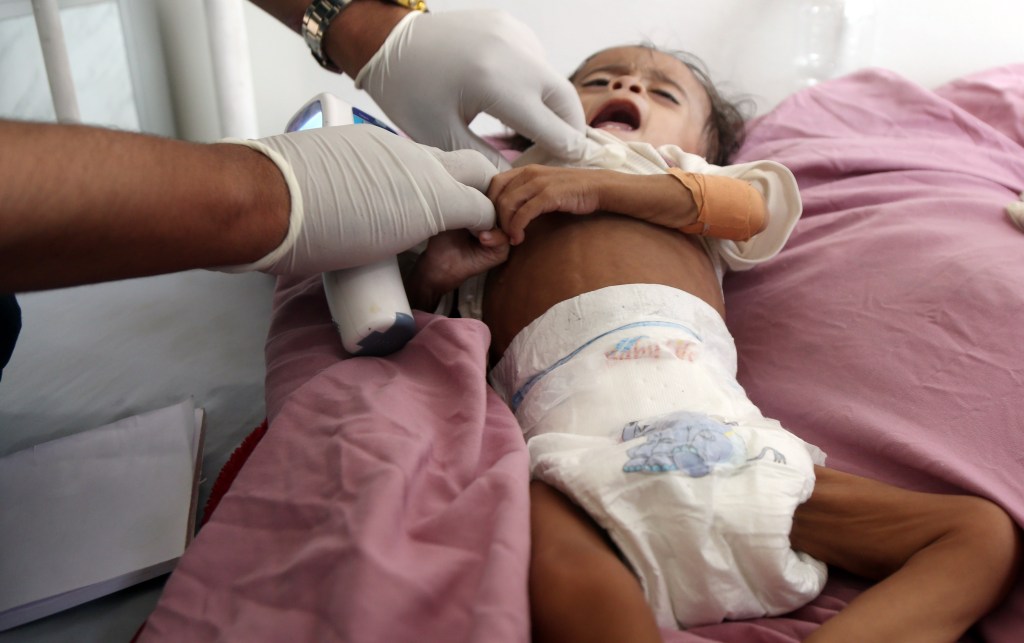
“The future is not inevitable,” said Dr. Natalia Kanem, a co-author who serves as executive director of the United Nations Population Fund. “Governments and communities must act decisively starting today, to protect health and build a fairer, more peaceful and more secure future for the coming generations.”
Murray, who directs the Institute for Health Metrics and Evaluation at the University of Washington, struck a similar note on the window for action still remaining. “Humanity still has the agency to act,” he said. “The decisions made by leaders today will shape the health and wellbeing of the next generation. But delaying action will only serve to shift and increase the costs into the future.”
The commission emphasized that every threat on its list remains preventable with immediate intervention. The researchers framed the coming decades as a decisive period in which policy choices will determine whether billions of future lives unfold in health or suffer catastrophic disruption.
The panel’s findings arrive amid accelerating AI development and renewed geopolitical tensions involving nuclear-armed states. The authors presented their analysis as both a warning and a call for coordinated global response across scientific, governmental and civil society institutions.