

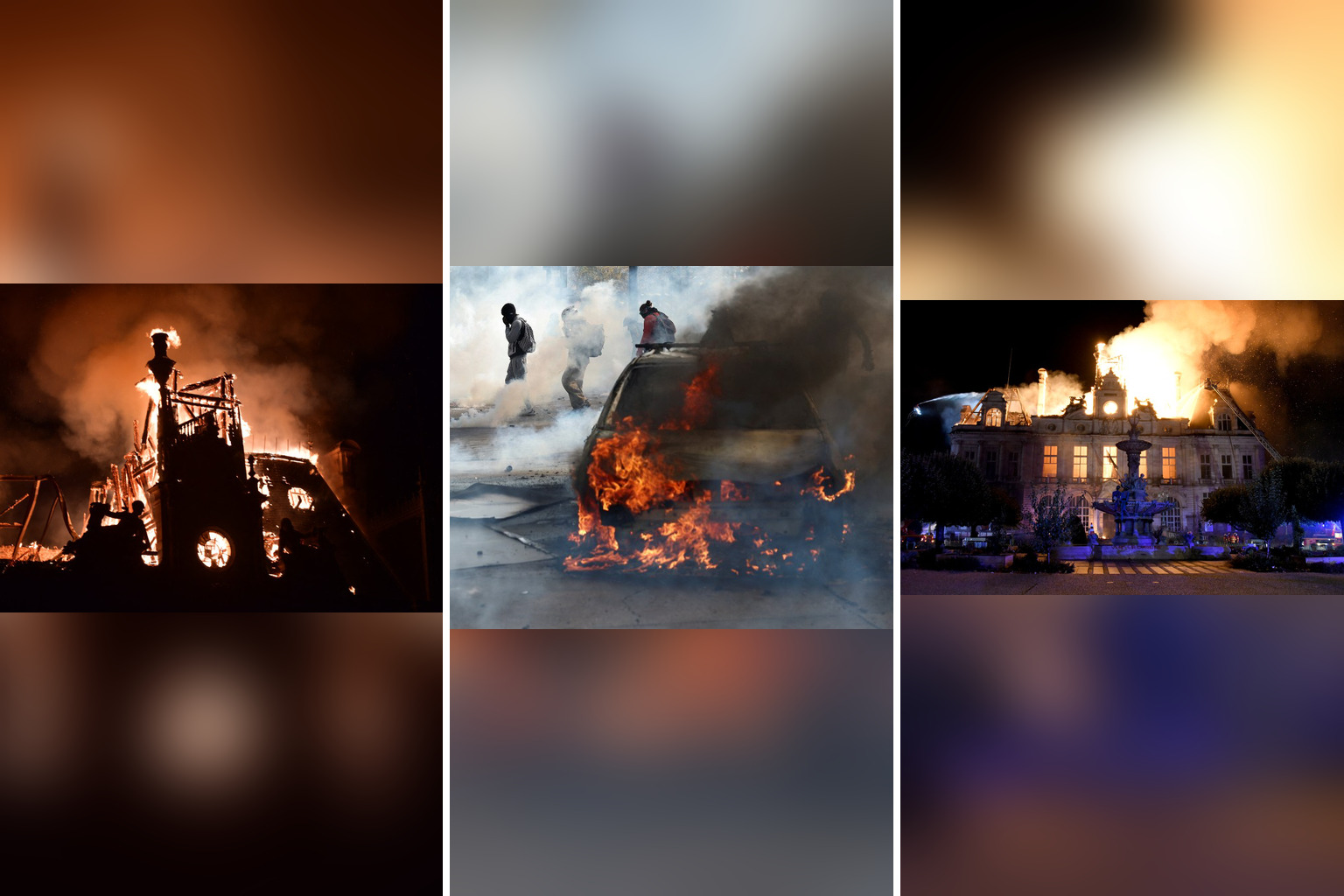
Emmanuel Macron has vowed prosecution for rioters who torched a 142-year-old town hall as France’s cost-of-living protests escalated into their most destructive weekend yet.
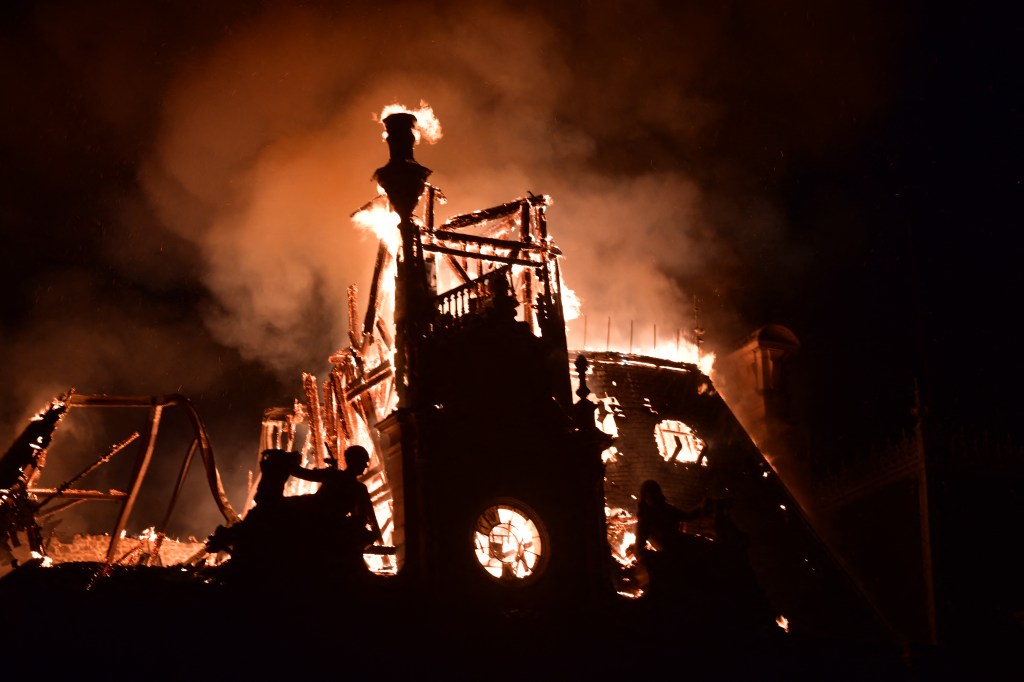
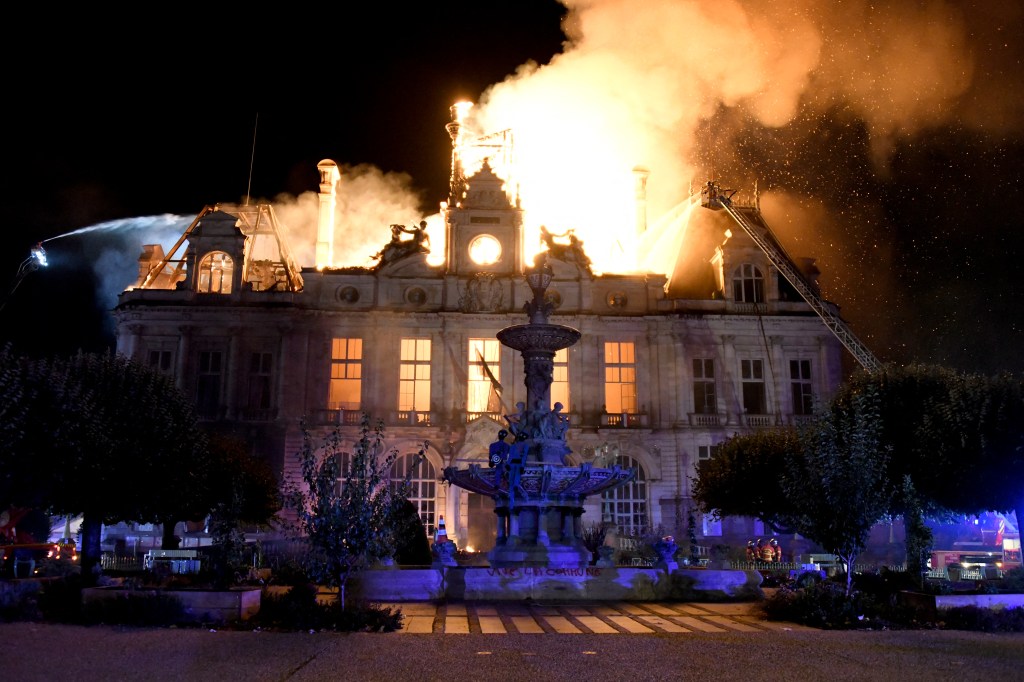
The Limoges Town Hall, a historic landmark built in 1883 and protected since 1975, was “largely lost” to flames during nationwide demonstrations on Saturday, local prefect Maurice Barate told AFP. “The roof has collapsed onto lower floors, except the west wing, and two-thirds of the exterior has already disappeared,” Barate said. He called the blaze “a deliberate act by hooligans” and labeled it “a catastrophe for heritage.”
Outgoing President Macron addressed the violence on social media with a forceful warning to perpetrators. “There is no place for violence in our republic,” he wrote. “Those who have broken, attacked the prefectures as well as businesses, looted even our town halls, will be prosecuted and punished,” He added translated from French: “To the law enforcement forces, guarantors of the right to demonstrate, I express the support of the Nation. We will all stand united against the sowers of chaos, who seek only to bring down our institutions and prevent those who peacefully express their demands from doing so.”
Interior Minister Laurent Nuñez reported that around 400 people were arrested Saturday as more than half a million demonstrators joined over 100 marches across the country. Masked groups also attempted to storm city halls in Lille and Calais and a police station in Brest, with violence additionally flaring in Rennes, Toulouse, Montpellier and Grenoble.
Nuñez pinned the destruction on “extremely violent, radical far-left groups,” a characterization that underscored the government’s effort to separate organized agitators from peaceful protesters.
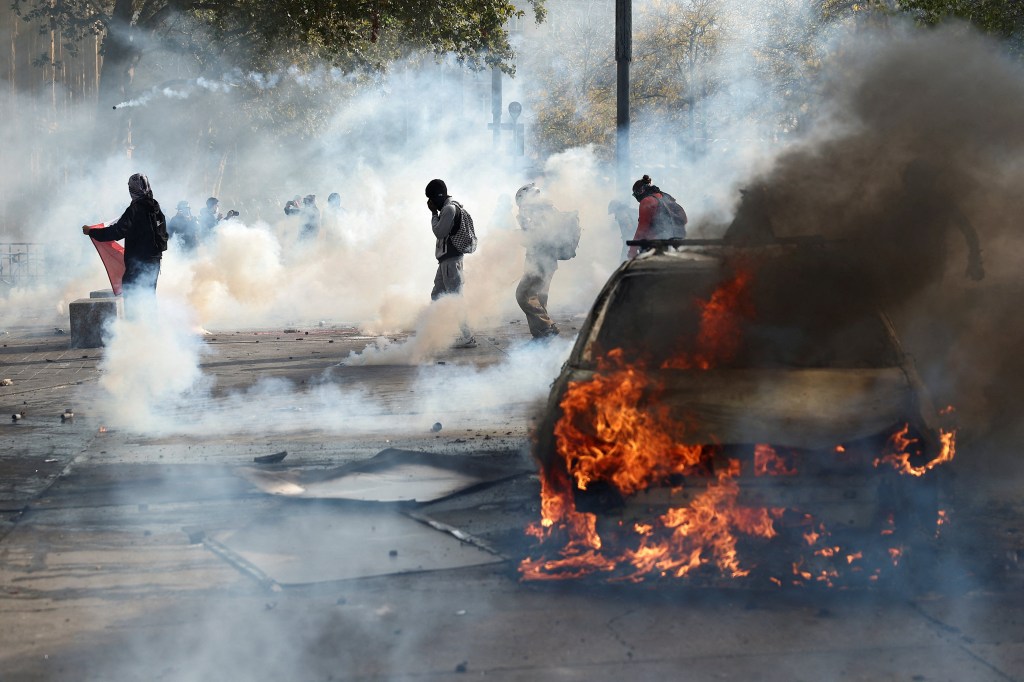
In Paris, police deployed tear gas and water cannons to disperse hooded and masked individuals who hurled fireworks and other projectiles at officers in the Place de la République. The confrontations marked another flashpoint in a capital that has seen repeated clashes during the four-week protest wave.
While many demonstrations remained nonviolent, the scale of Saturday’s destruction represented a sharp escalation in a movement driven by economic grievances. The targeting of municipal buildings — particularly one of such architectural significance — shifted the crisis into new territory.
The Limoges structure had stood for nearly a century and a half before Saturday’s blaze reduced much of it to rubble, striking at a symbol of local governance and French civic heritage.
The unrest has persisted for four weeks across France, with cost-of-living pressures fueling anti-government sentiment that has drawn participants from across the political spectrum, even as officials insist radical elements are responsible for the worst damage.
Macron’s intervention carried added weight given his status as outgoing president, with his term nearing its end amid one of the most sustained periods of civil disorder France has experienced in years.