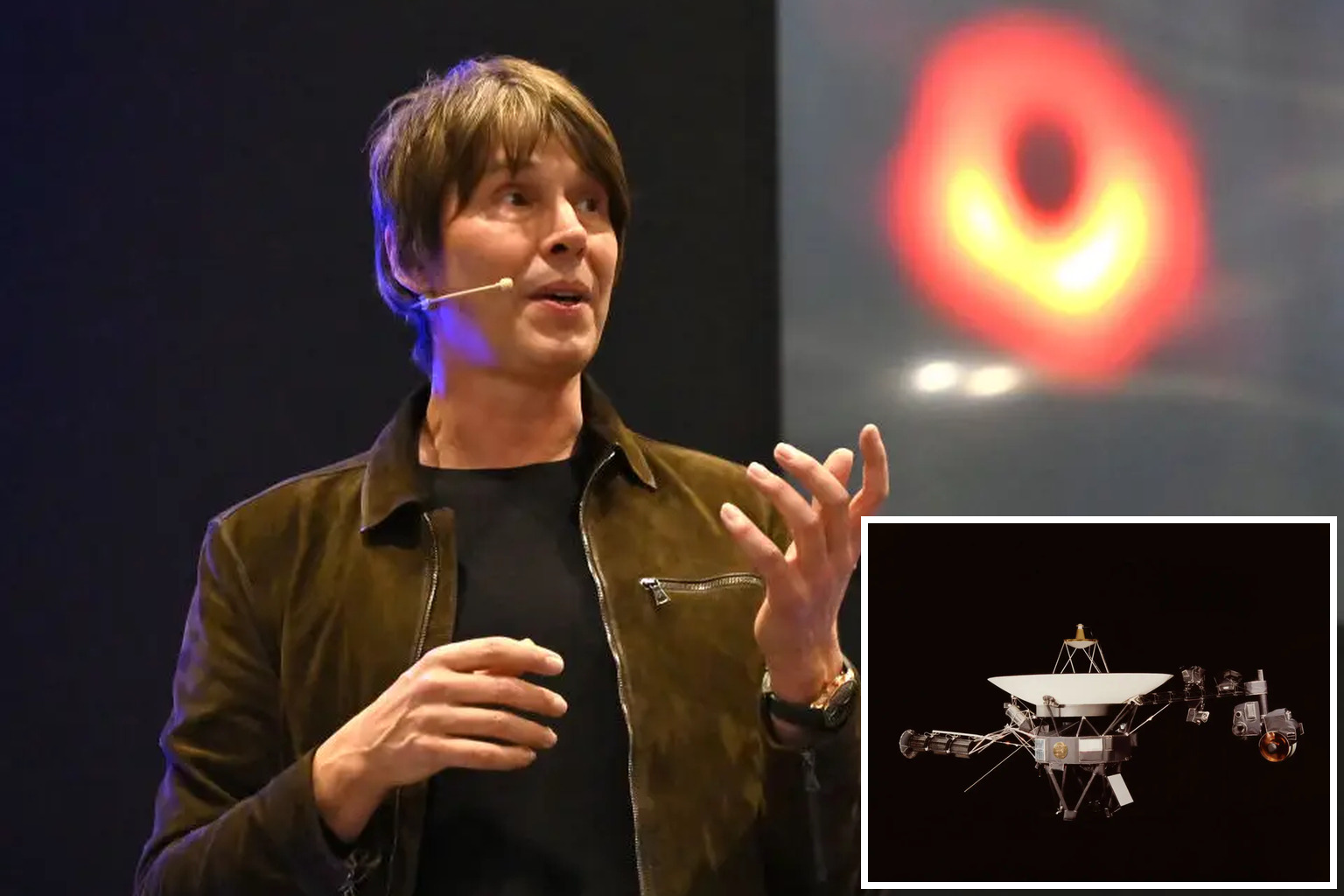
Professor Brian Cox has warned that humanity could be the sole bearer of meaning across an entire galaxy of 400 billion suns.
The physicist and broadcaster, 57, laid out his stark vision during a sit-down with the outlet for its “Explainer with a Stranger” series. He said the possibility that intelligent life is extraordinarily rare leaves him terrified, and that he would much prefer company among the stars.
“I’d prefer it if there was someone else out there,” he said. “So even if some idiot presses the wrong button, there’s meaning somewhere else close by.”

Cox argued that if intelligence truly is a cosmic anomaly, an enormous responsibility falls on human civilization alone. “If it is true that intelligence is extremely rare, then it seems to be that there’s a responsibility that falls on us to ensure that meaning exists in our little corner of space,” he added.
His assessment of life’s prevalence beyond Earth is layered. Microbes, he suggested, likely flourish even within our own solar system. Intelligence is the sticking point. “My guess is that the length of time it takes to go from single cells to intelligence is enormous, and that’s why civilizations are rare,” he said.
The Manchester-born scientist framed his position through the lens of the “great filter,” a concept holding that civilizations encounter a near-inevitable barrier before achieving interstellar capability. Should that filter lie ahead of us, Cox warned, every advancing society would inevitably discover atomic power, develop weapons and artificial intelligence, and destabilize its planetary climate.
“Once you’ve got the power to destroy yourselves, at some point somebody just does it and prevents civilizations becoming spacefaring civilizations,” he said.
Cox offered a more hopeful alternative: the filter may already be behind us. Under this reading, intelligence itself is the rare fluke, but nothing now blocks humanity’s path to the stars. He cited the two Voyager spacecraft, which entered interstellar space and will mark 50 years of operation next year, as proof that the barrier can be cleared.
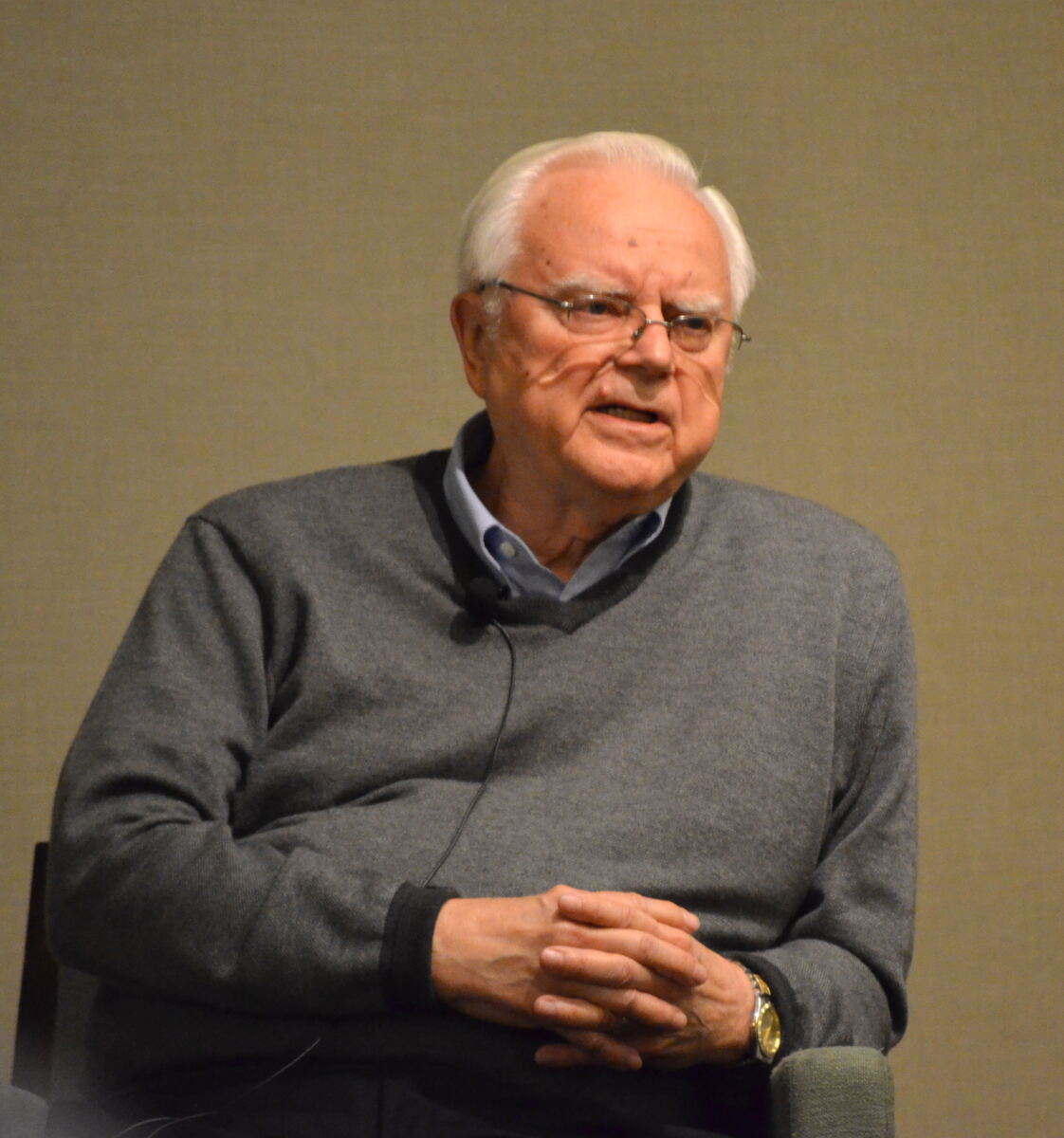
The discussion turned to the long silence from the cosmos. Cox noted that the Search for Extraterrestrial Intelligence, or SETI, has operated for at least half a century. He recalled meeting Frank Drake, the astronomer whose Drake Equation estimates how many intelligent civilizations might inhabit the Milky Way. Despite decades of listening, SETI has detected nothing, a void astronomers term the “great silence” or the Fermi paradox.
Cox emphasized the scale of the mystery. The Milky Way contains roughly 400 billion suns, with more than 6,000 planets directly detected around stars beyond our solar system, implying trillions of planets galaxy-wide. He called it inconceivable that no civilizations far more advanced than ours should exist, yet the airwaves remain dead.
He also invoked Arthur C. Clarke, author of 2001: A Space Odyssey, who famously declared that both possible answers to whether aliens exist are terrifying.
On earthly mysteries, Cox was dismissive. He said he does not believe anything of consequence hides at Area 51, the classified Nevada military installation long central to UFO conspiracy theories.
“I would find it astonishing, given my experience of governments and the competence of them, that they’re managing to keep these very big things secret,” he said.

The interview arrives as Voyager 1 and Voyager 2 continue their outward journey, now more than 15 billion and 12 billion miles from Earth respectively, still transmitting data across the void.