

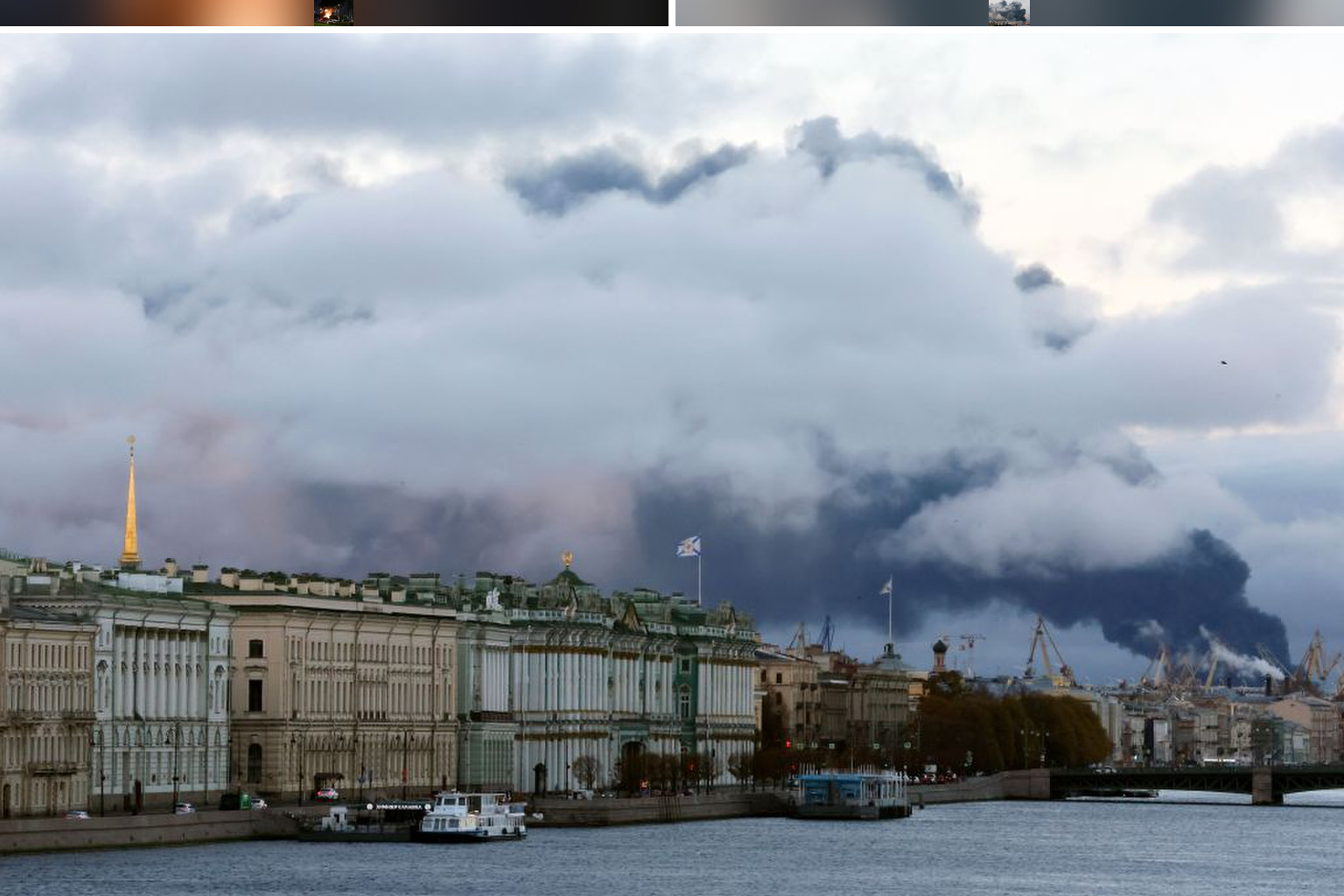
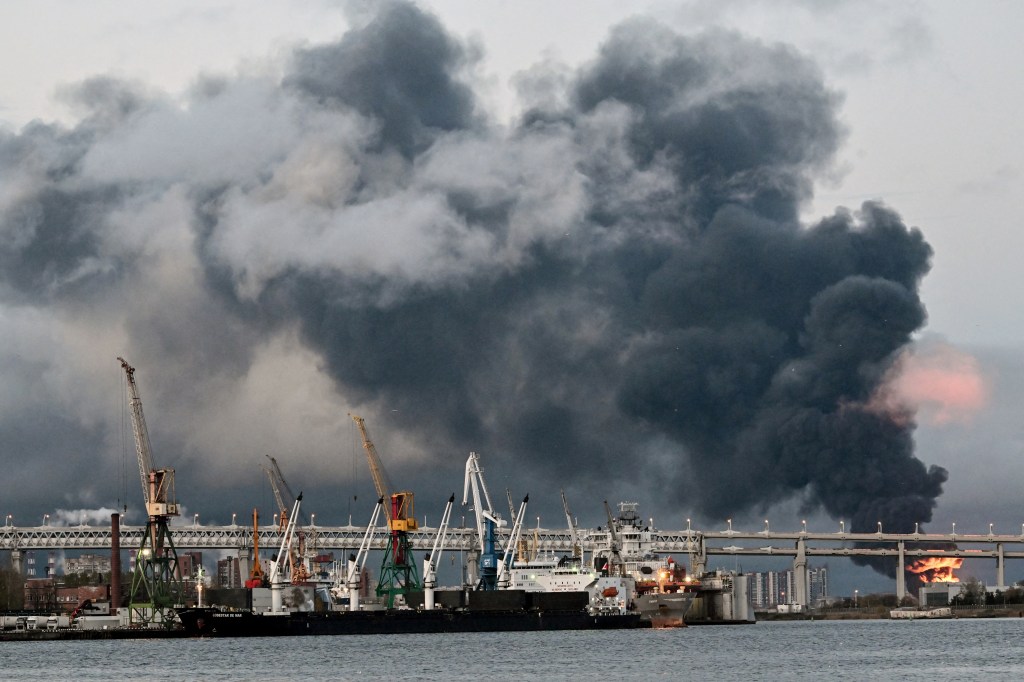
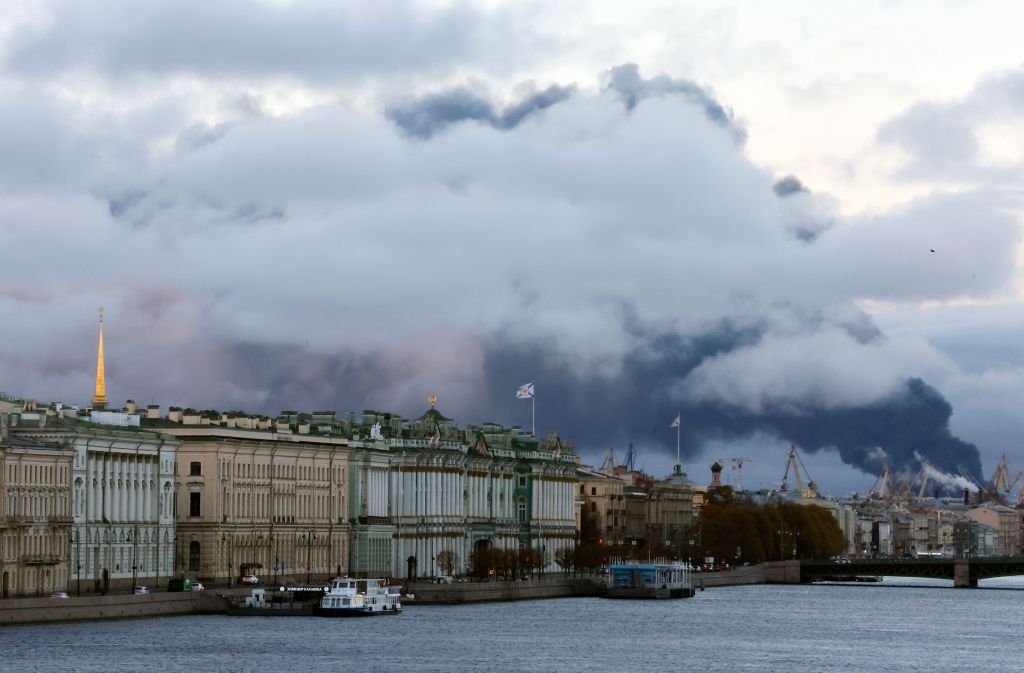
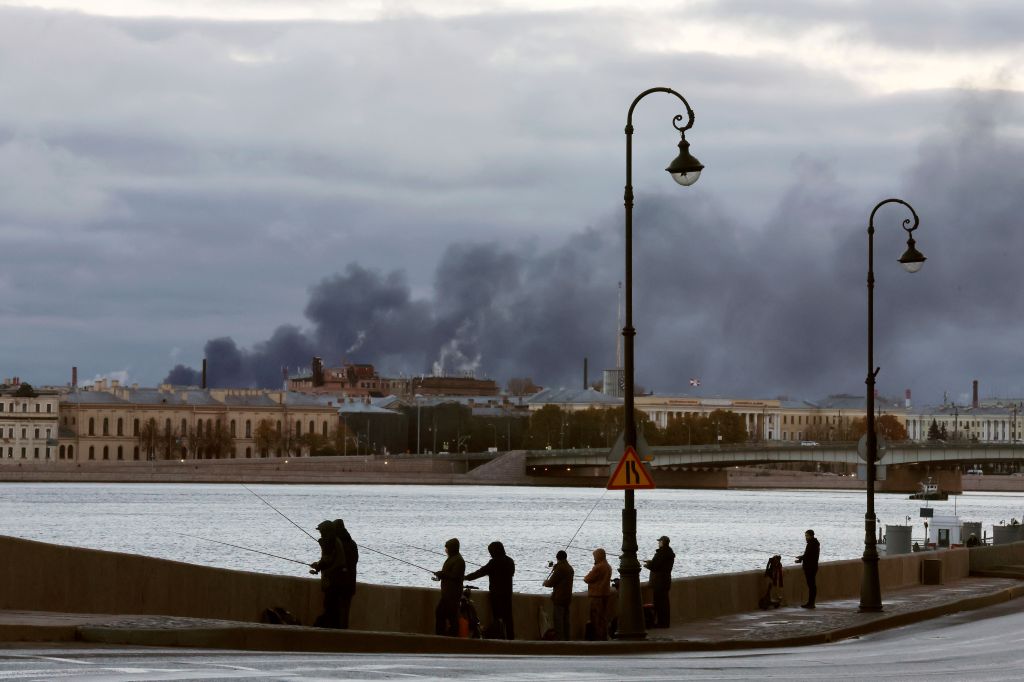
Ukraine launched one of its largest drone offensives of the year, striking oil facilities in Vladimir Putin’s hometown of St. Petersburg as Kyiv defied President Trump’s push for an energy cease-fire.
The overnight barrage involved roughly 1,000 drones and left the Petersburg Oil Terminal and the city’s Ruchi oil depot burning, regional authorities confirmed. At least one person was killed and five others were wounded in the strikes on the oil infrastructure, St. Petersburg Gov. Alexander Beglov said.
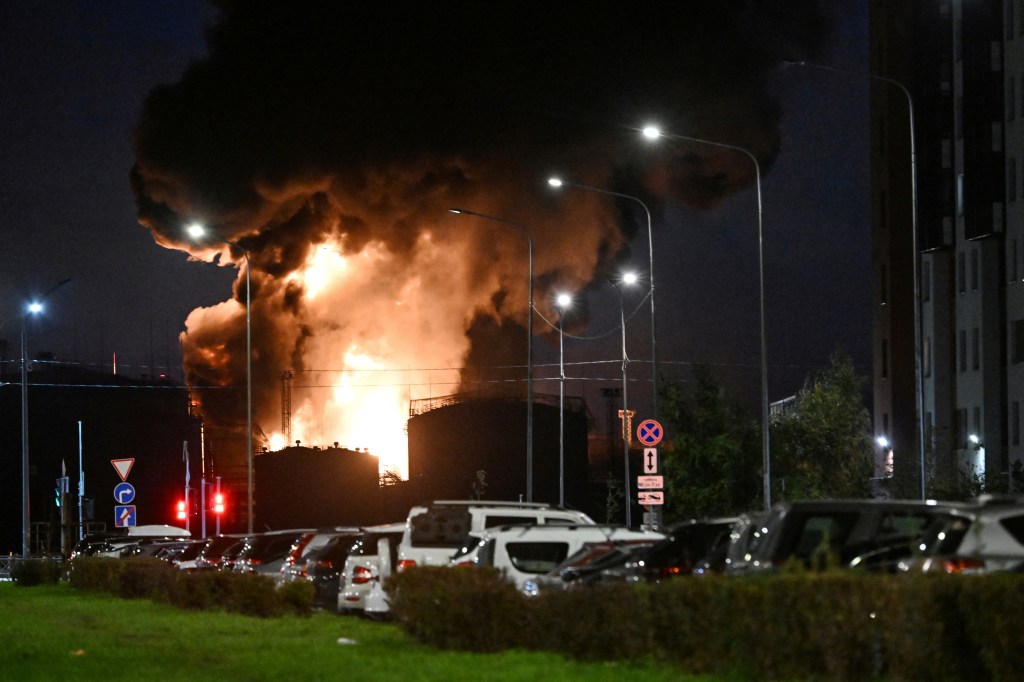
The attacks extended beyond energy targets. Russian retailer Ozon confirmed one of its logistics centers was hit, while tech giant VK verified damage to a data center. Russia’s Ministry of Defense claimed its forces destroyed 1,015 Ukrainian drones across 15 regions, including annexed Crimea and the Black Sea.
Putin, 72, spent his formative years in St. Petersburg—then Leningrad—and served as a deputy to the mayor during the 1990s before rising to national power. The symbolic weight of striking his hometown was not lost on either side.
Kremlin spokesperson Dmitry Peskov framed the bombardment as proof that Ukraine continues to “resist” the Russian invasion, but he dismissed its strategic value. “The current course of events” would not be altered by such attacks, he warned.
Ukrainian President Volodymyr Zelensky embraced the operation and vowed more would follow. “The trend this year continues – since the start of fall, our warriors have liberated more territory than the Russians have managed to capture,” he said on Sunday.
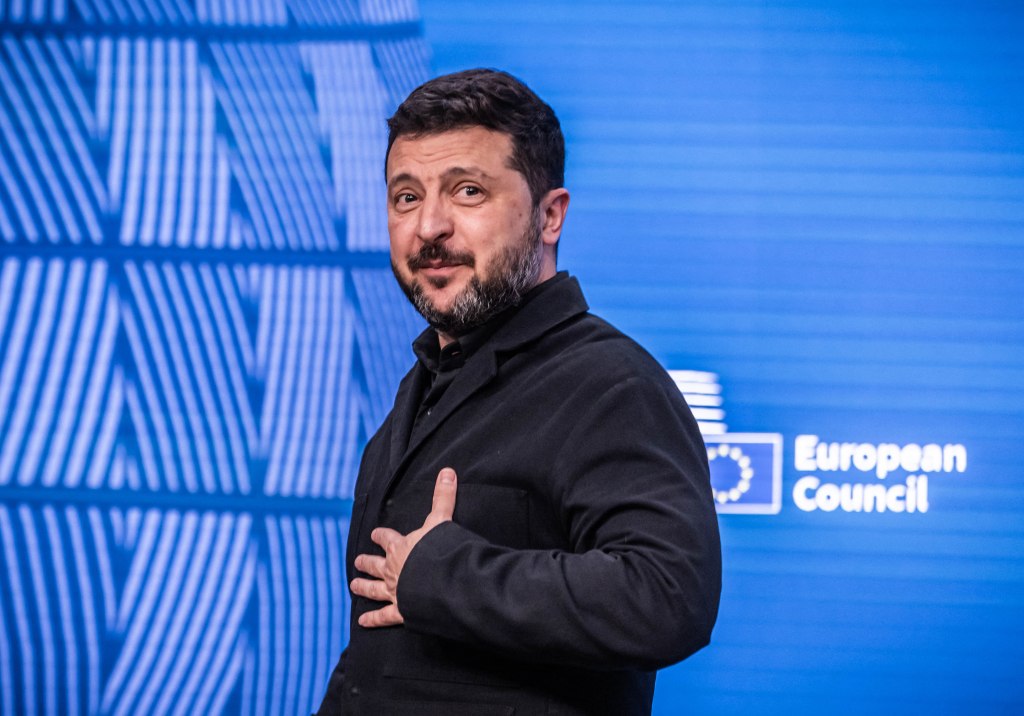
“Our front is strong, and I thank every warrior and every one of our units that is carrying out its tasks in full,” he added.
Zelensky also rejected Trump’s energy cease-fire proposal, which the U.S. President had paired with an effort to purchase Russian diesel. Since Trump announced that cease-fire, Russia has launched more than 76 attacks on Ukrainian energy, oil and gas facilities, the Ukrainian leader noted.
“America should see that Russia is not taking any reciprocal steps in response to sanctions relief or agreements,” Zelensky said. “On the contrary, they take every signal of an opportunity to make money as proof that their bet on war is paying off and they can keep fighting.”
Trump has stood by the cease-fire and diesel deal. He signed an executive order Friday waiving planned restrictions against Moscow, citing U.S. National interest. “We’ll figure it out, and you’ll figure it out. But it’s a very good decision, and it’s going to be a decision that’s good for the country, and I think good for the world,” the president said Saturday.
The strikes came as Russia held the final day of elections, and as military analysts have warned that Moscow would intensify attacks on Ukraine’s energy sector heading into fall. The goal, observers say, is to force Kyiv into major concessions or endure another punishing winter.
The Kremlin has insisted it will prevail despite suffering some of its heaviest losses this year—a claim Zelensky directly challenged with his tally of territorial gains since autumn began.