

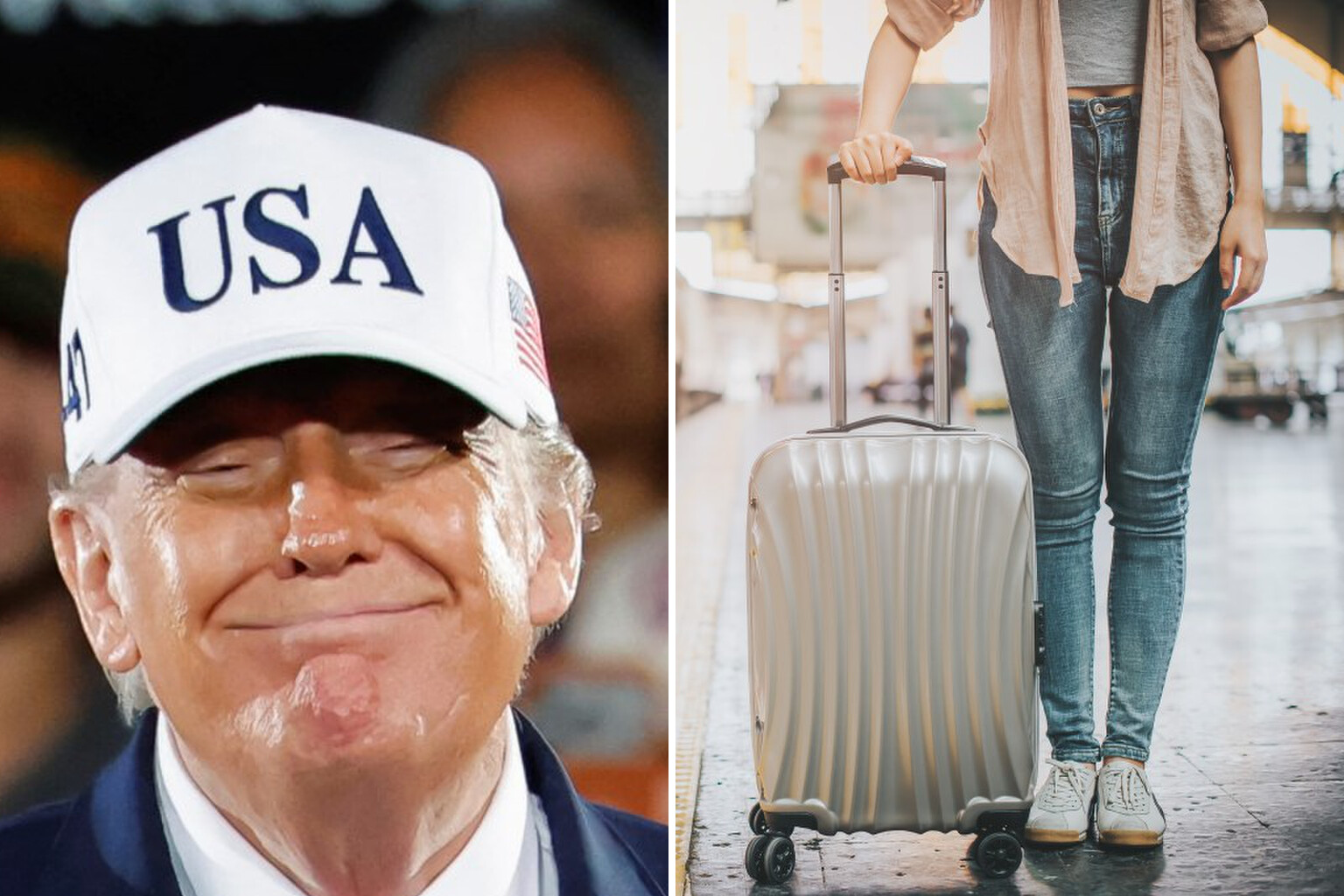
Americans who fled to Europe after Trump’s re-election are now publicly regretting the move.
Wired Magazine published a feature Thursday, “They Fled Trump’s America. Now They Regret It,” gathering accounts from self-described liberal Americans who sought what the outlet called “political refuge” following Trump’s second term. The piece documented a wave of disillusionment spanning the UK, Germany and beyond, with former emigrants citing economic hardship, cultural friction and a sharpened appreciation for American life.
One former mover, identified only as “Annie,” told the magazine she had been seduced by social media portrayals of an idyllic British existence. The reality proved starkly different.
“There are huge misconceptions about access to quality healthcare, standard of living… the quality of life is significantly lower than in the US,” she said, pointing to everything from the National Health Service to sharply reduced disposable income. Annie noted that appliances Americans consider ordinary, like dishwashers and dryers, register as luxury items in the UK.
She also confronted unexpected costs she had assumed were covered. “So no, the health care is not free here,” she told Wired, explaining that she pays “huge amounts of taxes and an immigration surcharge” for NHS access.

The workplace culture jarred her as well. “I found it particularly surprising how people feel so comfortable mocking my accent and culture, even in a workplace environment,” Annie said. She added that she had expected “British politeness” to match cinematic portrayals, only to encounter what she described as an individualistic culture lacking American-style charity and helpfulness. “The UK is very much a place of ‘it is what it is,’ but as Americans we are taught to always improve and strive for better things,” she continued.
Sarah Wood González, a journalist and consultant, offered a similar reassessment of American traits she had previously undervalued. “Something I had taken for granted is the American outgoingness and default to action, where the question is ‘how can we collaborate?'” she told the magazine. “Generally speaking, I also found that the American work style, for better or for worse, moves much faster and can get to a yes or no in less time.”
Josh, who relocated to Germany, had already reversed course and moved back to the United States. He told Wired the decision came after grinding job searches and mounting bureaucracy. “Finding work was so hard, and the endless bureaucracy had grown worse since I’d left,” he said. He missed “the friendlier people, freedom of speech, and ease of daily life” stateside, and found German society permanently exclusionary. “If you aren’t born and raised there, and don’t look German, you’ll never be fully accepted,” he added. Josh conceded he may have “overreacted” by fleeing to Europe.
The social media response to such regrets has been hostile, according to Wired. The magazine summarized that posts about wanting to return “are usually met with a huge amount of backlash,” with commenters quick to brand the poster “right-wing and privileged.” The outlet noted one case where someone missing their “blue city in a blue state” friend circle was called “insane” by top commenters, who parroted what Wired characterized as “the right-wing notion that they probably aren’t trying hard enough to assimilate.”

Daniel Di Martino, a Manhattan Institute fellow born in Venezuela, framed the phenomenon as a collision between romanticized expectations and economic reality. “Things aren’t always great in Europe, but Europe is not one thing,” he said. “Living in Greece, making the average salary of a Greek person, would be considered near poverty level in America. Living in Denmark, like an average Dane, is definitely fine, but they still earn much less than the average American.”
He pointed to labor market rigidities as a root cause. “The reason for this is simple: It is very hard to fire workers, so getting a job in the first place is difficult,” Di Martino said. He added that in most European nations, “taxes are very high for low and middle-income workers to pay for so-called universal healthcare and pensions for a larger elderly population.” He allowed that Europe offers lower crime and better food, but maintained that “on the basic reality of how much someone earns, Americans would be worse off moving to Europe.”
Theo Wold, who served as White House deputy assistant for domestic policy during Trump’s first term, offered a more ideological reading. “American liberals want to import European socialist ideas and wave after wave of third world immigrants into the US, but it turns out that in real life, socialism and mass immigration produce countries that are poorer, less productive, and less enjoyable to call home,” he said. Wold suggested that firsthand exposure to European systems might serve as political education. “Every American voter who thinks they want single-payer healthcare should have to spend a few months on an NHS waitlist or look for housing in the Kreuzberg district of Berlin: the European malaise is a real wake-up call,” he continued.
The Wired feature arrives as online discourse around post-election relocation has intensified, with some former emigrants finding themselves politically stranded between the country they left and the one they discovered.