

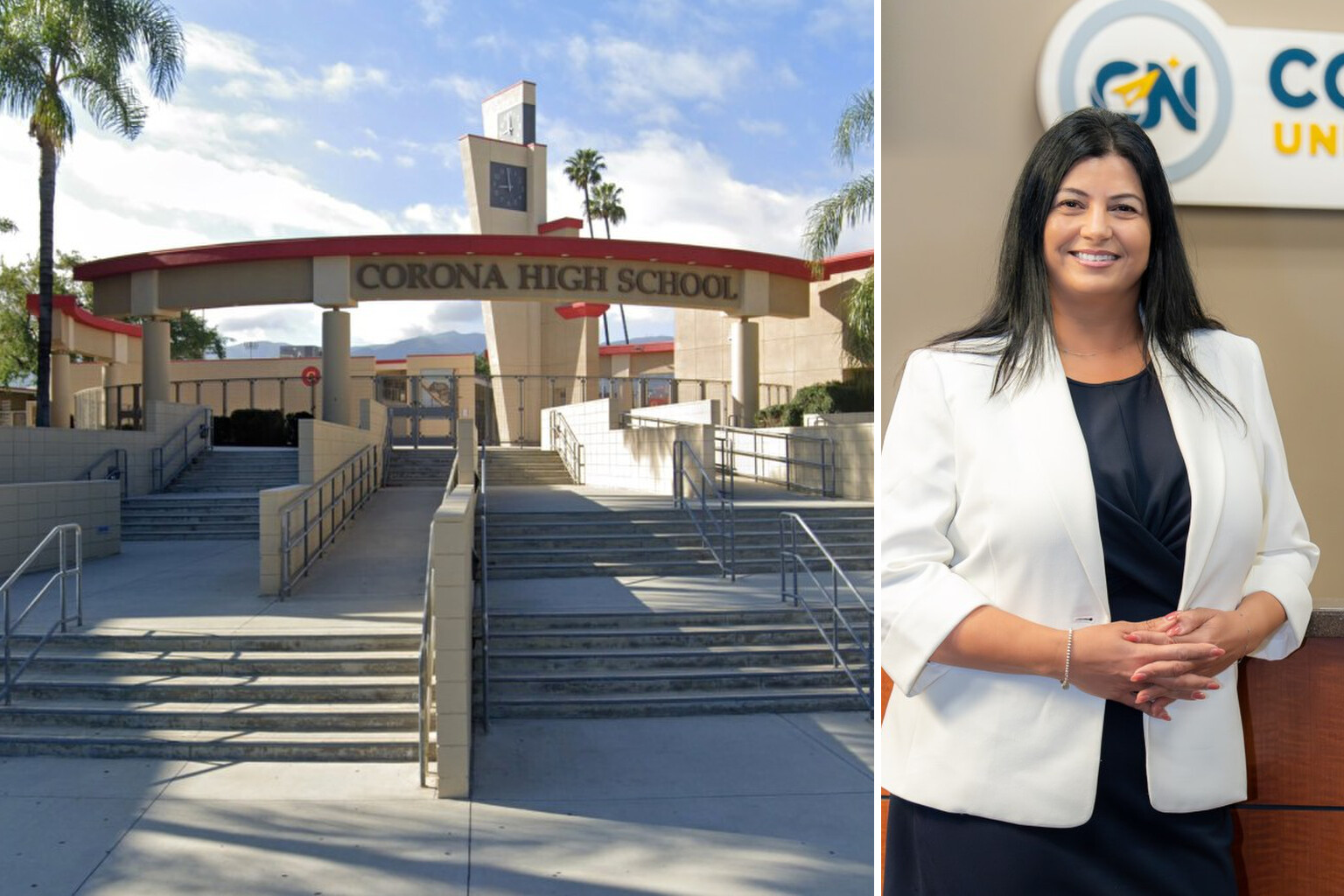
A California school district has broken its silence after federal investigators uncovered an alleged school shooting plot involving two teenage girls.
Corona-Norco Unified School District confirmed that both suspects attend high schools under its jurisdiction — one currently enrolled at Corona High School and the other at Norco High School, though she previously attended Corona. The girls were taken into custody after the FBI flagged threatening social media communications.

The federal bureau alerted local authorities after identifying online discussions about the planned attack. Corona Police Department officers moved quickly to arrest both teens, who authorities said had been actively attempting to acquire firearms for the assault. The investigation has been active since Oct. 6, and district officials emphasized that neither suspect has set foot on campus since that date.
“We are grateful for the swift response of the Corona Police Department and their continued partnership throughout this investigation,” the district wrote in its official statement. The message, distributed to families and staff, sought to reassure a community rattled by news of the foiled plot.

The district’s communication directly addressed parental anxiety about student safety. “We understand that hearing news like this can be unsettling for families, and we want our parents to know that the safety and well-being of our students and staff remain our highest priority,” officials wrote. They detailed existing protective infrastructure already in place across their schools.
CNUSD, as the district is known locally, pointed to layered security protocols designed to catch threats before they materialize. “CNUSD has established safety protocols, monitoring systems, and strong partnerships with local law enforcement to help identify and respond to potential threats,” the statement continued. The district framed these mechanisms as part of a broader, ongoing commitment rather than reactive measures imposed after the arrests.
“These measures are part of our ongoing commitment to providing safe and supportive learning environments for every student,” district officials added. The statement did not specify what additional steps, if any, would be implemented beyond existing procedures.
The case highlights the growing role of federal surveillance in intercepting potential school violence, with social media platforms serving as both planning venues and detection opportunities. Local law enforcement’s rapid response after the FBI tip suggests established coordination channels between federal and municipal agencies in the Riverside County area.
Both suspects remain in custody as the investigation proceeds. Authorities have not released the girls’ exact ages or whether they will face charges as juveniles or adults. The district has not indicated when or if either student might return to campus, noting only the Oct. 6 exclusion date that predates the public disclosure.
The Corona-Norco district serves a sprawling suburban area east of Los Angeles, encompassing multiple high schools and tens of thousands of students. Security concerns have intensified nationally in recent years, though districts vary widely in their public communication strategies following threat incidents.
Federal involvement through the FBI signals the seriousness of the alleged conspiracy, particularly given the reported efforts to secure weapons. Social media monitoring has become an increasingly common tool for law enforcement agencies attempting to prevent mass casualty events, though such surveillance also raises ongoing debates about privacy and preemptive intervention.
The district’s decision to issue a formal statement represents a shift from initial silence as the investigation unfolded behind the scenes for an undisclosed period. Families learned of the incident only after arrests had been completed and immediate physical danger had been addressed.
Law enforcement officials have not disclosed the specific social media platforms used or the precise nature of the communications that triggered federal attention. The extent of planning beyond firearm acquisition also remains unclear as the case develops through appropriate juvenile or criminal channels.