


Experts are warning that the wave of media attention surrounding Lindsay Clancy’s trial may be triggering a disturbing pattern among vulnerable mothers.
Dr. Susan Hatters-Friedman, a psychiatrist and maternal filicide expert at Case Western Reserve University, said the Clancy case has received coverage “like no other filicide case before.” She questioned whether the spotlight could plant dangerous ideas in already troubled minds.
“Would someone with a certain personality might then start to have thoughts of getting that attention? Could this be putting the idea in people’s minds?” she said.

Dan Romer, a researcher at the Annenberg Public Policy Center who previously studied suicide contagion linked to the Netflix series “13 Reasons Why,” said the current cluster of cases fits a recognizable pattern.
“This fits the contagion model, especially with all the media attention,” Romer said.
He noted that Clancy’s vocal supporters — women who rallied outside the courthouse and flooded social media arguing she was failed by the medical system — may have amplified the signal to other distressed mothers.
“If there is an audience that sees the event as relevant to them, you could have a contagion effect,” Romer said. “The fact that these are mothers does fit into that narrative. They’ve seen another mother who’s been under a lot of stress and takes the lives of their family.”

The timeline of recent cases has raised particular alarm. Illinois mother Corie Walsh, 32, allegedly hanged her 2-year-old son Barrett in September after intensely following Clancy’s trial, then attempted to kill herself. Her lawyer has argued she was in the grip of a psychotic break and told police her son was the anti-Christ.

Just this week, Indiana mother Shatayvia Alisha Calderon allegedly executed her 9-year-old son Julian, weeks after sharing a fundraiser for Clancy’s family on social media.

At least eight cases of mothers allegedly killing or attempting to kill their children have surfaced since Clancy’s trial began in July. The cluster defies some typical patterns of maternal filicide identified by psychiatrist Phillip J. Resnick in the 1960s.
Most recent victims have been older children, not newborns or infants who historically account for the highest rates of maternal killings. Clancy’s children were 5, 3, and 8 months when she strangled them in their Duxbury, Massachusetts home in January 2023.

Several cases also lack the usual contextual triggers. Walsh and Pennsylvania mother Metallica Rose Harrison, who allegedly stabbed her son and husband to death at a Great Wolf Lodge in the Poconos before attempting suicide, were both still living with the fathers of their children. North Dakota mother Kailey Erhart, by contrast, allegedly slaughtered her two kids in August while texting her estranged husband “say goodbye to your children.”
Hatters-Friedman noted that Harrison’s attack came on the final day of what appeared to be a picture-perfect family vacation — a pattern sometimes seen when suicidal parents plan to take children with them.
“If a parent is planning to kill their child, they might want them to have a good last day, so they might treat them to nice things that make them happy,” she said.

The social media footprints of these mothers have added another unsettling dimension. Most posted apparently loving, happy photos right up until the killings, leaving behind jarring digital records of happier times. Clancy’s own online presence offered abundant images of her smiling with her children.

Romer’s research has already established that media exposure contributes to suicide contagion. He said the extension to maternal violence would not surprise him.
The phenomenon may also reflect confirmation bias — heightened attention to cases resembling Clancy’s rather than an actual increase in incidence. FBI data shows women account for less than 10% of killers in the United States, and maternal filicide totals roughly 200 cases annually based on crime data spanning 1976 to 2007.

Clancy’s defense centered on severe postpartum psychosis and an improper diagnosis in the months before her children’s deaths. She claimed she heard a male voice commanding her to kill them. Her case drew unprecedented sympathy from millions of women nationwide, with activists arguing she was driven by illness rather than malice.
Washington mother Janieka Ellington, who allegedly stabbed her daughters on a highway, had been rambling about someone following them before intentionally crashing her car — another case where psychosis appears central.
Hatters-Friedman said the Clancy case has penetrated clinical settings in ways previous filicide trials never did.
“People are now coming into their mental-health appointments thinking about it and talking about it,” she said. “It’s not just new moms talking about it. It’s all sorts of people.”
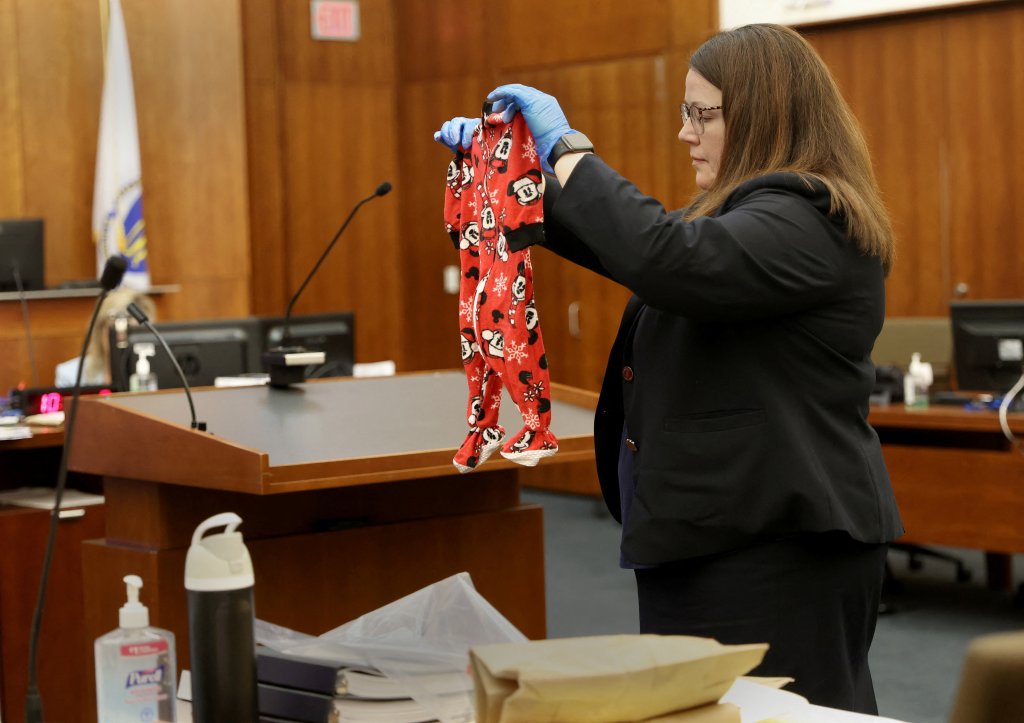
Clancy’s trial began in July and has continued to generate national headlines.