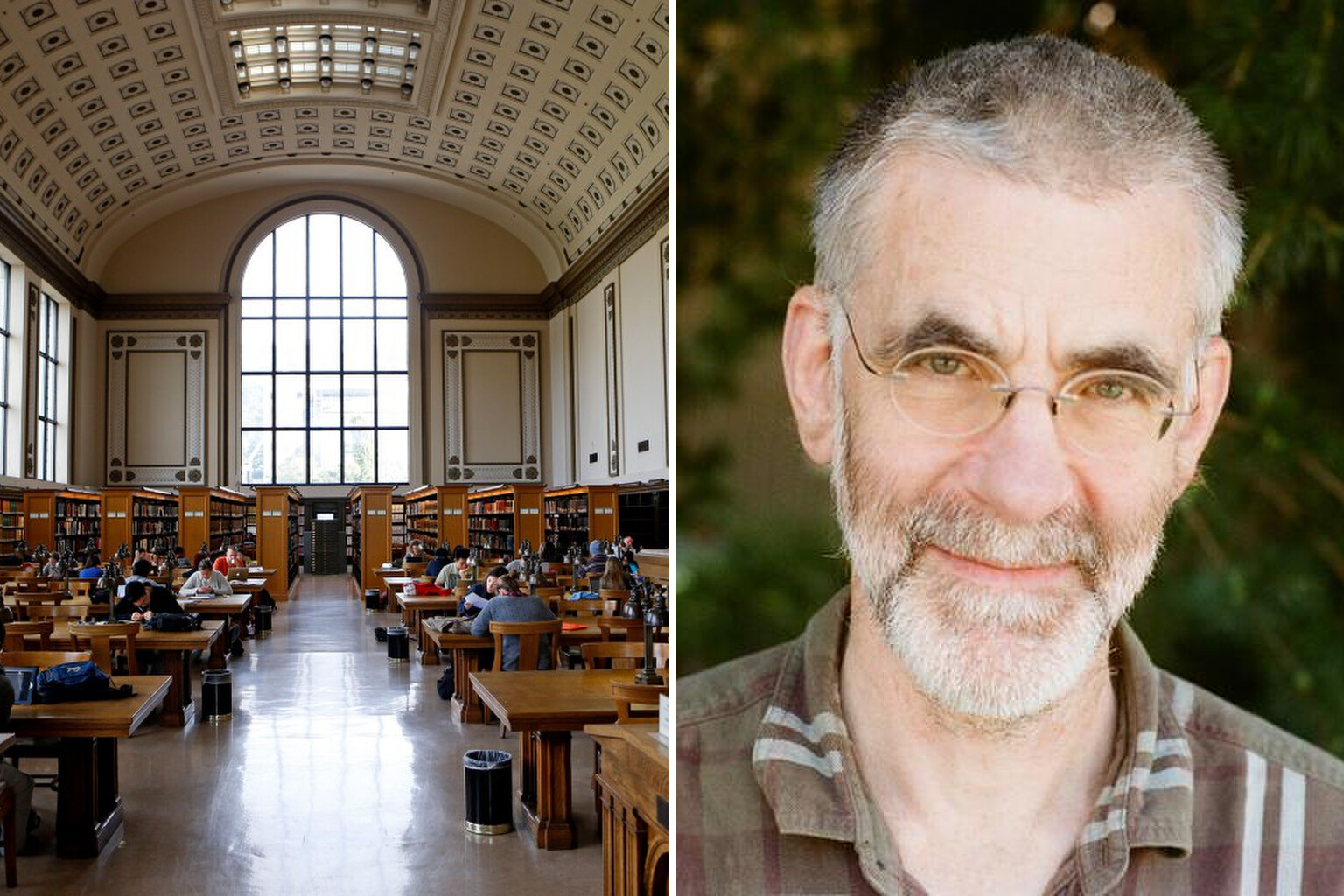
Richard Borcherds has abandoned grading homework for correctness at UC Berkeley after concluding artificial intelligence has made the practice obsolete.
The Fields Medal–winning mathematician, 71, now awards credit based solely on whether students complete their assignments, a policy shift he implemented after observing AI tools routinely producing top-scoring work. Borcherds told the Daily Californian, Berkeley’s student newspaper, that paying graders to evaluate answer accuracy no longer made sense when machines could match or exceed human performance.
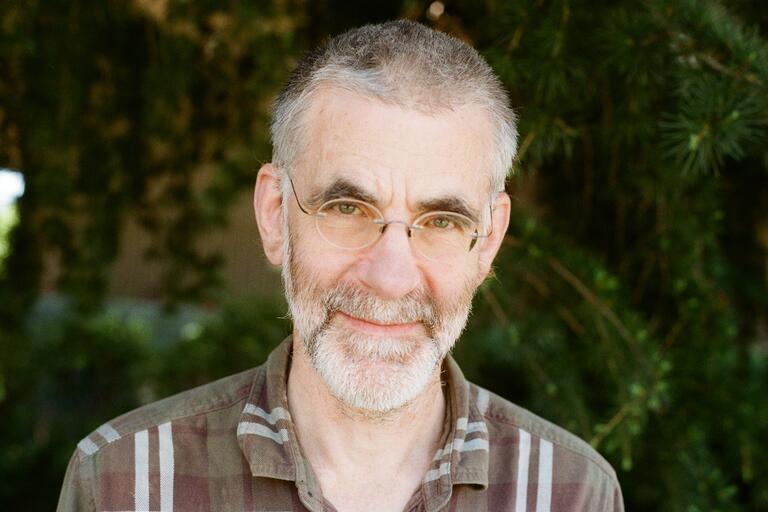
“If AI continues to improve at present rate, then, in a few years, there’ll be nothing human mathematicians can do that AI can’t do better,” he told the paper. Borcherds, who received mathematics’ highest honor in 1998 for his contributions to algebra and geometry, said he recognized the new approach fell short of ideal but saw few viable alternatives given the technology’s trajectory.
His comments followed OpenAI’s announcement that its AI agents had apparently solved the Navier-Stokes existence and smoothness problem, one of the field’s most notorious unsolved challenges. The claim, which would carry profound implications for fluid dynamics and mathematical physics, underscored for Borcherds just how rapidly machine capabilities were advancing into territory once considered exclusively human.
The professor’s uncertainty extends beyond grading methods to the fundamental viability of mathematics as a career path. He noted that as recently as five years ago, the discipline appeared relatively shielded from the technological disruption reshaping other professions, a protection that now seems increasingly fragile.
“I have no idea what to advise. I even asked ChatGPT this exact question, and even ChatGPT said it didn’t have any idea what was going to happen,” Borcherds told the Daily Californian.
He predicted that mathematics departments would likely persist in their current form for several more years despite the technological upheaval, drawing a parallel to academic journals that continue printing physical editions long after losing much of their original purpose. Borcherds pointed to historical precedents of technological displacement, from hand weaving to horse-drawn transport, while emphasizing that mathematics had never before faced this particular challenge.
“There have been plenty of technical breakthroughs in the past — hand weaving was put out of business by looms, and horses were put out of business by motor cars, and so on,” he said. “This is the first time anything like this has happened in mathematics, though.”
Berkeley’s administration has attempted to establish institutional guardrails around AI use without mandating uniform solutions. Anne Marie Richard, the university’s assistant vice provost for undergraduate education and chief academic technology officer, said in an email to the student newspaper that the Berkeley Division of the Academic Senate requires instructors to include AI policy statements in their syllabi.
However, Richard noted that specific restrictions vary considerably by course and subject matter, leaving individual faculty members to determine their own classroom rules. The university tested AI-detection tools including Turnitin and Rumi but concluded neither was reliable enough for campus-wide deployment, according to the Daily Californian.
That decentralized approach has left Borcherds and other professors to devise their own responses to a problem that continues to outpace institutional adaptation. Borcherds suggested that universities’ characteristic resistance to change would slow any broader structural response, even as capabilities advance.