

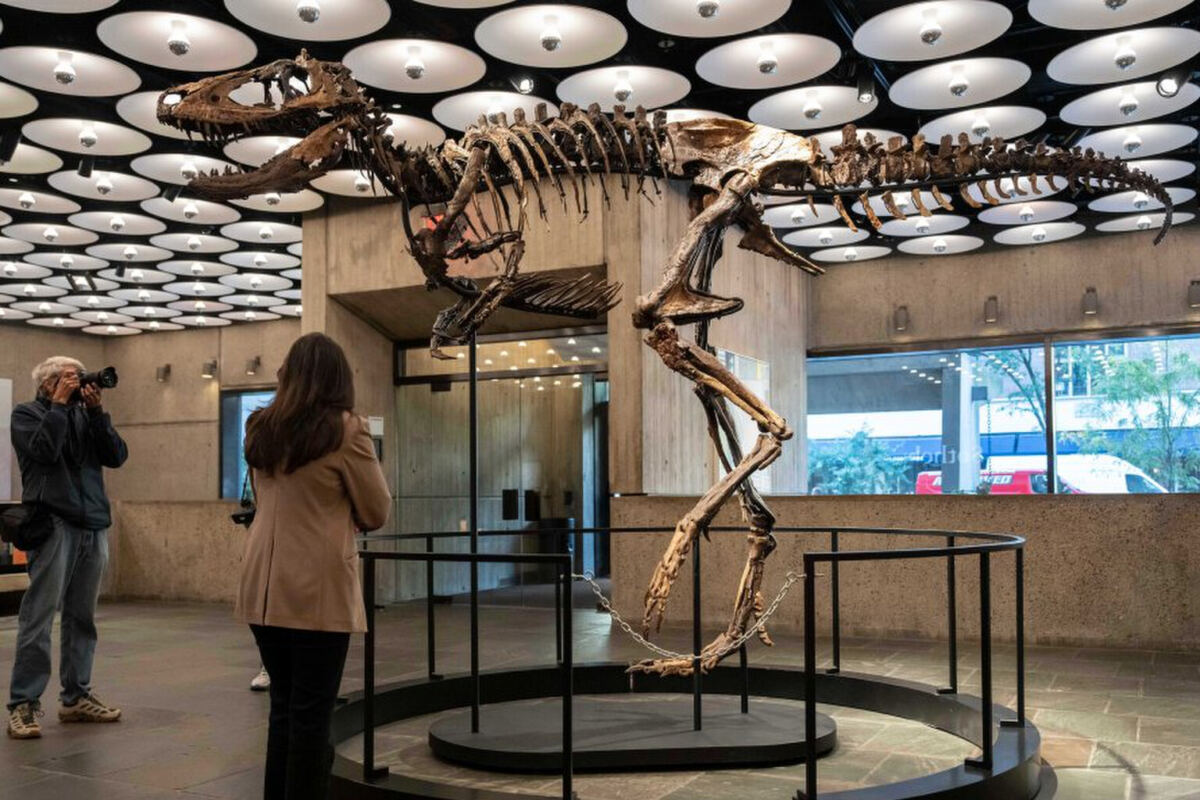
A mystery buyer paid $47.3 million for a rare “mini T. Rex” skeleton at a Sotheby’s auction in New York City on Tuesday, shattering the house’s own estimates by more than fivefold.
The skeleton belongs to a Nanotyrannus, a distant cousin of Tyrannosaurus rex that stood 6.5 feet tall and stretched nearly 20 feet long. Sotheby’s had projected the fossil would sell for $6 million to $9 million. Instead, the roughly 12-minute live auction drew five competing bidders by phone and online before the anonymous winner prevailed.
The fossil, nicknamed “Jodi,” is now the second-most expensive dinosaur skeleton ever sold. Only a T. Rex known as “Gus,” which fetched $50.1 million at Sotheby’s this summer, has commanded a higher price.
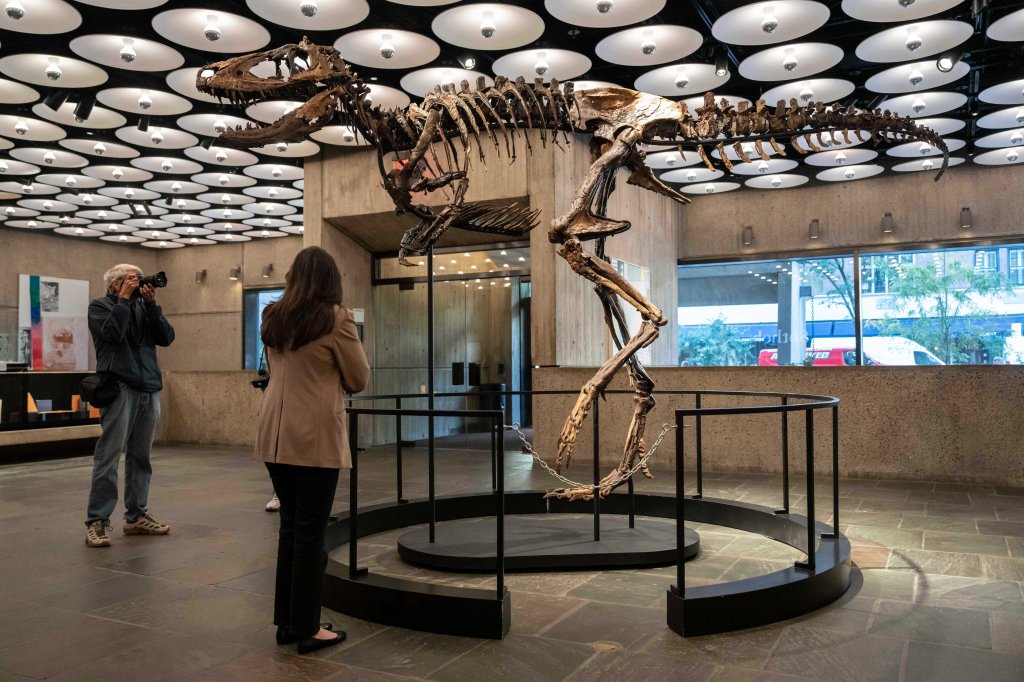
The dinosaur takes its name from Jodi Pierson, the Montana rancher who found it on her land in 2019. Professional fossil hunters excavated the specimen, and their work became the focus of the Discovery Channel documentary series “Dino Hunters” in 2020. The skeleton has been on display at Sotheby’s upper Manhattan headquarters since earlier this month and is considered almost 70% complete.
Cassandra Hatton, Sotheby’s head of science and natural history, thanked the excavation team in a statement. “Their commitment to understanding and preserving this remarkable specimen has helped bring us to this moment, a testament to the fact that we can all make major contributions to science,” she said.
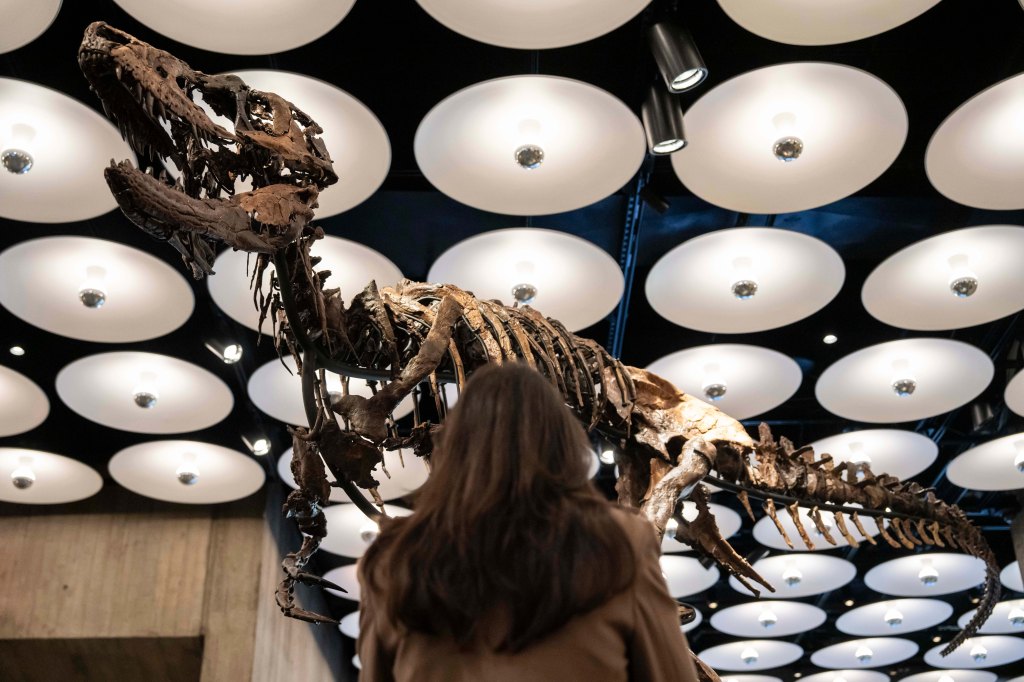
Scientists long debated whether Nanotyrannus was truly its own genus or merely a juvenile T. Rex. Research published last year settled the question, concluding it was a distinct type of dinosaur. The two species coexisted during the Cretaceous period some 67 million years ago, though Nanotyrannus was about half the length of an adult T. Rex and possessed relatively longer forelimbs, larger hand claws, and more slender, blade-like teeth.
Only three Nanotyrannus skeletons are known to exist worldwide, making “Jodi” an extraordinarily rare specimen.
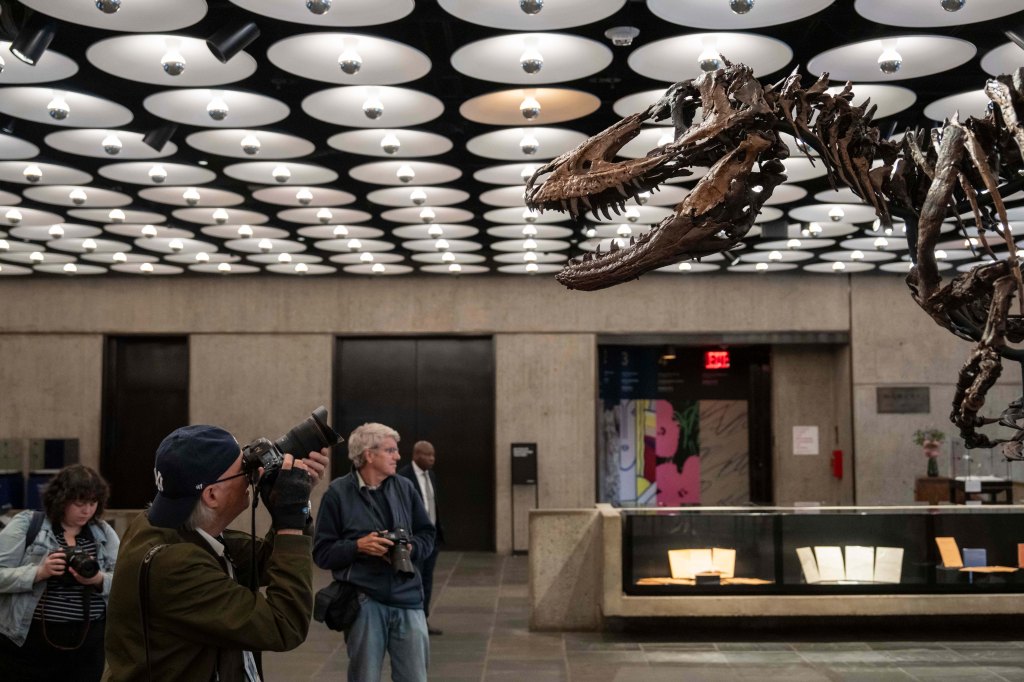
The blockbuster sale has drawn criticism from some researchers who argue that significant fossils belong in museums or research institutions rather than private collections. They contend that such specimens should remain accessible for scientific study and public viewing, not disappear into anonymous ownership.
The identity of “Jodi’s” new owner remains unknown, and it is unclear whether the skeleton will ever be publicly displayed again.
Sotheby’s next major science and natural history auction is scheduled for later this year in Hong Kong.