

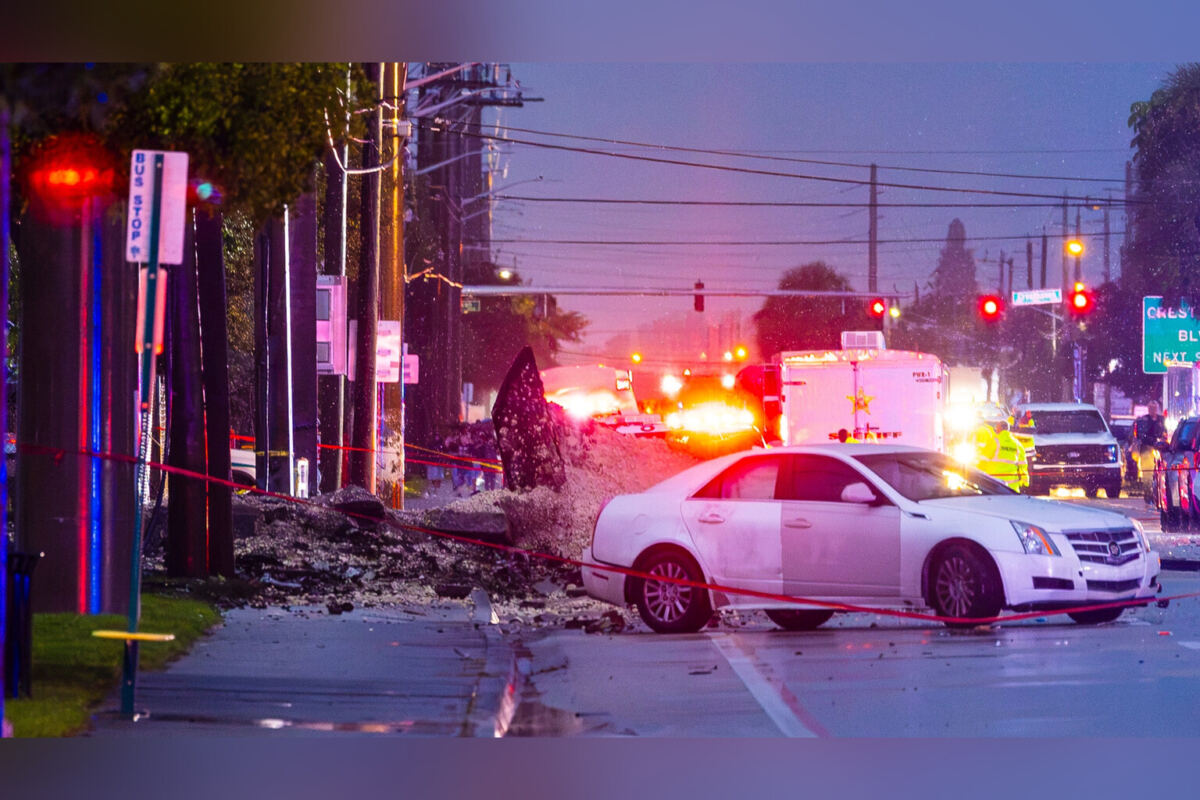
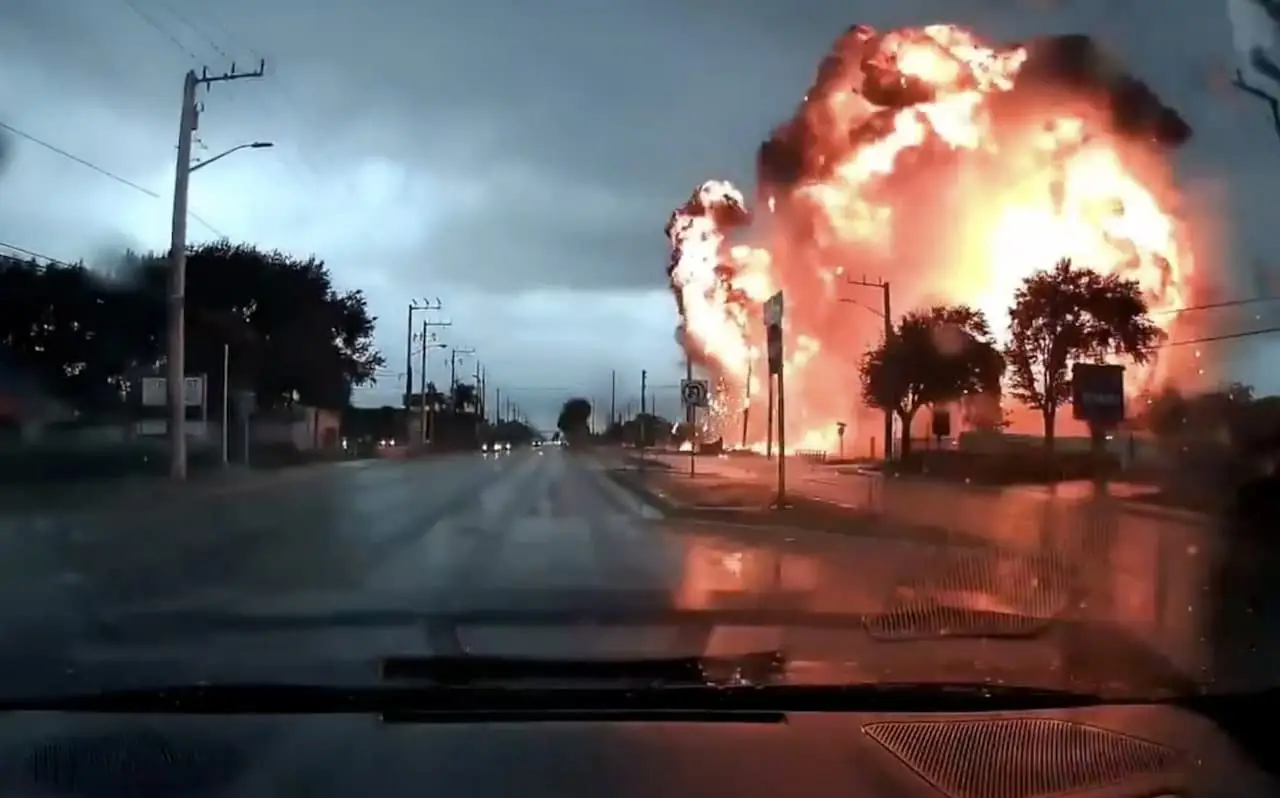
Nine people died when a private jet nosedived into a Florida neighborhood and erupted in a massive fireball.
The Learjet 60 was carrying nine passengers and crew from Austin-Bergstrom International Airport in Texas to North Eleuthera Airport in the Bahamas when it crashed near Cresthaven, Florida, around 12:50 p.m. Local time on Sunday, Nov. 1. US Transportation Secretary Sean Duffy confirmed all nine people onboard perished, calling the incident an “horrific tragedy.”
“Please join me in praying for the families and loved ones of those we lost,” he said.
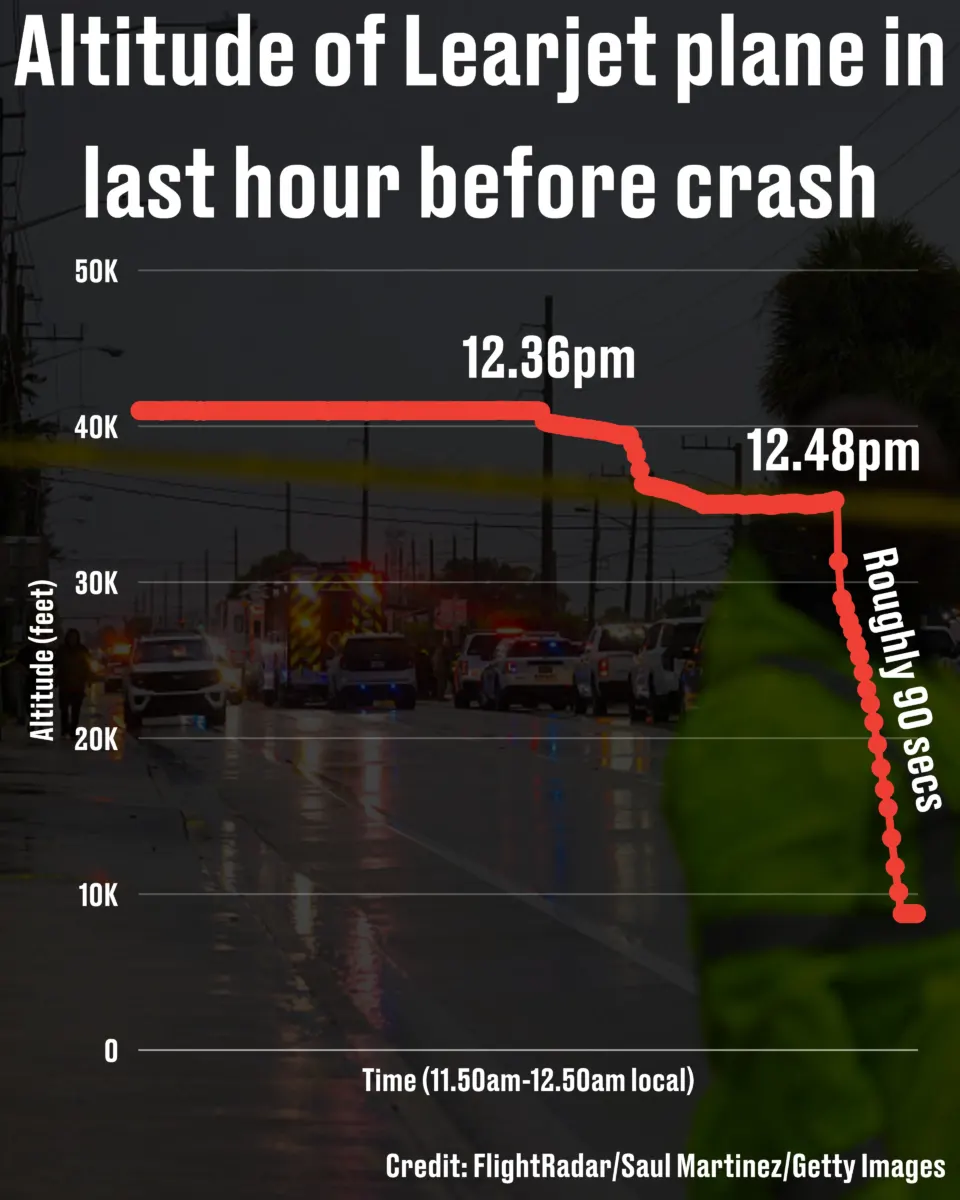
The aircraft had been cruising east at 35,000 feet when pilots reported turbulence, icing and precipitation and requested permission to climb 2,000 feet higher. Within moments, the jet entered a catastrophic dive, plummeting first at 10,000 feet per minute, then 20,000, and finally up to 30,000 feet per minute, exceeding its design limits according to air traffic control recordings and flight tracking data.
Chilling audio captured a frantic female crew member warning officials of an “overspeed condition” and declaring they were “going to crash into the ground.” In the final seconds before transmission cut out, she screamed:
“Look outside! We’re out of time!”
Florida governor Ron DeSantis surveyed the wreckage and described the devastation to reporters on Sunday.
“It was a cataclysmic plane crash,” he said. “It looked like a missile going down and left a big crater on the side of the road.”
The crash occurred approximately eight miles from Donald Trump’s Mar-a-Lago estate. Footage shared on social media showed the aircraft plunging vertically before bursting into flames upon impact near a major roadway, narrowly missing homes and passing vehicles by mere feet. Flames flickered around chunks of pavement lining the crater as stunned residents gathered.
A witness named Anthony, who declined to give his surname, described the terrifying final moments to Local 10.
“I looked outside my window because I heard a propelling sound. It came from the sky, and boom, everything exploded,” he said. “Debris was flying, and it hit my window. I go outside to check on my people. Everybody was outside. It was kind of weird because there was no debris like there would be with a normal plane.”

Minutes before impact, the pilot had reported ice accumulating on the jet and turbulence that was jolting the aircraft by as much as 700 feet, according to air traffic control recordings captured by LiveATC.net. A pilot then declared an emergency and issued distress calls before the plane veered sharply right and crashed steeply into the ground.
Aviation experts quickly pointed to weather as a likely factor. DeWitt Ingram, a Learjet type-rated captain and founder of Par-Avion Group Aviation Consulting, told CBS12 News that penetrating severe storm cells could have compromised the aircraft’s structural integrity.
“If the pilot flew into the tops of one of the thunderstorms, in that very rough air, he could have damaged the airplane to the point where he lost control,” he said.
Steve Arroyo, another aviation expert, offered a similar assessment to the outlet, suggesting that icing and turbulence may have caused the plane to stall while cruising at 34,000 feet.
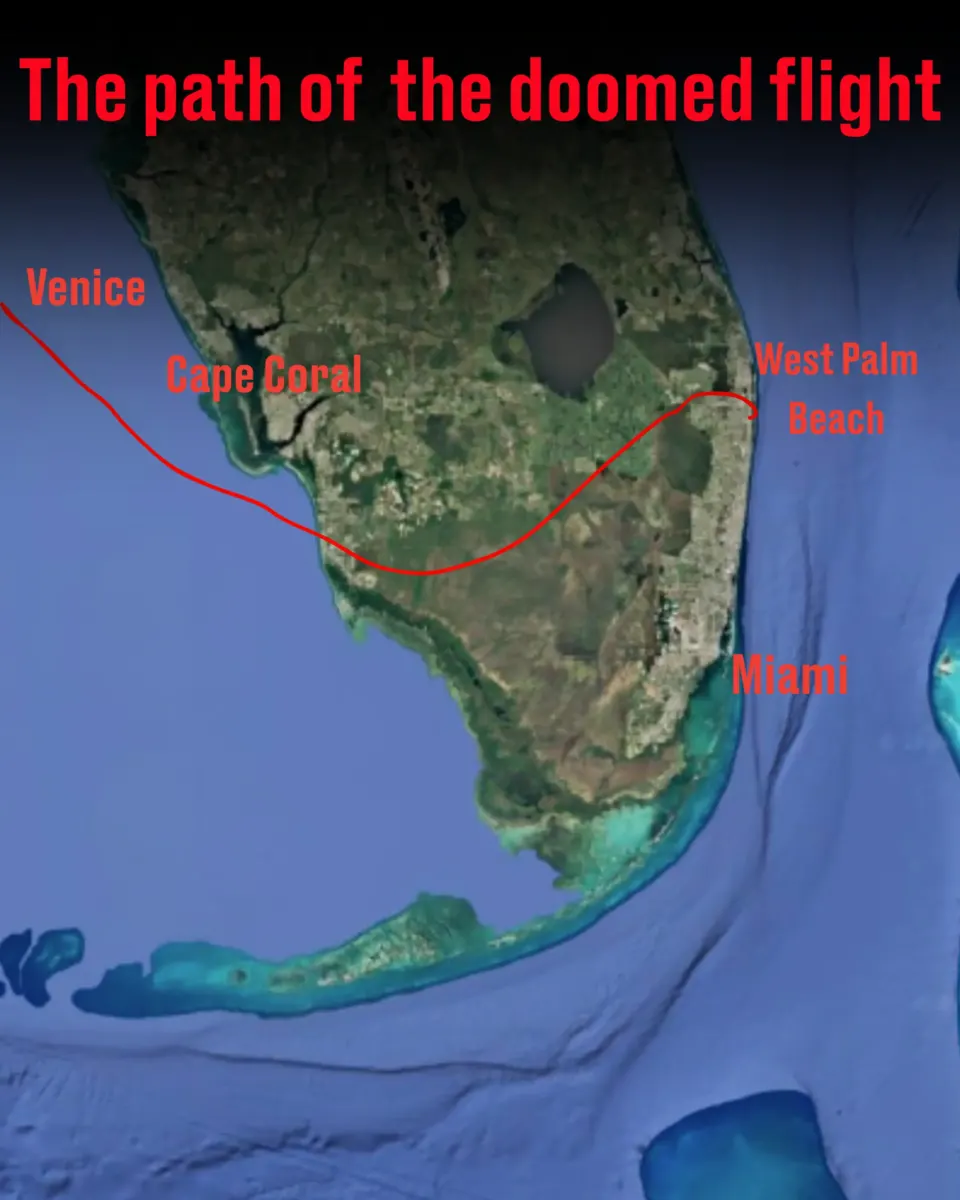
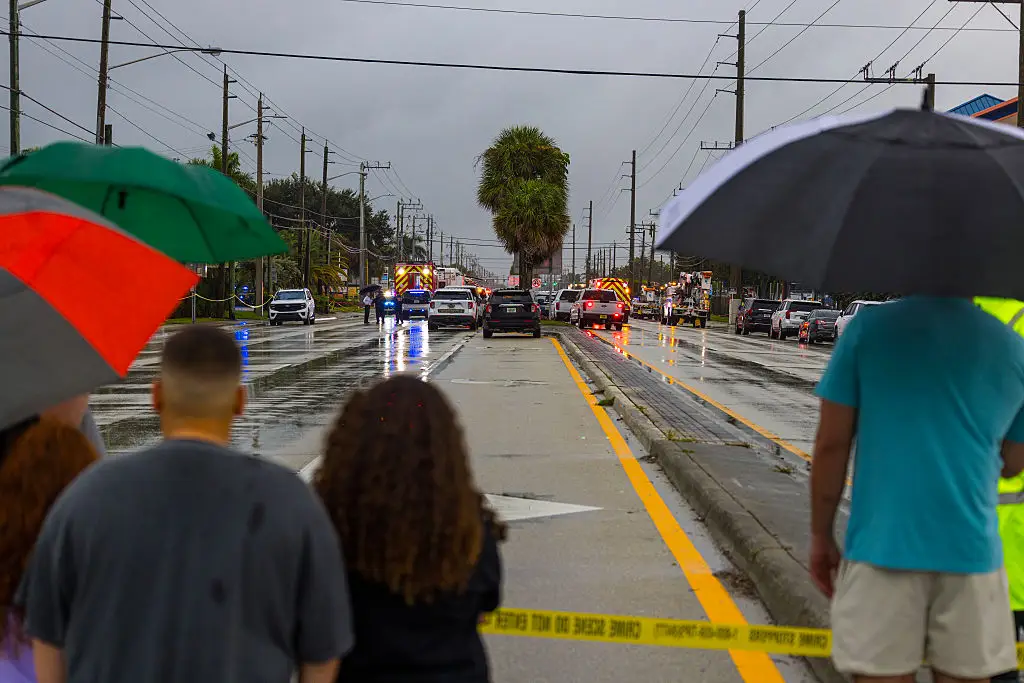
Local authorities evacuated approximately 600 residents from a nearby mobile home community as federal investigators began their work. County officials closed the road indefinitely. DeSantis noted there were no immediate reports of ground injuries or fatalities despite the crash’s proximity to homes.
Jim Reynolds, a spokesperson for Austin-Bergstrom International Airport, confirmed the aircraft was private but could not immediately identify those aboard.
“This is definitely a tragedy,” he said.
The Federal Aviation Administration announced it is sending a team to support the National Transportation Safety Board’s investigation into the cause. An FAA spokesperson provided details of the flight path and confirmed the NTSB would lead the probe and provide all updates.
A local resident situated 500 feet from the impact site reported that “everything was on fire” in the immediate aftermath.
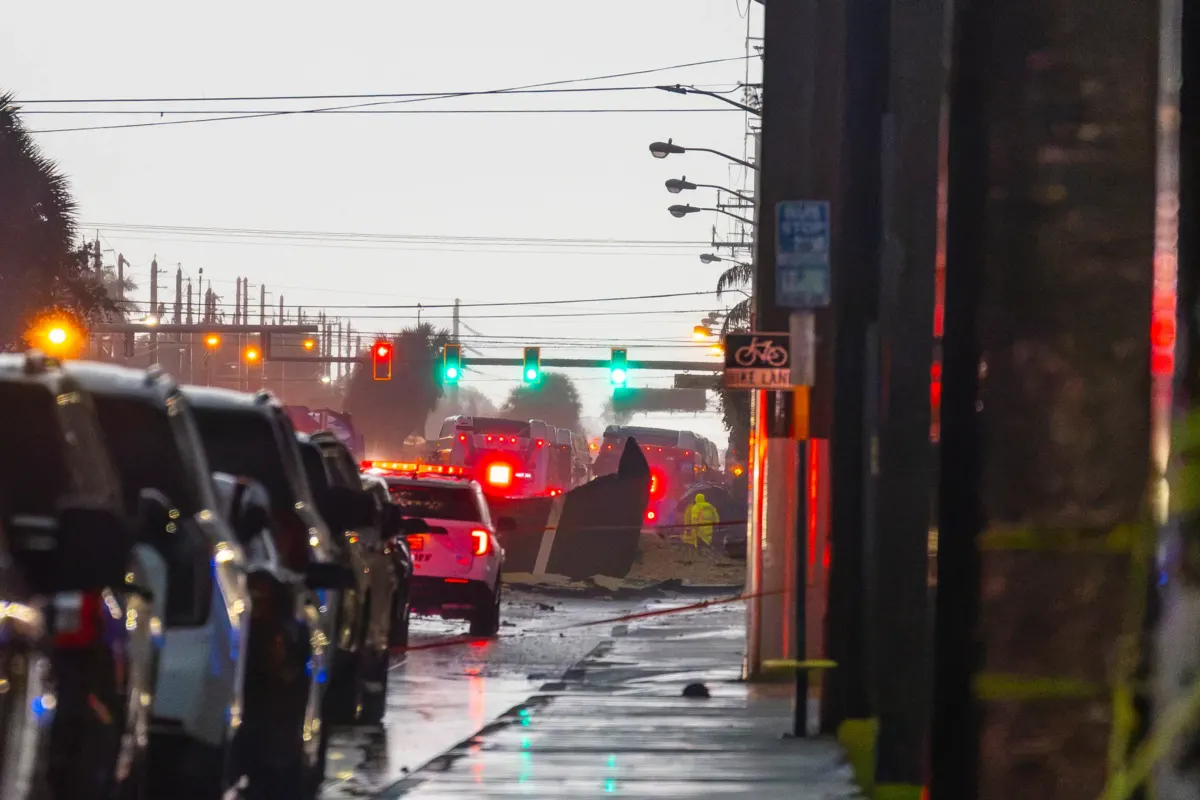
The NTSB investigation is expected to examine the role of severe weather, potential structural failure, and the crew’s final emergency responses in determining what caused the Learjet to fall from the sky.