


Christa Pike, 50, has filed an emergency motion to end her solitary confinement after surviving a botched lethal injection.
Pike was discharged from a Nashville hospital on October 9 following the failed September 30 execution attempt, and her legal team now argues that each day of continued isolation compounds the harm to the death row inmate. Lawyers for the state have until November 4 to respond to the motion, with Pike’s team then given until November 6 to reply.

In a personal declaration, Pike detailed the conditions she says she faces in the infirmary where she spends most of her time alone, save for meetings with her attorneys. She wrote that she is being forced to clean a shower she claims is infested with cockroaches, putting her at “high risk of infection and further injury.”
“This pod houses inmates with significant histories of assaults and disciplinary problems,” she wrote.
“In my two years living in this pod after entering into the settlement, I witnessed multiple assaults by close custody inmates of other inmates and guards, multiple individuals who were undergoing acute psychological breakdowns, and significant danger.”
Pike’s declaration emphasized that her physical state leaves her vulnerable to attack. She wrote that she “could not defend myself or get away if another inmate attacked me.”
“I am afraid that I will be seriously hurt if I am moved to that pod while I am this weak,” she added.
The inmate also noted that she had “returned to the hospital emergency room once” since her prison return, though she “was not readmitted for inpatient care.”
Pike’s attorneys, in a statement shared, explained the urgency behind their filing. “The motion was filed on an emergency basis because each day of continued isolation causes further harm to Ms. Pike,” they said. “It asks the court to order the State to end her isolation and restore the protections in the agreement as far as her medical needs and safety allow.”
Beyond safety concerns, Pike expressed a desire to rejoin general population activities she has been denied. She said she wants to participate in “group meals, group classes, lobby time, group religious services, work assignments, or shared recreation.”
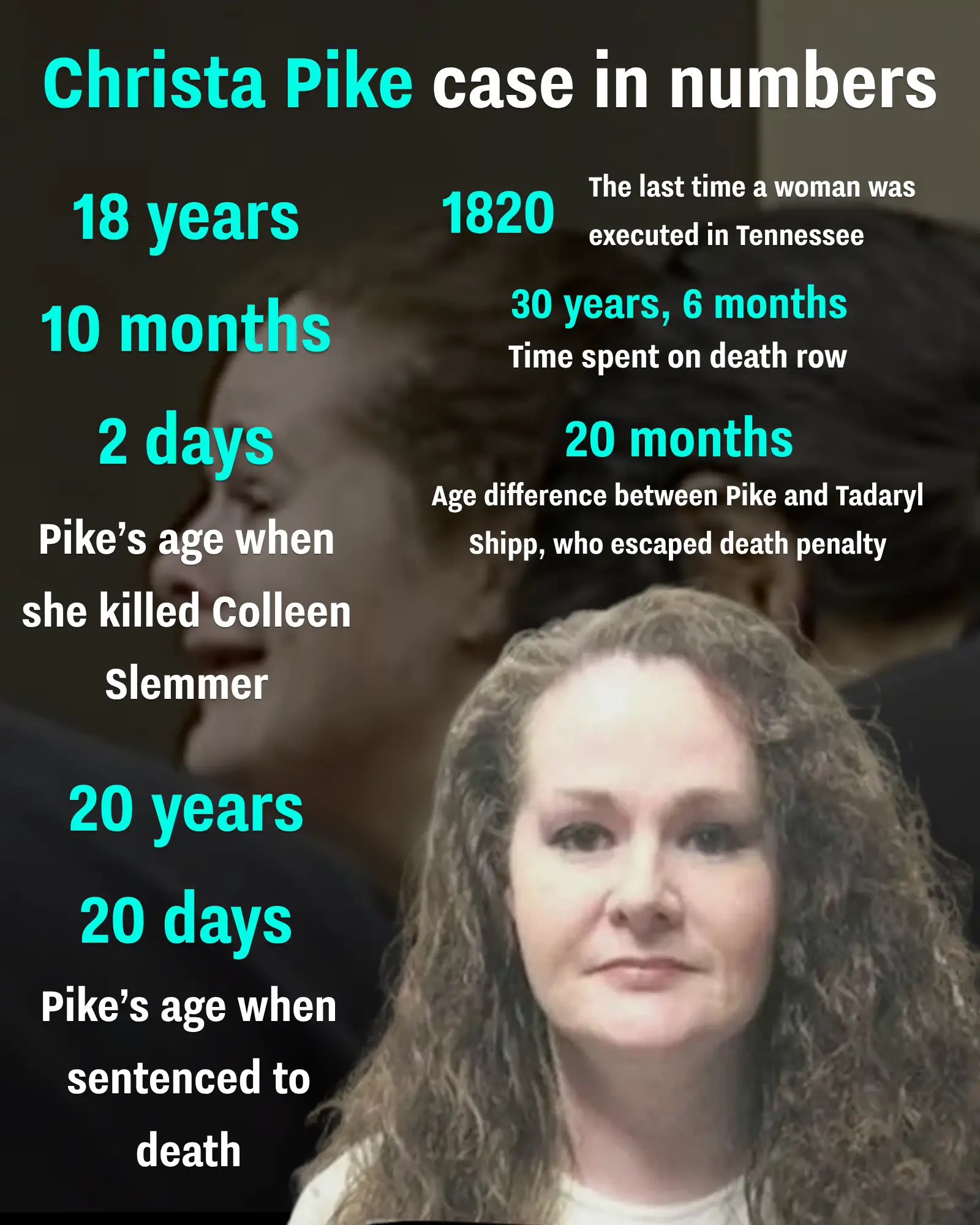
Pike was 18 when she and her boyfriend attacked and bludgeoned Colleen Slemmer to death in 1995, a crime for which she received a death sentence by electric chair at age 20. The conviction made her the youngest woman sentenced to death in Tennessee. Subsequent appeals highlighted her history as a victim of multiple incidents of child sexual abuse, with advocates arguing that the traumatic impact of that abuse was not adequately considered during her initial trial.

The botched September 30 execution, in which two doses of pentobarbital failed to kill her, led Tennessee to halt all executions pending an investigation into what went wrong. The lingering effects of those drugs now factor into Pike’s claim that she cannot protect herself from potential assault.
A spokesperson for the Tennessee Department of Correction said: “It is our policy not to comment on pending litigation.”
Pike’s legal team must file their reply brief by November 6.