

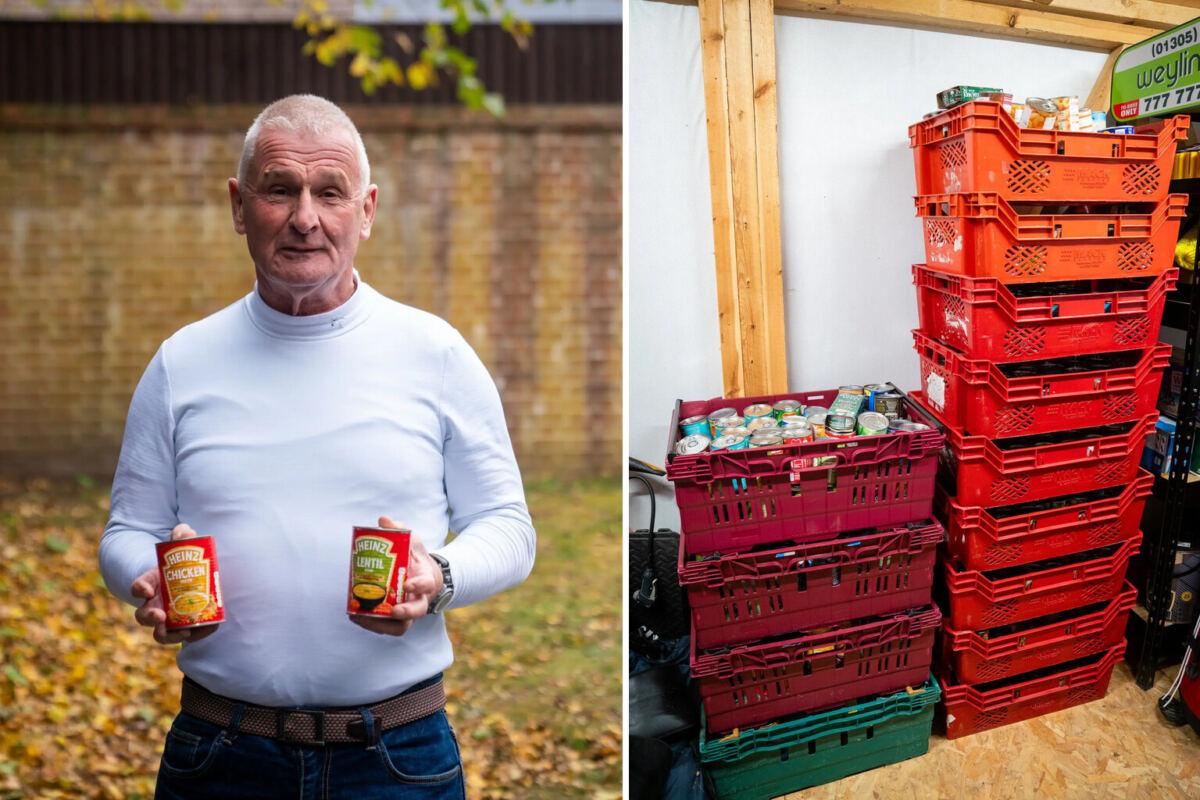
Ian Ferguson has revealed why he believes cash will become useless once supermarket shelves empty.
The 71-year-old taxi company owner from Weymouth, Dorset, has spent roughly £1,000 — close to $1,300 — building a stockpile designed to carry him through 100 days of isolation. His hoard now stands at 600 cans, a collection he began assembling in 2022 after Russia invaded Ukraine. The tins cover stews, soups, beans, curries, rice pudding and fruit, with Ferguson calculating that six per day would sustain him comfortably.
Ferguson keeps more than food in his emergency kit. He has also gathered wind-up radios, camping stoves, sleeping bags, water filtration tubes, an axe, a saw and basic tools for foraging in nearby woods. The Briton, who has no intention of slowing his accumulation, bases his entire philosophy on a grim assessment of human behavior under pressure.
“There’s a phrase ‘nine meals between mankind and anarchy’. ‘That’s three days. Imagine you didn’t eat for three days,” he said. “These days everyone is so impatient and intolerant it would probably be three meals before anarchy.”
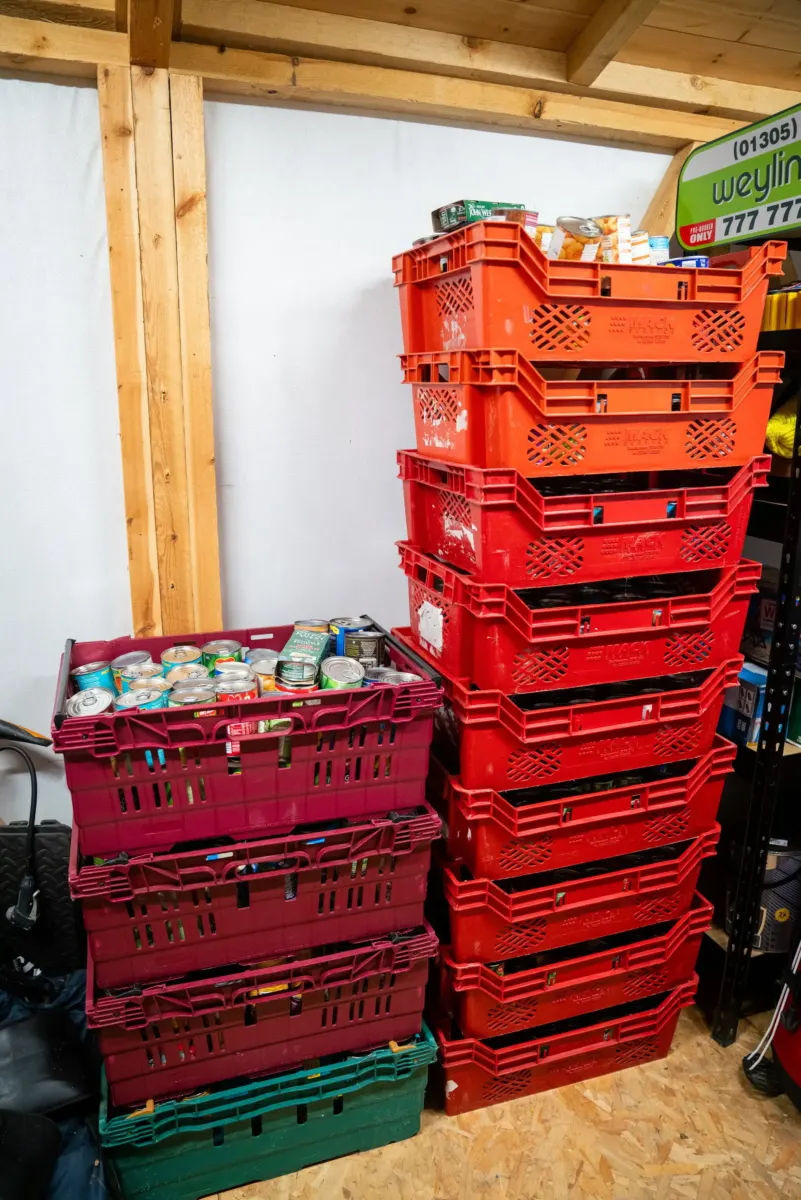
He has framed his stockpiling as a form of domestic insurance. “You’ve got insurance on loads of things in case something bad happens, so what’s your insurance for having food in the house?” he asked.
The emergency supply has sharpened Ferguson’s skepticism toward digital systems. He pointed to cyberattacks that have hit supermarkets and water companies, warning that modern supply chains depend entirely on electronic infrastructure. “Once the shops are empty, every supply chain is basically digital,” he continued. “It’s not some bloke with a clipboard and a pen writing what you’ve got. When it goes down, nothing will happen. Everything will freeze.”
This vulnerability, in his view, will render money meaningless at the moment it matters most. Ferguson argued that physical currency preserves individual autonomy when electronic payment systems collapse. “People used to want tangible money. When your battery is flat on your phone, if there’s no machine working, it means nothing to you,” he said. “I think we need to keep physical money to keep autonomy and flexibility in this system.”
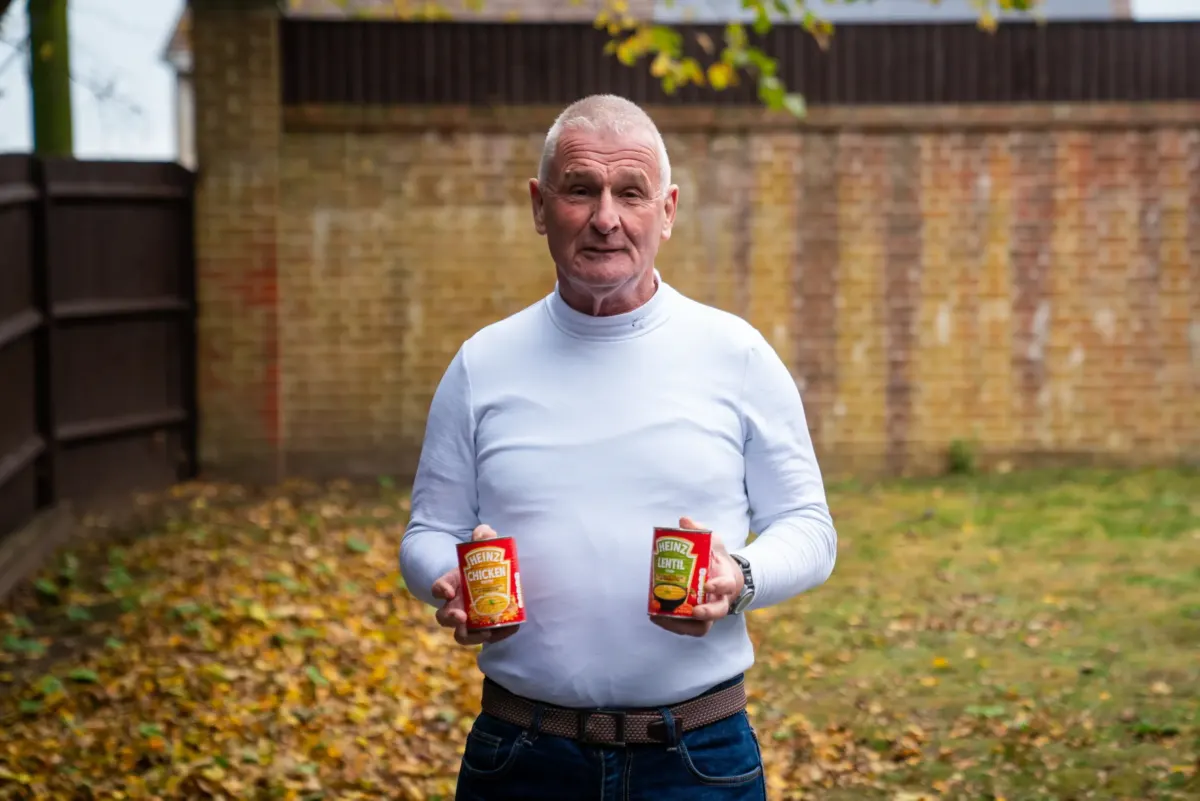
His distrust of institutional messaging extends to food labeling. Ferguson dismissed widespread anxiety about expiration dates on tinned goods, noting that commercial incentives drive the practice. “People are obsessed with use by and sell by dates,” he added. “They then go buy cigarettes with pictures of cancer-full lungs. We’re very selective about what warnings we’re going to heed. Obviously supermarkets want you to keep buying.”
Ferguson identified one gap in his own preparations: solar panels. He spoke of their value for maintaining heat and power but accepted that his age made the investment impractical. “Food isn’t the only answer. This whole thing isn’t about me sitting there watching people starve,” he said. “Someone who may have solar panels might still have heating. I’m 71, I’m not buying solar panels now. I hope the kindness of humanity would come out.”
The invasion of Ukraine in February 2022 prompted Ferguson to begin his stockpile, and some four years later his collection shows no sign of plateauing.