

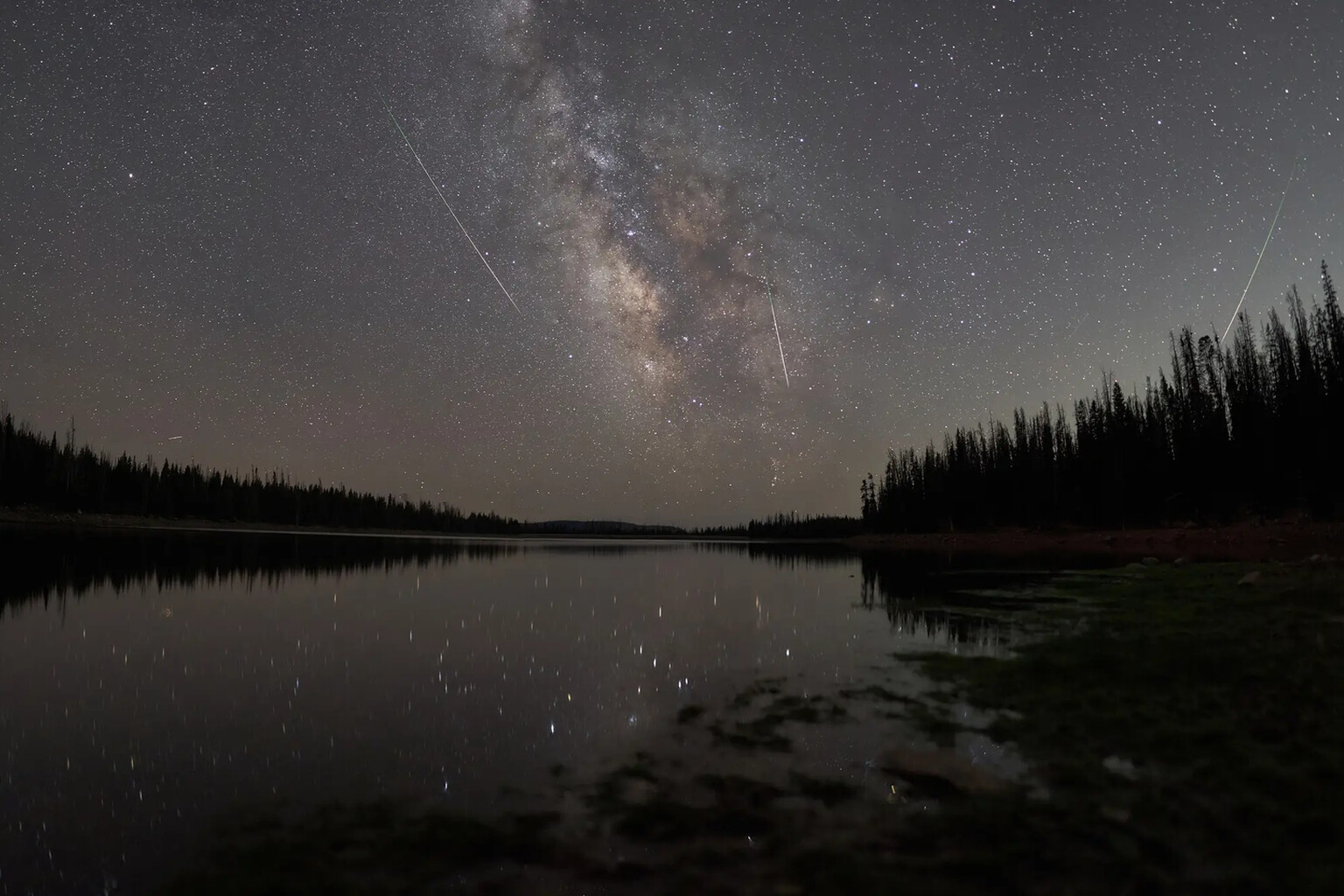
Stargazers across the United States are gearing up for prime viewing conditions as the Leonid meteor shower reaches its peak this week.
The annual celestial display is expected to hit its maximum activity overnight between November 16 and 17, with observers potentially catching 10 to 15 meteors per hour under ideal conditions. Viewing opportunities also extend to the nights immediately before and after the peak, giving skywatchers multiple chances to witness the event.
What sets the Leonids apart from other meteor showers is their extraordinary velocity. These meteors tear through space at roughly 44 miles per second, making them among the fastest visible shooting stars of the year. That breakneck speed produces the bright streaks of light that have made the shower famous among amateur and professional astronomers alike.
The phenomenon occurs when Earth’s orbit intersects with debris trails left behind by Comet 55P/Tempel-Tuttle. As these particles enter the atmosphere and burn up, they often leave glowing trails that can persist for several seconds after the meteor itself has vanished.
This year’s viewing prospects are boosted by favorable weather patterns across much of the country. A broad area of high pressure stretching from the Central Plains through the Great Lakes and toward the East Coast is expected to deliver clearer skies across those regions. That atmospheric setup should minimize cloud cover that might otherwise obscure the display.
Visibility ultimately hinges on darkness. Moonlight and cloud cover both play significant roles in determining how many meteors observers can actually spot. The darker the sky, the better the show.
No specialized equipment is required to enjoy the Leonids. The meteors are fully visible to the naked eye, so telescopes and binoculars are unnecessary. Experts recommend allowing 20 to 30 minutes for eyes to adjust to the darkness before serious observing begins.
Location matters just as much as equipment. The best viewing spots are safe areas with minimal artificial light, well away from brightly lit streets and buildings. An open area with an unobstructed view of the sky improves the experience, though meteors can appear in virtually any part of the heavens.
For those seeking a reference point, the Leonids appear to radiate from the constellation Leo, which gives the shower its name. However, scanning broadly across the sky rather than fixating on a single point typically yields better results.
The Leonid meteor shower returns every November as Earth passes through the comet’s debris field. While some years produce more spectacular outbursts than others, the shower reliably delivers one of the most dynamic astronomical events visible from populated areas.
Clear weather remains the single most important variable for any given observer. Even under perfect conditions, patience rewards the dedicated watcher, as meteor activity tends to come in bursts rather than steady streams.
The Leonids have a storied history among meteor showers, occasionally producing dramatic meteor storms with thousands of visible shooting stars per hour. Those extreme events are rare and unpredictable, linked to particularly dense concentrations of comet debris. The more typical annual display still offers plenty of spectacle for casual viewers willing to step outside after dark.